

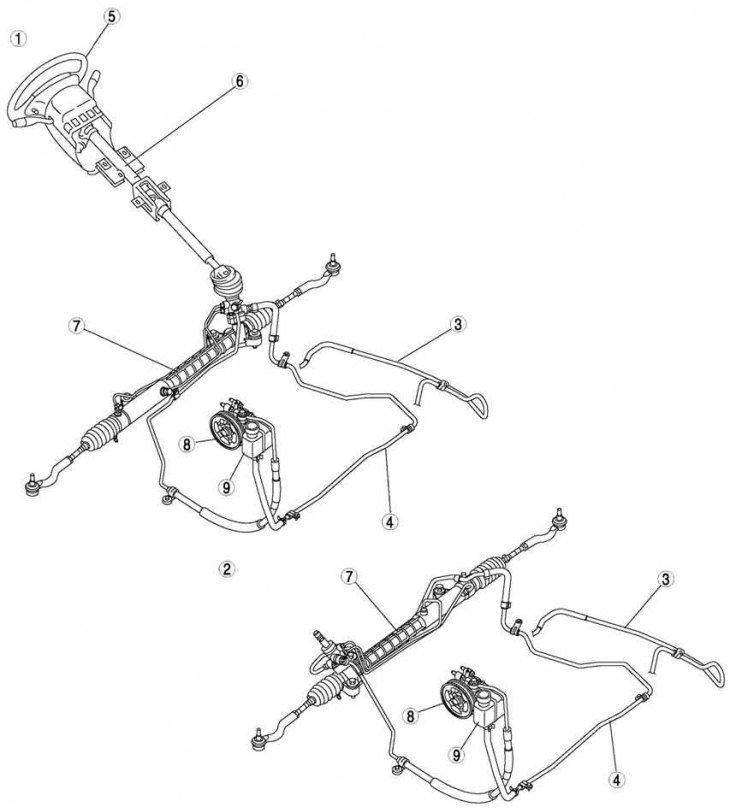
Fig. 5.1. Steering mechanism of the Mazda 6: 1 – with left-hand steering; 2 – with right-hand steering; 3 – ATX; 4 – MTX; 5 – steering wheel; 6 – steering column and shaft; 7 – steering mechanism; 8 – power steering pump; 9 – power steering reservoir
To reduce the force applied to the steering wheel to turn it, cars are equipped with a hydraulic power steering. High-pressure fluid is used as additional force, which is supplied to the working cylinders located on the steering mechanism. The distribution valve serves to pump fluid into the power cylinder under pressure, which corresponds to the angle of rotation of the steering wheel. Distribution valves operate in accordance with the so-called open center principle, i.e. when the distribution valve does not act, the fluid supplied by the pump is bypassed back into the reservoir at zero pressure. The pressure in the hydraulic system is created by a pump driven by a belt from the engine crankshaft pulley.
Table 5.1. Technical characteristics of the steering gear
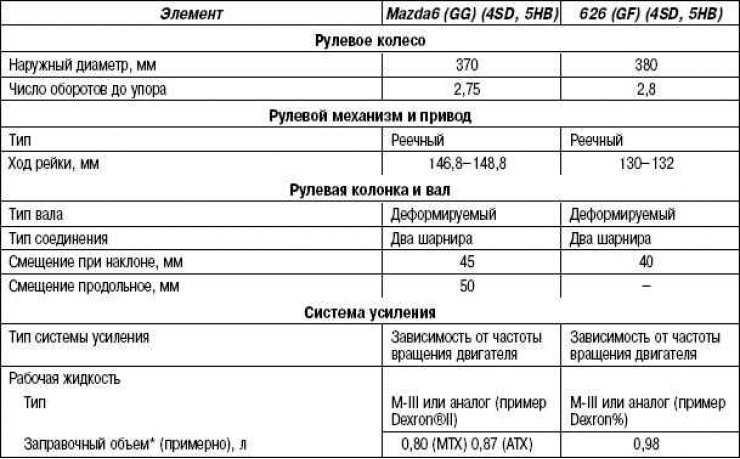
* When filling the tank to the maximum level.
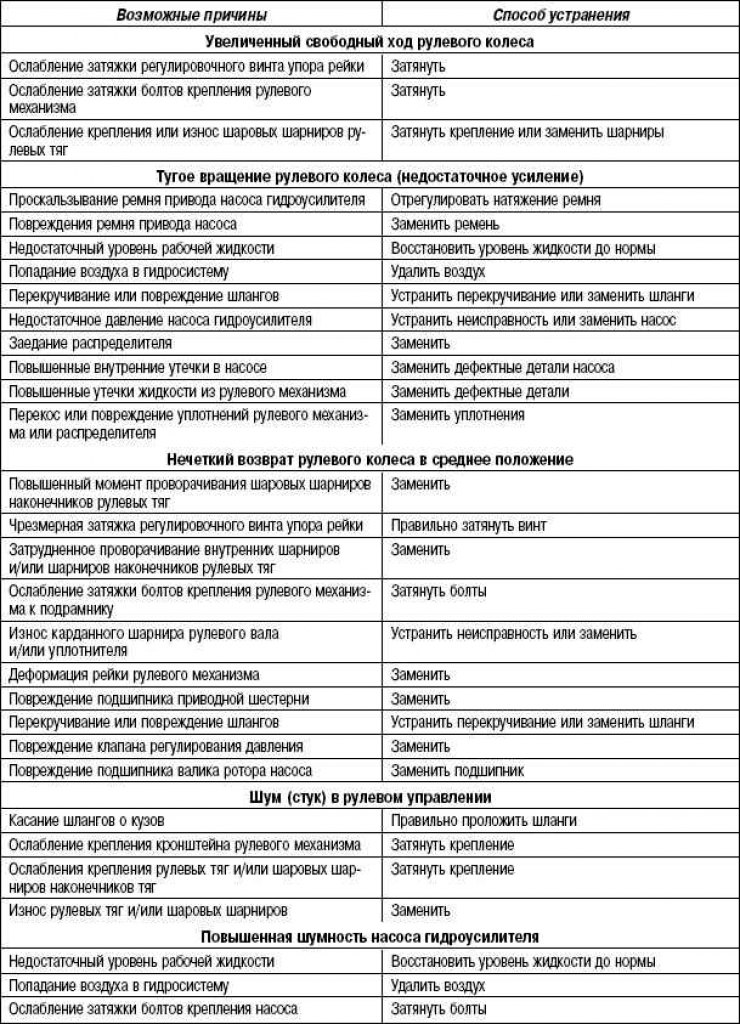
Table 5.2. Possible malfunctions, their causes and methods of elimination (Power steering)