MazBook.ru
English Русский
Български
Беларускі
Український
Српски
Hrvatski
Română
Polski
Slovenský
Magyar
• Bookmark • Sitemap • Contacts • Search:  
Cars Opel Cars Ford Cars Volkswagen Cars Audi Cars Kia Cars Renault Cars Peugeot


Familia Capella Mazda3 Mazda6 CX-? Others Articles
Familia 5 (1985-1989) Familia 6 (1989-1994)

Description and history of the car Mazda 323 (Familia)
  • Home
  • Mazda Familia
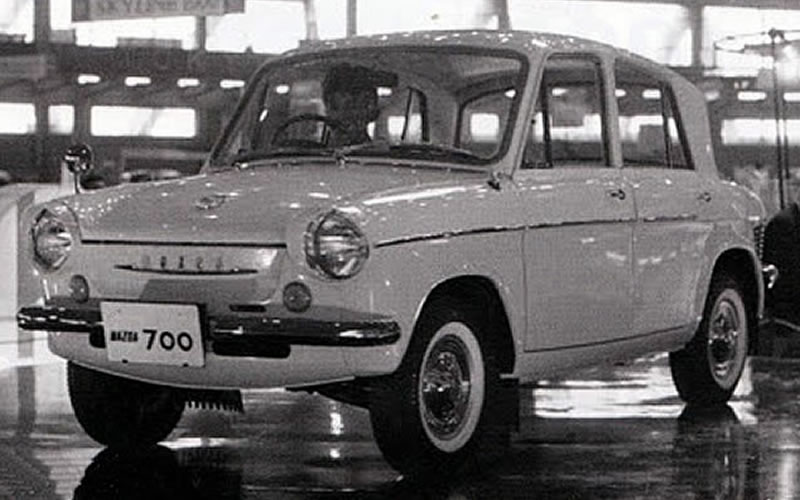
Mazda 700 at a car show, 1961 year 
Mazda 700 at a car show, 1961 year
Mazda Familia (Surname) is a B-class subcompact car until 1994 and thereafter a C-class compact family car that was produced by the Japanese automaker Mazda Motor from 1963 to 2003. In some markets it has the names Mazda 323 and Mazda Protege, as well as Ford Laser and Ford Meteor. In 2004, it was replaced by a new model Mazda 3.

The engine was located transversely in the front, the torque was transmitted to the rear wheels until 1980 and to the front wheels after. The body was in the form of a 4-door sedan, 3- or 5-door hatchback or station wagon, as well as a 2-door coupe. The main competitors of the car were Honda Civic, Mitsubishi Lancer, Renault Megane, Subaru Impreza, Toyota Corolla, Nissan Pulsar, Peugeot 306, Skoda Favorit and Volkswagen Polo.

First generation (1963−1968)
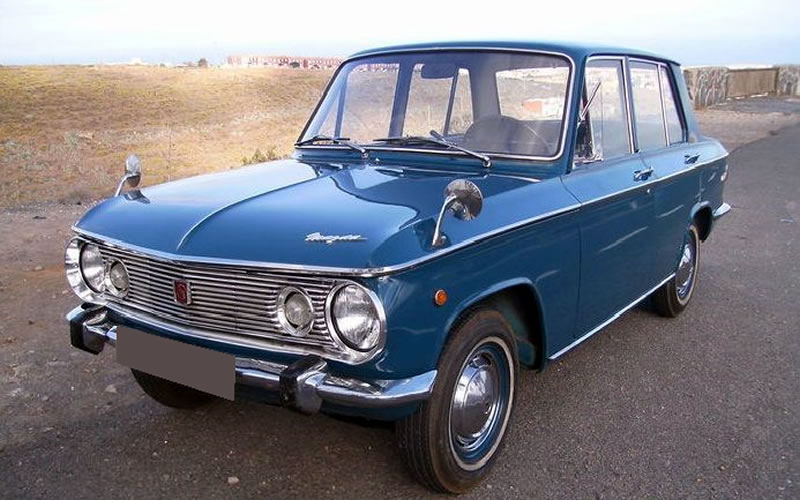


Mazda Familia 800, 1963 year 
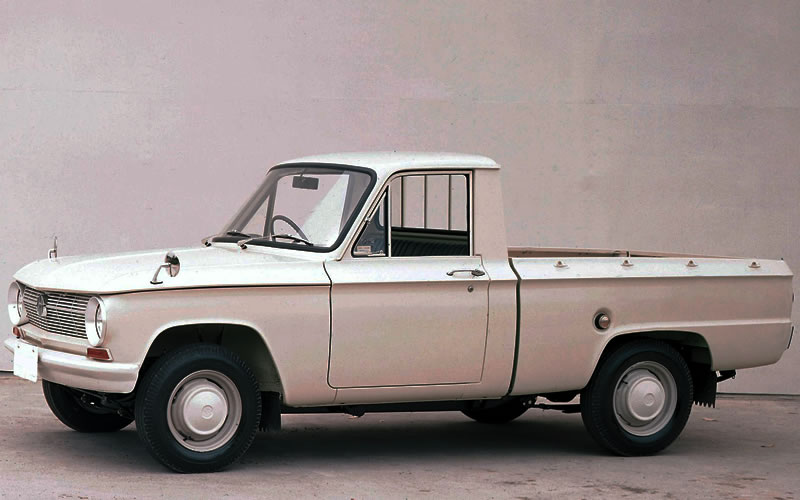
Mazda Familia 800, 1963 year
The prototype of the car, called "Mazda 700", was presented in 1961 at the eighth Tokyo Motor Show, and production of the "Familia" began in October 1963. It was introduced to the Japanese market during the Summer Olympics in October 1964. It was also called "Mazda 800" or "Mazda 1000" depending on the engine capacity. The exterior design was developed by the famous Italian designer Giorgetto Giugiaro. At first there was a 3-door station wagon body, in 1964 a 2-door and 4-door sedan appeared, and later a 2-door coupe appeared. The wheelbase was 2190 mm, the length of the body was 3700 mm, the width was 1465 mm and the curb weight was 720 kg. The car was assembled in Japan, in the city of Hiroshima.

Mazda Familia 800, pickup 
Mazda Familia 800, pickup
At first, a four-stroke aluminum in-line engine with a volume of 0.8 liters (782 cm³) with a capacity of 41 hp, later increased to 44 hp, with a valve timing scheme OHV, code "SA", also known as the "white engine" was used. In November 1965, an engine with a volume of 1.0 liters (985 cm³) with a capacity of 67 hp appeared, with a valve timing scheme SOHC, code "PC". In January 1967, a 4-cylinder engine with a volume of 1.0 liters (987 cm³) with a capacity of 51 or 57 hp appeared, with a valve timing scheme OHV, code "PB". Gearboxes were 4-speed manual or 2-speed automatic. The drive was carried out on the rear wheels.

Second generation (1967−1977)


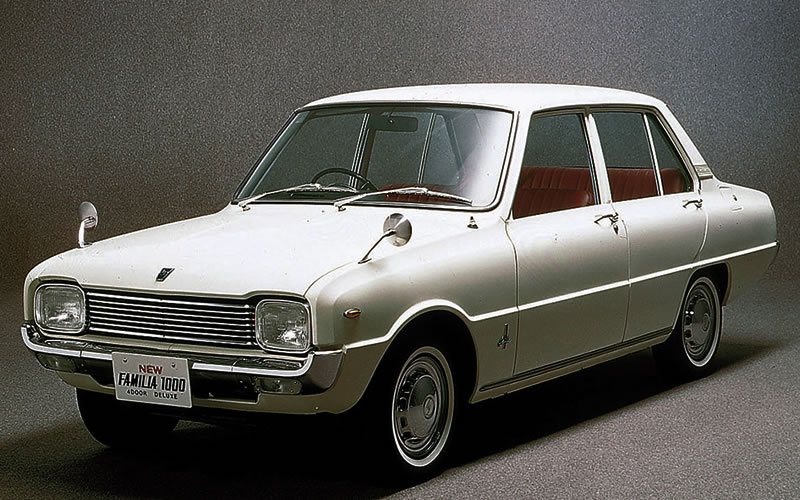
Mazda Familia 1000, 1967 year 
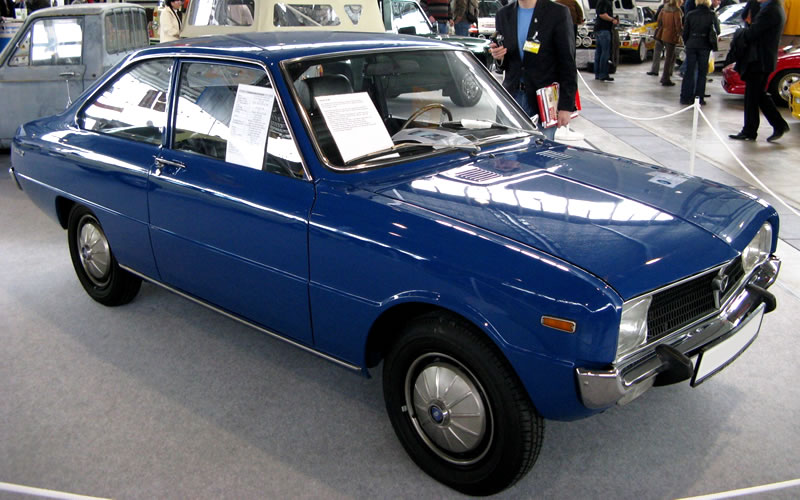
Mazda Familia 1000, 1967 year
The second generation appeared in November 1967 with the engine from the first generation "PB" with a volume of 1.0 liter (987 cm³) and the name "Mazda 1000". After the facelift in April 1970, a 1.0-liter (985 cm³) engine with an OHC valve timing scheme, code "PC" was installed. A more powerful engine appeared in February 1968 with a volume of 1.2 liters (1169 cm³) and a power of 58 hp, code "TB" and the car was named "Mazda 1200". In this form, it was shown in Europe at the Paris Motor Show in the fall of 1968. In Japan, this engine was modernized and its power was increased to 61 and 74 hp. Since 1970, a 1.3-liter (1272 cm³) engine with the code "TC" with a power of 69 hp has appeared. All engines are 4-cylinder in-line. The drive was carried out on the rear wheels through a mechanical or automatic transmission. The car was assembled in Japan, in the city of Hiroshima.

Mazda Familia 1200, coupe 
Mazda Familia 1200, coupe
The Familia II bodies were very diverse - 2- and 4-door saloon, 3- and 5-door station wagon, 2-door coupe and coupe with a body. The body length was from 3845 to 4160 mm, the width was 1480 mm and the unladen weight was 840 kg.

In 1968, a model was proposed "Familia Rotary" with a 1.0 liter (0.982 cm³) rotary engine producing 100 hp, code "10A". The coupe body was sold outside Japan as "Mazda R100". The trim level was higher than that of piston-engined models. Owners of rotary cars had a tax advantage in Japan.
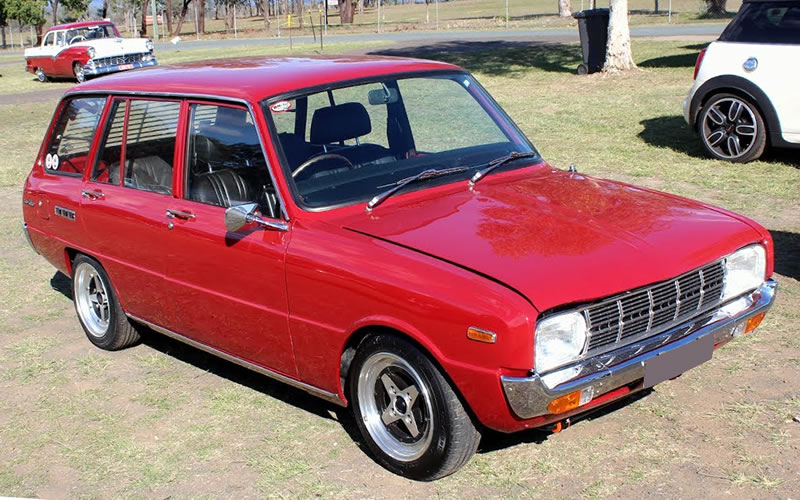
Mazda Familia 1300, wagon 
Mazda Familia 1300, wagon
In 1971, they started producing cars "Mazda Grand Familia" and "Mazda Savanna" to better compete with the Toyota Corolla and Nissan Sunny in North America.

In 1973, the second generation underwent a major update and was given the name "Familia Presto". The width of the body for sedans and coupes increased by 60 mm, the external design of the front and rear was changed. The other types of bodies remained the same width. "Savanna" based on "Grand Familia" replaced the rotary-engined coupe. The piston engines were upgraded, slightly increasing their power. In 1976, the engines were upgraded again to reduce emissions.

Third generation (FA4, 1977−1980)
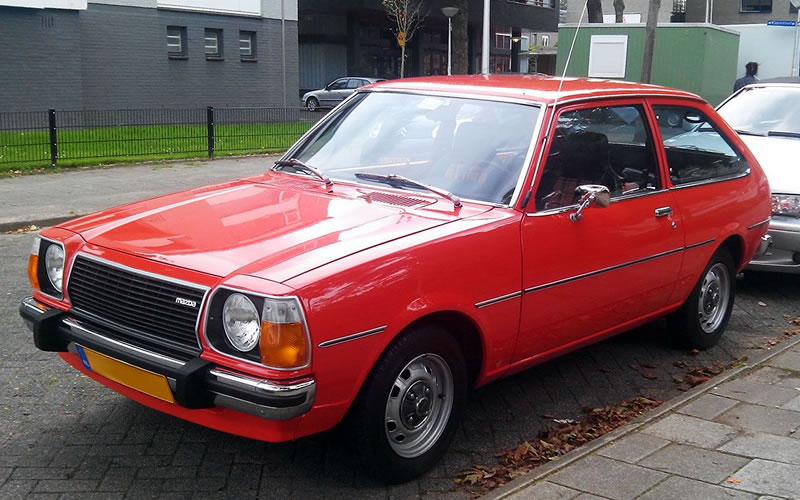


Mazda Familia FA4, hatchback 
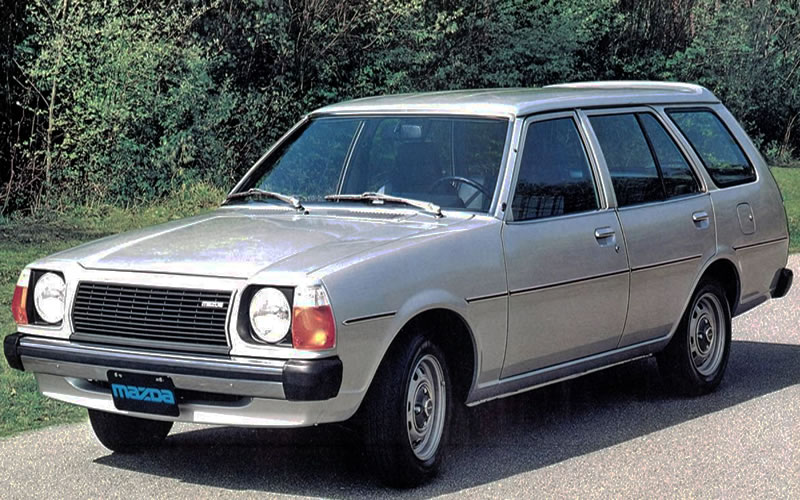
Mazda Familia FA4, hatchback
The third generation with the code "FA4" went on sale in January 1977. In most countries the car was called "Mazda 323". It also had less common names in different countries - "Baby Boomers", "GLC" (Great Little Car), "MR90" and "Vantrend". The body was in the form of a 3- and 5-door hatchback (length: 3835-3910 mm, width: 1595 mm), 3- and 5-door station wagon/van (length: 3995-4095 mm, width: 1595 mm). The curb weight was 812 kg. The car was rear-wheel drive. The car was assembled in Japan, the city of Hiroshima and New Zealand, the city of Otahuhu.

Mazda Familia FA4, wagon 
Mazda Familia FA4, wagon
From the start of production, three models of petrol 4-cylinder engines were available with the following characteristics: 1.0 liter (985 cm³) "PC" (I4 FA4PS, 44 hp.), 1.3 liters "TC" (1272 cm³, I4 FA4TS, power 59 hp.) and 1.4 liters "UC" (1415 cm³, I4 FA4US, power 82 hp.). Since mid-1979, these engines have been replaced by the following models - 1.3 liter "TC" (1272 cm³, I4, power 84, 72 and 59 hp.) and 1.4 liters "UC" (1415 cm³, I4, power 84 and 74 hp.). Since 1982, the vans have been equipped with a 1.5-liter "E5" engine (1490 cm³, I4, power 70 hp.). In South Africa, the Saturn engine, developed by Mitsubishi, was installed with a capacity of 1.6 liters "SA" (1597 cm³, I4 4G32, power 76 hp.). The base was a 4-speed manual transmission, and later a 5-speed manual appeared. The automatic transmission was 3-speed.

Fourth generation (BD, 1980-1985)


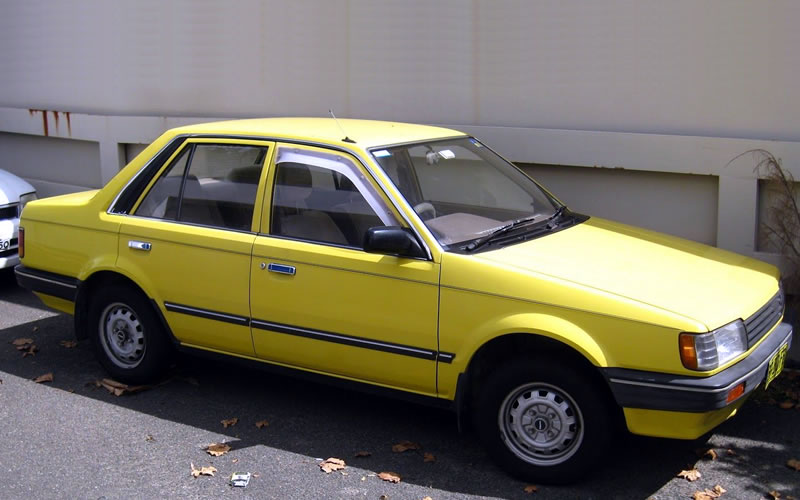
Mazda Familia BD, sedan 
Mazda Familia BD, sedan
On June 2, 1980, the third generation was introduced with the code "BD". This is the first Mazda car with front-wheel drive. In most countries, the model was called "Mazda 323", in North America it was called "Mazda GLC". Developed with the participation of the company Ford, which acquired a stake in Mazda in 1979 and had very similar cars, the Ford Laser and Ford Meteor. In the same year, it received the "Car of the Year in Japan" award. Assembly shops were located in Japan, Colombia, New Zealand and Zimbabwe.

The body styles were 3- and 5-door hatchback (length: 3955 mm, width: 1630 mm, height: 1375 mm) and a 4-door sedan (length: 4155 mm, width: 1630 mm, height: 1375 mm). The equipped weight was 780-830 kg.
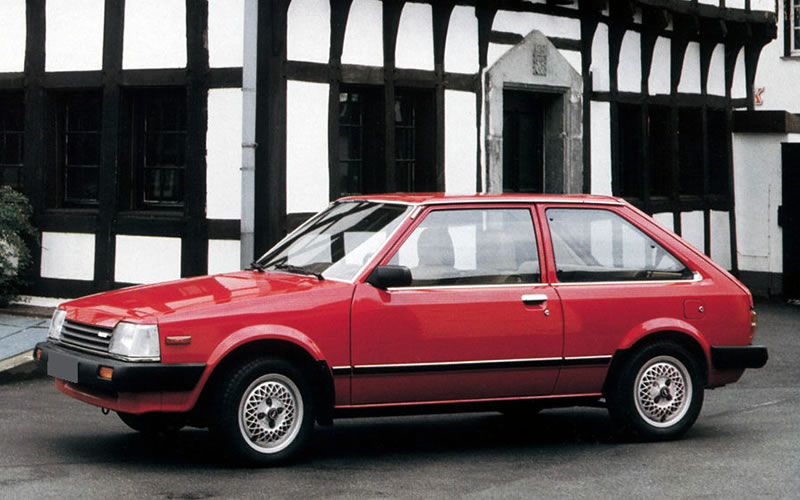
Mazda Familia BD, hatchback 
Mazda Familia BD, hatchback
The new "Mazda E" engines are based on the previous "PC/TC/UC" series and were developed specifically for this generation of Mazda 323. There were three modifications of 1.1-liter "E1" engines in total (1071 cm³, 1 carburetor, 54 hp.), 1.3 liters "E3" (1296 cm³, 2 carburetors, 67 hp.), 1.5 liters "E5" (1490 cm³, 2 carburetors, 74 hp.) and the same volume with the code "E5S" (2x2 carburetors, 87 hp.). All engines are 4-cylinder in-line, petrol. Chassis codes were BD1011/BD1031/BD1051 depending on the installed engine. The gearbox offered was only a 5-speed manual.

Fifth generation (BF, 1985−1989)


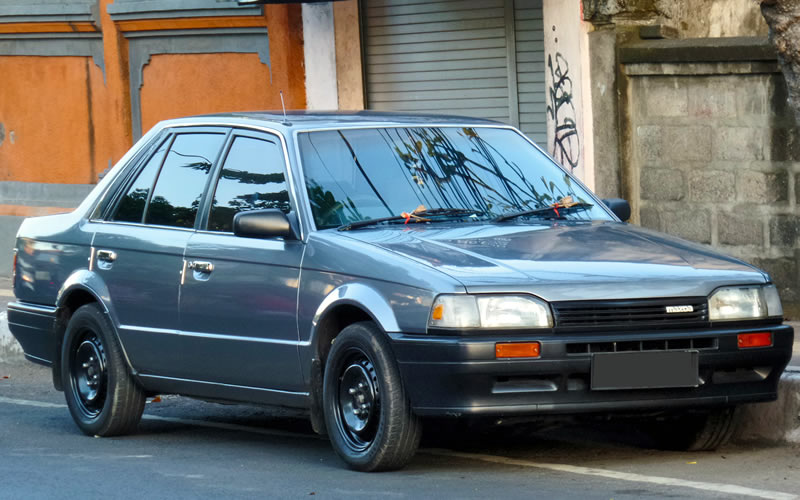
Mazda Familia BF, sedan 
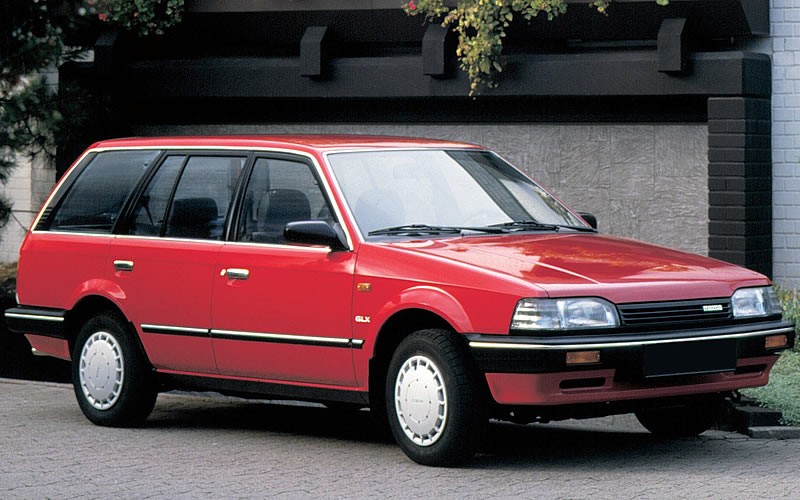
Mazda Familia BF, sedan
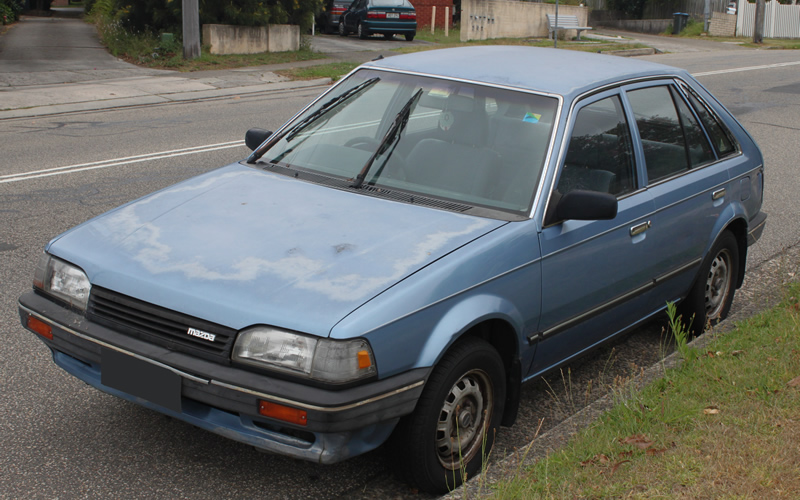
Fifth generation "Familia/323" under the code "BF" was presented in January 1985. At first there were only 4-door sedan, 3- and 5-door hatchback bodies. In November of the same year, a 5-door station wagon appeared, in March 1986, a 2-door convertible was released, and in January 1987, a 2-door coupe with a body was presented. The length of the car was from 4110 mm to 4310 mm, the height was 1390 mm and 1430 mm, the width was 1645 mm. The curb weight was 936 kg. The drive is traditionally on the front wheels, but modifications with all-wheel drive appeared. Assembly was carried out in Japan, Colombia, South Africa, Mexico, Thailand, New Zealand and Zimbabwe.

Mazda Familia BF, wagon 
Mazda Familia BF, wagon
For the first 2 years, the range of petrol 4-cylinder engines was from the previous generation and consisted of the following modifications: 1.1 liter "E1" (1100 cm³, I4, 2 carburetors, 54 hp.), 1.3 liters "E3" (1296 cm³, I4, 2 carburetors, 67 hp.), 1.5 liters "E5" (1490 cm³, I4, 2 carburetors, 84 hp.) and 1.5 liters "E5T" (I4, turbo EGi, 113 hp.). In February 1987, the engine line was updated to a more modern "B" series with updated electronic components. Their characteristics were as follows - 1.3 liters "B3" (1323 cm³, 2 carburetors, 65 hp.), 1.5 liters "B5" (1498 cm³, 2 carburetors, 72 hp.), 1.6 liters "B6" (1597 cm³, 84 hp.), "B6T" (turbo, 16-valve, 138 hp.), "B6D" (DOHC, 16-valve, 108 hp.).

Mazda Familia BF, hatchback 
Mazda Familia BF, hatchback
Gearboxes were equipped with 4- and 5-speed manual or 3-speed automatic "Mazda F3A".

The 1.7-liter "PN" 4-cylinder in-line diesel engine was introduced for the first time (1720 cm³, power 56 hp.). Also in South Africa there were 2.0 liter engines from Mazda 626 (FE-SOHC, 8 valves, 116 hp.) and (FE-DOHC, 16 valves, power 144 hp.). These models also had improved braking and suspension systems. The South African-made models were exported to the UK from 1991 to 1993 under the name "Sao Penza".

Sixth generation (BG, 1989−1994)
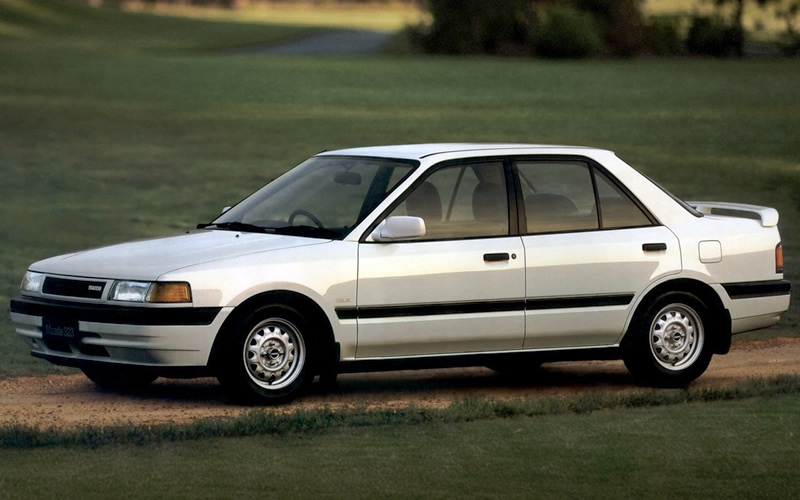


Mazda Familia BG, sedan 
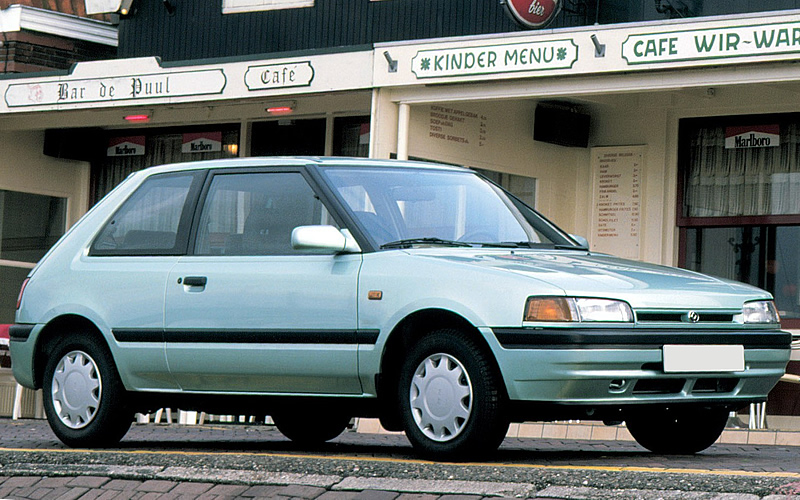
Mazda Familia BG, sedan
In 1989, the sixth generation of the "Familia" with the code "BG" was introduced. In most countries, the car was called "Mazda 323", in North America - "Mazda Protege", in China - "Haima CA7130/CA7160". The body was produced as a 3- or 5-door hatchback (length: 3995-4035 mm) or 4-door sedan (length: 4215-4355 mm). Width (1670-1690 mm) and height (1340-1405 mm) all bodies have the same. The engine is located transversely in front, the torque drive goes to the front wheels or to all wheels. The car was assembled in Japan, China and Thailand.

Mazda Familia BG, hatchback 
Mazda Familia BG, hatchback
The range of petrol engines has the following characteristics:
  • 1.3 liters, 1323 cm³ ("B3", 1989-1991, 8 valves, carburetor, 75 hp) and ("B3", 1991-1994, 8 valves, EGI-S fuel injection, 78 hp)
  • 1.5 liters, 1498 cm³ ("B5-M", 1989-1991, 16 valves, carburetor, 90 hp), ("B5-MI", 1990-1994, 16 valves, EGI-S fuel injection, 93 hp), ("B5-DE", 1989-1991, 16 valves DOHC, EFi fuel injection, 109 hp) and ("B5-DE", 1991-1994, 16 valves DOHC, EFi fuel injection, 113-118 hp)
  • 1.6 liters, 1597 cm³ ("B6", 1989-1991, 8 valves, carburetor, 84 hp) and ("B6", 1989-1994, 16 valves, carburetor, 101 hp)
  • 1.8 liters, 1839 cm³ ("BP", 1989-1994, 16 valves DOHC, Fi fuel injection, 140 hp), ("BPT", 1989-1994, 16 valves DOHC, turbo, Fi fuel injection, 178 hp), ("B8", 1991-1994, 16 valves SOHC, Fi fuel injection, 103 hp) and ("BPD", 1992-1994, 16 valves DOHC, turbo, Fi fuel injection, 207 hp)
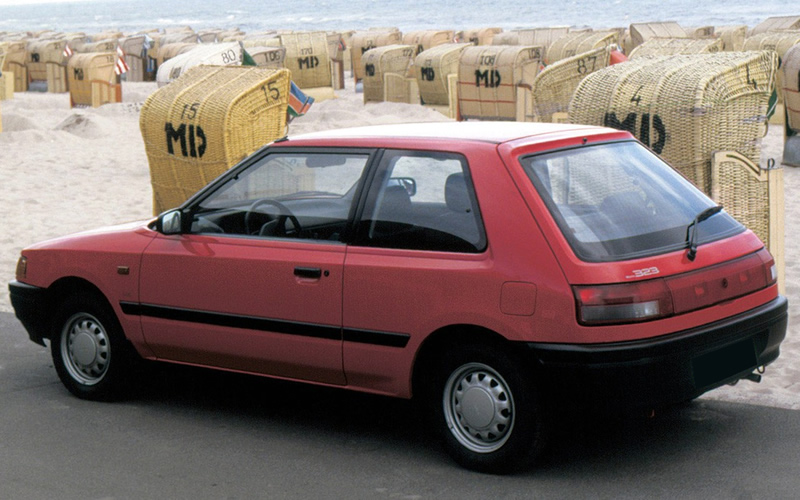
Mazda Familia BG, hatchback, back view 
Mazda Familia BG, hatchback, back view
Also installed was one model of diesel engine with a volume of 1.7 liters (1720 cm³), code "PN", 8 valves, with a power of 56 hp.

The following gearboxes were installed: 3-speed automatic, 4-speed automatic "F4A-EL" and 5-speed manual.

Also in Japan, special luxury sports car models were released under the name "Familia Infini" and "Familia Astina/323F".

Seventh generation (BH, BA, 1994−1998)
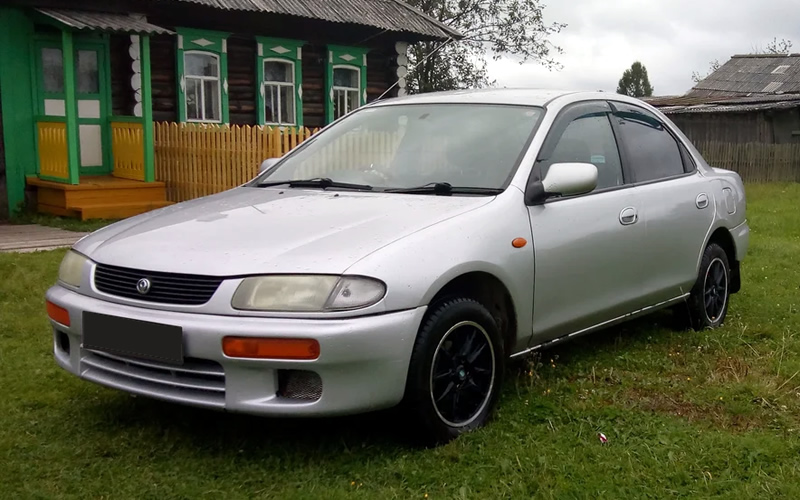


Mazda Familia BH, sedan 
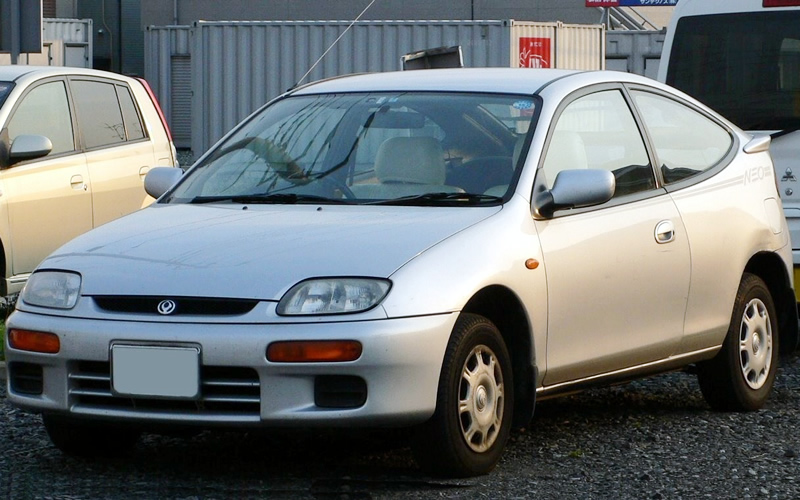
Mazda Familia BH, sedan
The production of the seventh generation with the codes "BH" and "BA" began on August 8, 1994. The most common name remained "Mazda 323", and in different markets there were also names "Allegro" (Colombia), "Artis" (South America), "Lantis" (Japan), "Astina" (Australia, New Zealand) "Protege" (North America) and "Etude" (South Africa). The cars were manufactured in Japan, Columbia, the Philippines, South Africa, Thailand, New Zealand and Zimbabwe. The bodies were as follows - 3- and 5-door hatchback (length: 4155 mm, width: 1670 mm, height: 1370 mm), 4-door sedan (length: 4435-4440 mm, width: 1695-1710 mm, height: 1375 mm) and a 3-door hatchback coupe. The engine is located in the front with front-wheel drive.

Mazda Familia BH, hatchback 
Mazda Familia BH, hatchback
The range of petrol engines is as follows:
  • 1.3 liters, 1324 cm³ ("B3", 1995-1999, 8 valves, 74 hp)
  • 1.5 liters, 1498 cm³ ("Z5", 1994-1998, 16 valves DOHC, fuel injection FI, 89 hp)
  • 1.6 liters, 1597 cm³ ("B6D", 1994-1998, 16 valves DOHC, 108 hp)
  • 1.8 liters, 1839 cm³ ("B8", 1994-1998, 8 valves, 114 hp) and ("BP", 1995-1999, 16 valves DOHC, fuel injection FI, 131 hp)
  • 2.0 liters, 1995 cm³ ("KF", 1994-1996, V6, 24 valves DOHC, 144 hp)

Also installed was one model of a 2.0 liter (1998 cm³) diesel engine, code "RF", 8 valves, with a power of 70 hp.

The following gearboxes were installed: 3-speed automatic, 4-speed automatic F-4EAT or 5-speed manual.

Eighth generation (BJ, 1998−2003)
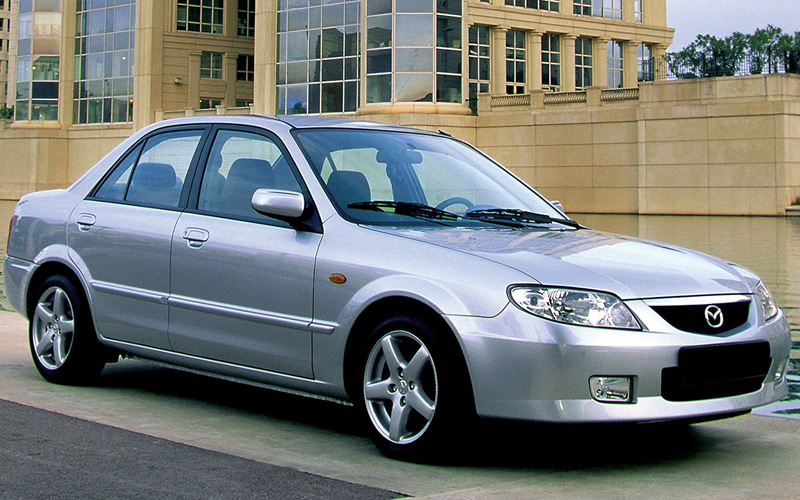


Mazda Familia BJ, sedan 
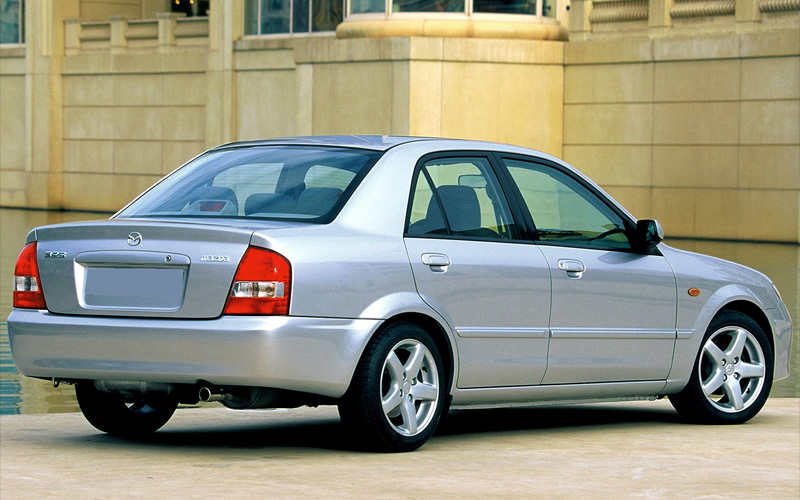
Mazda Familia BJ, sedan
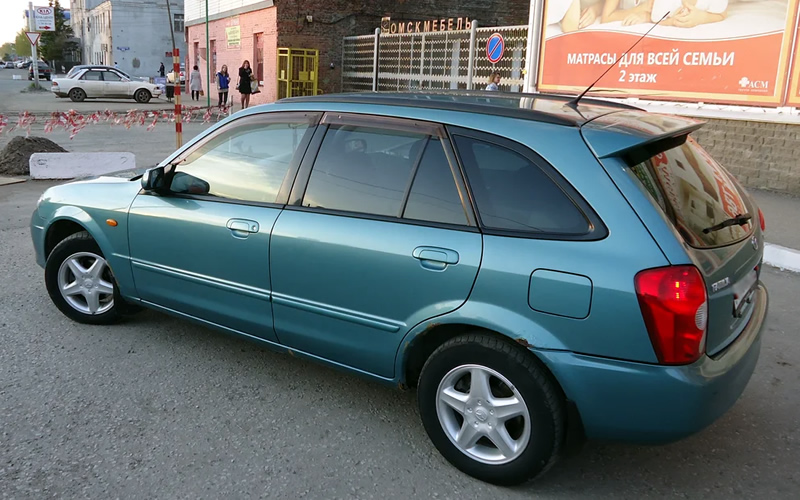
The last generation of the "Familia" was released in September 1998 under the code "BJ" as a 1999 model. In most countries, the most common name was also "Mazda 323", as well as other names in different countries - "Protege" (North America), "Isamu Genki" (Taiwan), "Allegro" (Colombia), "Ford Activa", "Ford Lynx", "Ford Laser", as well as "Haima" and "Haima Happin" (China). There were three body styles in total - a 4-door sedan (length: 4315 mm, width: 1695 mm, height: 1410 mm), 5-door hatchback (length: 4250 mm, width: 1695 mm, height: 1420 mm) and station wagon (length: 4265 mm, width: 1695 mm, height: 1470 mm). The engine is located at the front with front-wheel drive. The car was assembled in Japan, South Africa, Colombia, Iran, Thailand and Zimbabwe.

Mazda Familia BJ, sedan, back view 
Mazda Familia BJ, sedan, back view
The range of petrol engines is very large and includes the following modifications:
  • 1.3 liters, 1324 cm³, B3- ME SOHC I4, 73 hp.
  • 1.5 liters, 1498 cm³, ZL -DE DOHC I4, 110 hp.
  • 1.5 liters, 1498 cm³, ZL-VE S-VT I4, 130 hp.
  • 1.6 liters, 1598 cm³, ZM-DE DOHC I4, 105 hp.
  • 1.8 liters, 1839 cm³, FP -DE DOHC I4, 122 hp.
  • 2.0 liter, 1991 cm³, FS DOHC I4, 130 hp.
  • 2.0 liter, 1991 cm³, FS-ZE DOHC I4 (Sport 20), 170 hp.

Also installed was one diesel engine with a volume of 2.0 liters (1998 cm³), code "RF", 8 valves, with a power of 70 hp.

The following modifications of gearboxes were installed: 4-speed automatic "F-4EAT" or "4F27E", 5-speed manual, and also on the Chinese market there was a continuously variable transmission or variator (CVT).
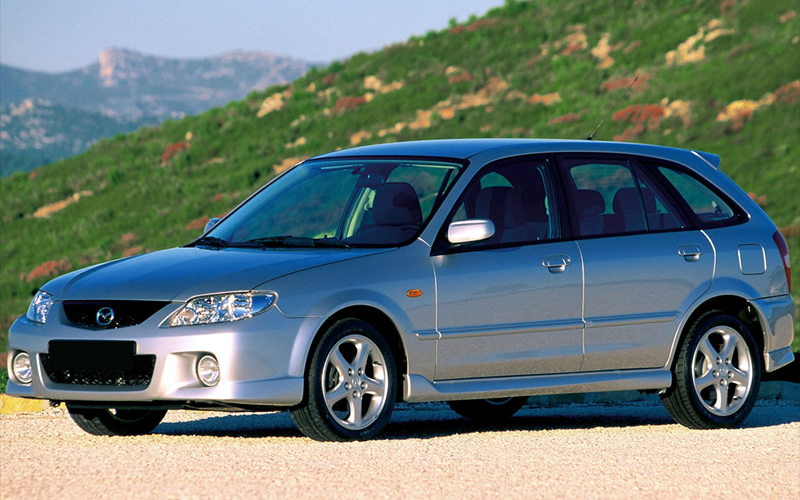
Mazda Familia BJ, wagon 
Mazda Familia BJ, wagon
Mazda Familia BJ, wagon, back view 
Mazda Familia BJ, wagon, back view
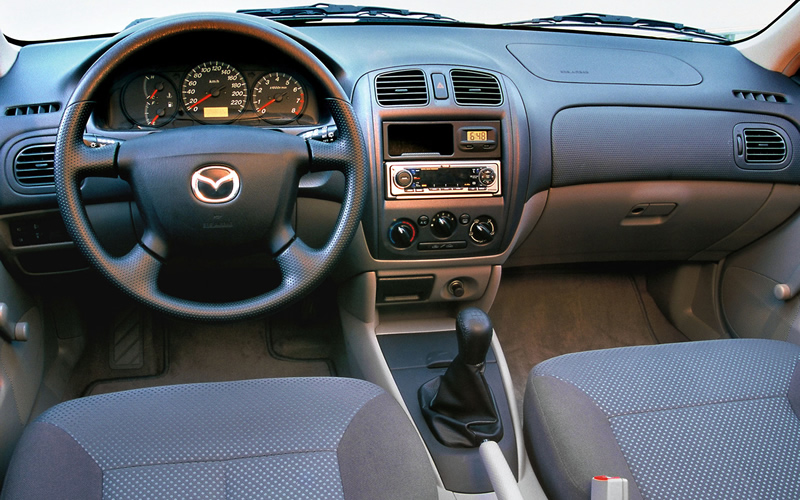
Mazda Familia BJ, interior 
Mazda Familia BJ, interior
Share with friends on social networks:
Link in different formats to this article
TEXTHTMLBB Code
Familia 6 (1989-1994) 
  • General information
  • Introduction to guide
  • User manual
  • Maintenance
  • Power unit
  • Petrol engines
  • Diesel engines
  • Lubrication system
  • Cooling system
  • Ignition system
  • Supply system
  • Carburetor
  • Injection system
  • Exhaust system
  • Transmission
  • Clutch
  • Car gearbox
  • Chassis
  • Front suspension
  • Rear suspension
  • Steering
  • Brake system
  • Wheels and tires
  • Body
  • Body elements
  • Doors and windows
  • Body Care
  • Electrical equipment
  • Equipment and devices
  • Power devices
  • Heating system
  • Lighting and headlights
  • Windshield wipers and washers
  • Wiring diagrams (since 1987)
  • Wiring diagrams (since 1991)
Familia 5 (1985-1989) 
  • General information
  • Vehicle data
  • Model «E» engine
  • Engine repair
  • Cooling and lubrication system
  • Power and ignition system
  • Model «B» engine
  • Engine repair
  • Cooling and lubrication system
  • Ignition system
  • Power system (carburetor)
  • Power system (injector)
  • Transmission
  • Clutch
  • Mechanical gearbox
  • Automatic gearbox
  • Front wheel drive
  • Chassis
  • Steering
  • Front suspension
  • Rear suspension
  • Brake system
  • Electrical equipment
  • Equipment and devices
  • Electrical circuits
  • Wiring diagrams (station wagon)
MazBook.ru © 2018–2025 · Mobile version · Articles and news · Sitemap: EN BG BY UA RS HR RO PL SK HU · Feedback · Site search · Add to bookmarks Familia 5 (BF) · Familia 6 (BG) · Capella 3 (GC) · Capella 3 and 4 (GC) · Capella 5 (GE) · Capella 6 (GF) · Mazda3 BK · Mazda6 GG · CX-5KE · Mazda 121 (3) · Mazda BT-50 (1) ·