


Description of cars Mazda: 121, Bongo, BT-50
Mazda 121 ↓ • Mazda Bongo ↓ • Mazda BT-50 ↓
Name Mazda 121 used for various Mazda Motor vehicles produced since 1975 By 2003 years under different names:
In 2001, the car was completely replaced by the Mazda2 model.
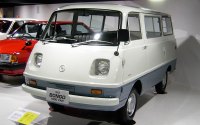
Mazda Bongo F1000 Van
Mazda Bongo is a light commercial vehicle with a van or pickup truck body, produced from 1966 year and present time Japanese automaker Mazda Motor. Also It has the following names − Mazda E-Series, Mazda Access, Mazda Marathon, Ford Econovan, Ford Freda, Ford Spectron, Nissan Vanette Van/Truck (Bongo III and IV generation) and Mitsubishi Delica (Bongo IV generation). The car was assembled in Japan (Hiroshima), Malaysia (Shah Alam), Taiwan (Taoyuan) and Zimbabwe. In total, the car survived four generations.
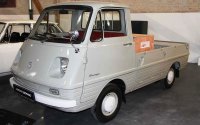
Mazda Bongo F1000 Pickup
In May 1966, Mazda introduced its small van with the name «Bongo». The four-cylinder four-stroke engine with the OHV gas distribution system was 0.8 liters (782 cm3), located at the rear with rear wheel drive. Since 1968, two versions of the car have been produced - F800 and F1000. The second had a more powerful 1.0 liter engine (987 cm3) 47 hp These engines were also installed on cars «Mazda Familia» first generation. There were electrically powered prototypes with a range of 60 km.
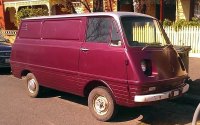
Mazda Bongo F800 Van
Production ended in 1975 due to Mazda's severe economic problems and new, stricter emissions regulations that came into effect from 1976. For 10 years of release, Bongo has retained its appearance.
The car turned out to be very high-torque due to the gearbox with a reduced gear ratio and could easily carry 1.5 tons. Due to the body's susceptibility to rust and poor maintenance, it's extremely unlikely to see a complete Bongo today.
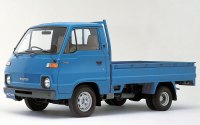
Mazda Bongo 1977-1980 Pickup
In September 1977, Mazda resumed production «Bongo», introducing the second generation of this van. The engine in it was located in the middle of the car with rear-wheel drive. Depending on the size of the engine, its modifications were called «E1300», «E1400» And «E1600». Ford sold this car under the name «Econovan». In 1980, a modification appeared «E2200» with a 2.2 liter engine. The Korean company Kia also produced this van under the name «Kia Bongo» And «Kia Ceres». Kia produced this van until 1999 with minor improvements.
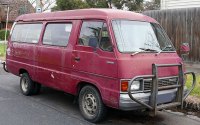
Mazda Bongo 1981-1983 Van
The range of engines has the following characteristics:
The original exterior design features round headlights and a grille, followed by a facelift in 1981 with rectangular headlights and a more traditional grille.
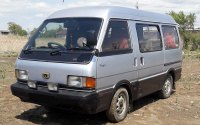
Mazda Bongo 1985 Van
In 1983, the third generation of Bongo was released, which received updated engines and was also called «Mazda E-series». Ford sold this car under the names «Spectron» (passenger) or «Econovan» And «J80» (cargo). Since 1994, Nissan has also sold this car under the name «Vanette». In South Korea, the car was sold under the name «Kia Wide Bongo».
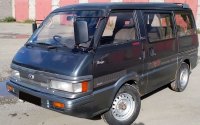
Mazda Bongo 1991 Van
Gasoline engines had three modifications of the following characteristics - 1.4 liters (1415 cm3, UC), 1.8 liters (1789 cm3, F8) and 2.0 liters (2000 cm3, FE). There were two modifications of diesel engines with a volume of 2.0 liters (1998 cm3, RF-T) and 2.2 liters (2209 cm3, R2). The transmission was a 5-speed manual or 4-speed automatic.
There was also a model with an extended base called «Bongo Brawny». Ford sold it under the name «Econovan Maxi». In Korea, the car was called «Kia Wide Bongo» (truck) And «Kia Besta» (passenger).
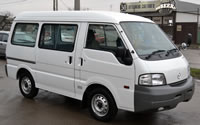
Mazda Bongo 2004 Van
In 1999, the fourth and final generation of the Bongo van and truck was released. In different countries, the car was called as «Mazda E-series», «Ford Econovan», «Mitsubishi Delica» And «Nissan Vanette». Gathered on the platform «SK», which is based on the previous generation platform «SS/SE». In 2018, Mazda stopped production of these vehicles, focusing on the production of light passenger vehicles. Two engines were available - petrol 1.8 litas (1798 cm3, 95 and 102 hp) and diesel 2.0 liters (1998 cm3, 86 hp).
From 1999 to 2010, an extended version of the car was produced called «Bongo Brawny».
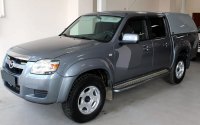
Mazda BT-50 2007
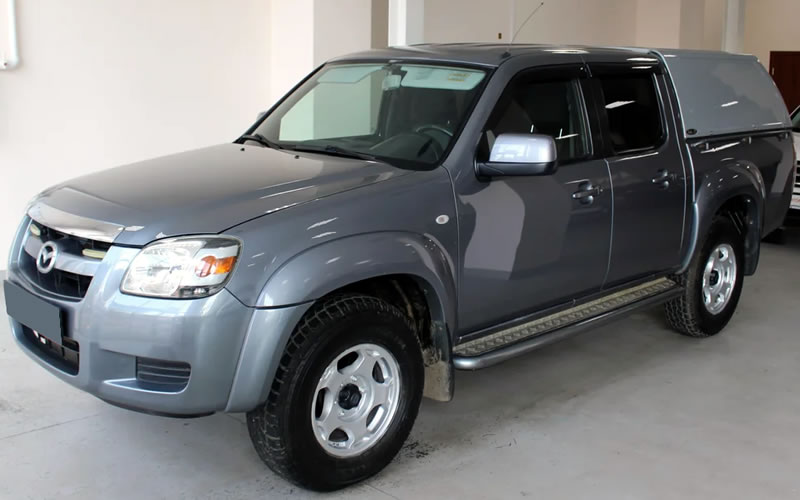
Mazda BT-50 - mid-size pickup truck, produced with 2006 year on present time Japanese automaker Mazda Motor. Not manufactured or sold in Japan. Came to replace pickups «B-Series». Until 2011, Ford also marketed the first generation version of the BT-50 as «Ford Ranger» and like an SUV «Ford Everest». The engine is located in front longitudinally, the drive is carried out on all wheels or only on the rear wheels. The body is 2-door and 4-door. In total, two generations of these pickups were produced.
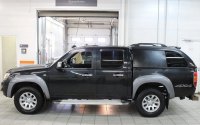
Mazda BT-50 2007 side view
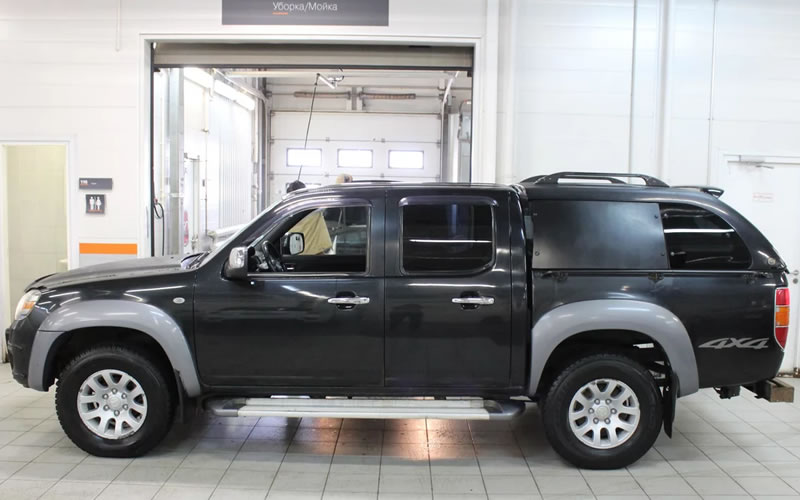
In March 2006, the pickup truck was presented to the public at the Bangkok Motor Show. The body was produced in three versions - a single-row cab with two seats and two doors, a four-seater short cab with two doors and a four-seater long cab with four doors. The length of the body was 5170 mm, width 1804 mm and height 1762 mm. The curb weight was 1763-1878 kg. The car was assembled in Thailand, Colombia, Zimbabwe, South Africa, Vietnam and China.
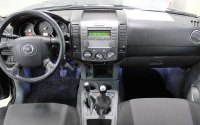
Mazda BT-50 2007 interior
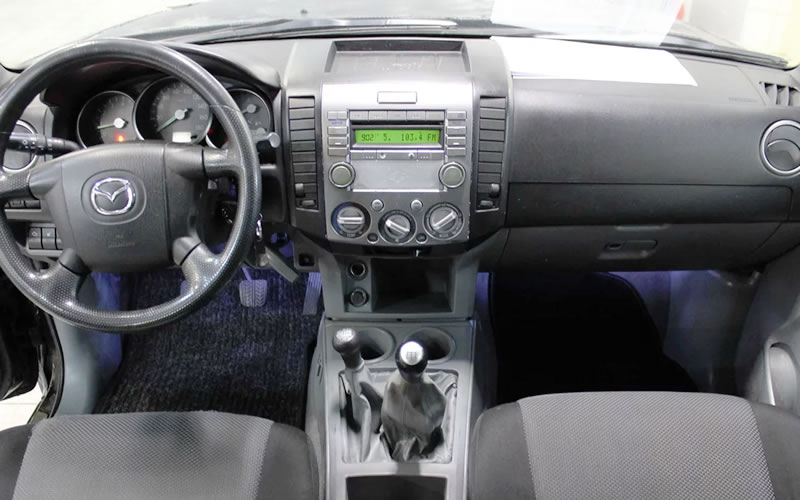
Engines installed only diesel «MZR-CD» 2.5 liters (2499 cm3, I4 Duratorq TDCi, 143 hp) and 3.0 liters (2953 cm3, I4 Duratorq TDCi, 156 hp). Transmissions 5-speed manual or automatic. Cars with petrol engines of 2.2 and 2.6 liters were delivered to the countries of Central and South America.
In the first quarter of 2008, the BT-50 received a slight restyling.
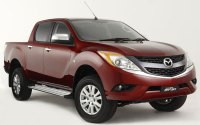
Mazda BT-50 2012
The second generation was shown at the Australian International Motor Show in October 2010. The car is based on a platform «Ford Ranger (T6)». Body shapes are the same as in the first generation, but the dimensions of the car have increased significantly. Length is 5359 mm, width 1849 mm, height 1741-1856 mm. The curb weight is 1708-2051 kg. In 2015, they carried out a minor cosmetic restyling.
Engines installed only diesel Duratorq «MZ-CD» 2.2 liters (2198 cm3, four-cylinder I4, 153 hp) and 3.2 liters (3198 cm3, five-cylinder I5, 185 hp). Transmissions 6-cylinder automatic or manual.
Mazda 121
Name Mazda 121 used for various Mazda Motor vehicles produced since 1975 By 2003 years under different names:
- 1975-1981 - the second generation of a sports car «Mazda Cosmo» with a 1.8-liter piston engine with a capacity of 100 hp. (he is «Mazda RX-5», but with rotary engine).
- 1988-1991 - the first generation of a subcompact car «Ford Festiva» with a body 3-door hatchback.
- 1991-1998 - subcompact four-door sedan «Autozam Revue», which was later renamed to «Mazda Revue». Engines of 1.1, 1.3 and 1.5 liters were installed on the car.
- 1996-2002 - the first generation of a subcompact car «Mazda Demio» (in the countries where it was delivered «Ford Fiesta» this car is not for sale). The body was in the form of a 5-door hatchback, the engines were 1.3 and 1.5 liters.
- 1996-2002 - Auto-rebadged version of the fourth generation of a subcompact car «Ford Fiesta», sold in some European markets. The body was in the form of a 3 or 5 door hatchback.
In 2001, the car was completely replaced by the Mazda2 model.
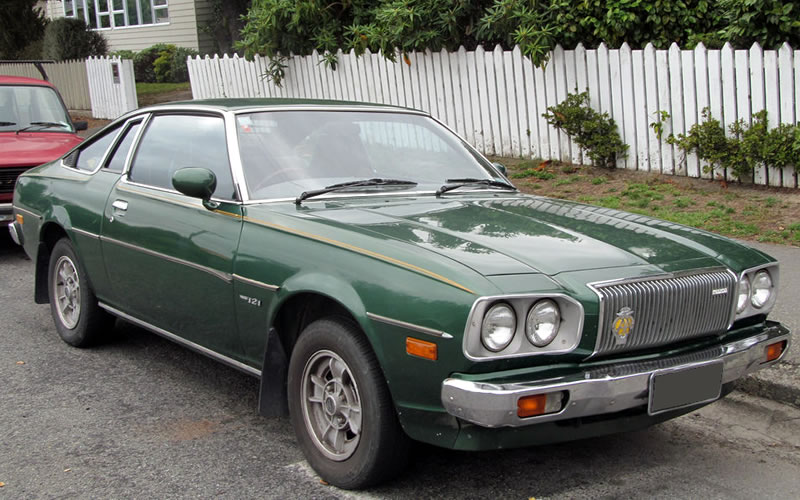 Mazda Cosmo CD 1975-1981 | 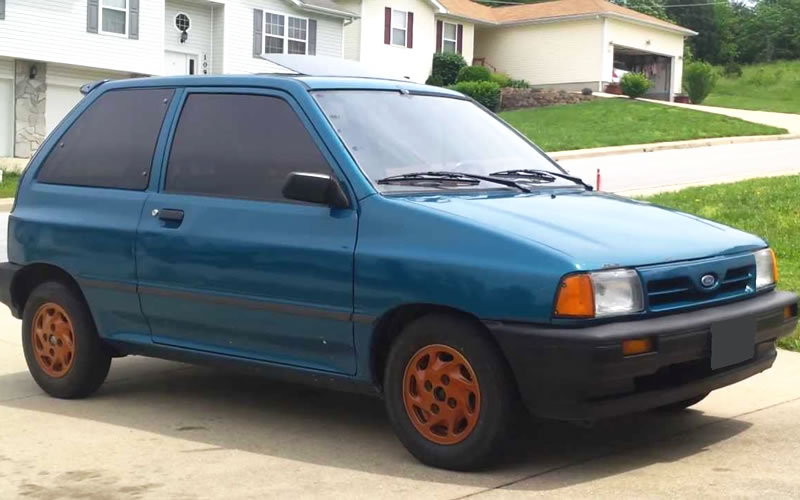 Ford Festiva WA 1988-1991 | 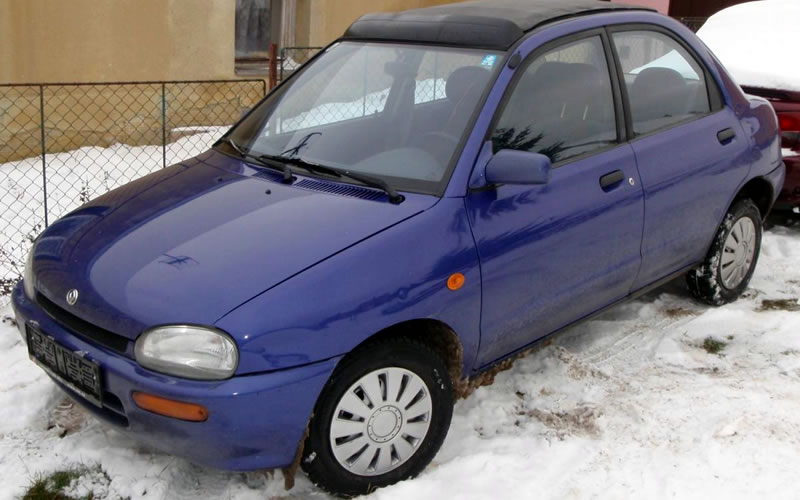 Autozam Revue 1991-1998 |
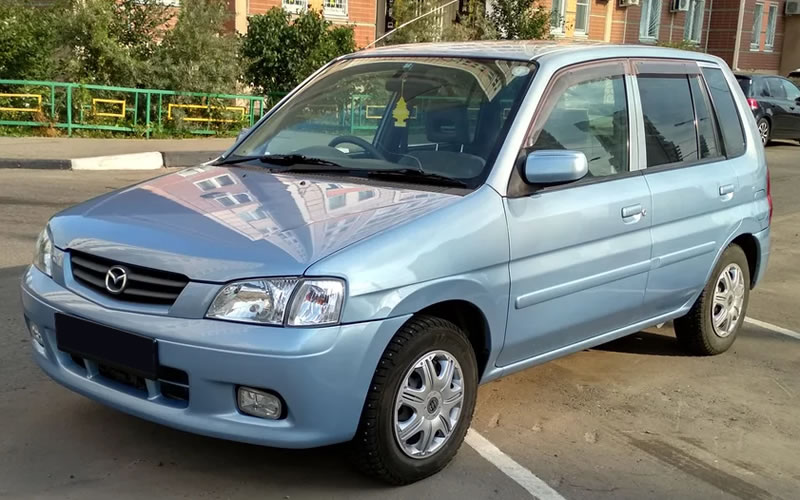 Mazda Demio DW 1996-2002 | 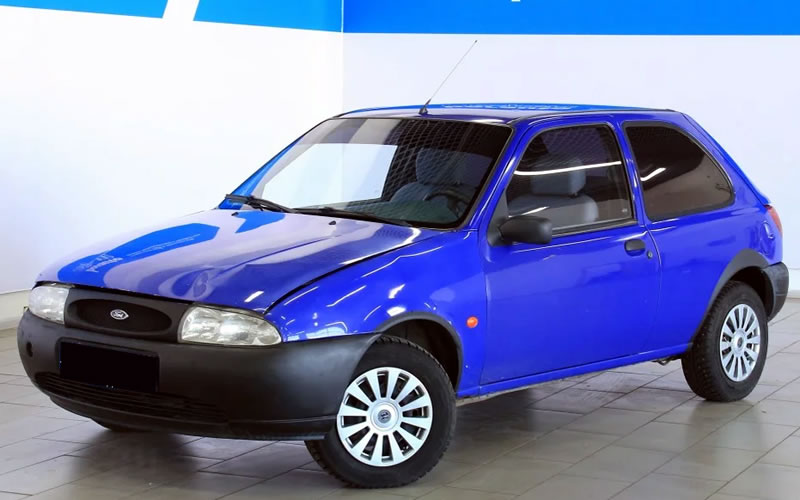 Ford Fiesta Mk4, 3-door | 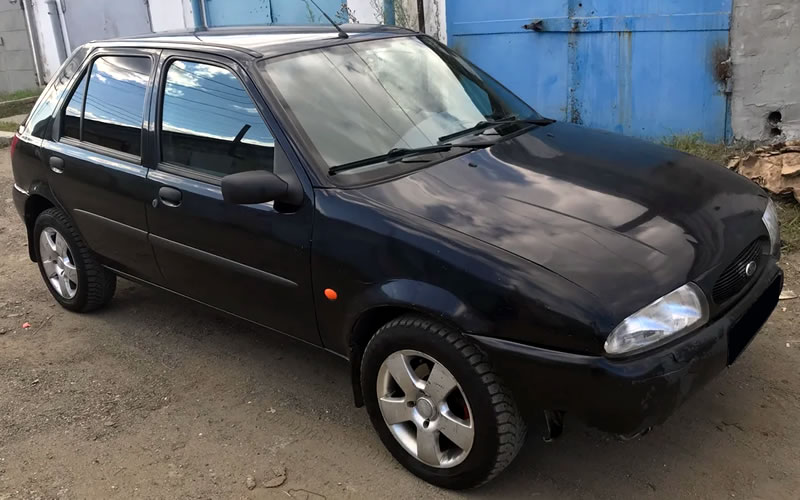 Ford Fiesta Mk4, 5-door |
Mazda Bongo
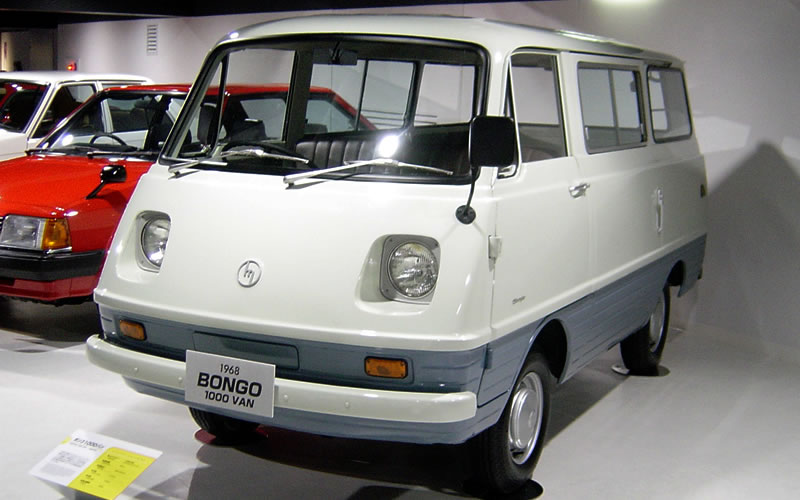
Mazda Bongo F1000 Van
First generation (1966−1975)
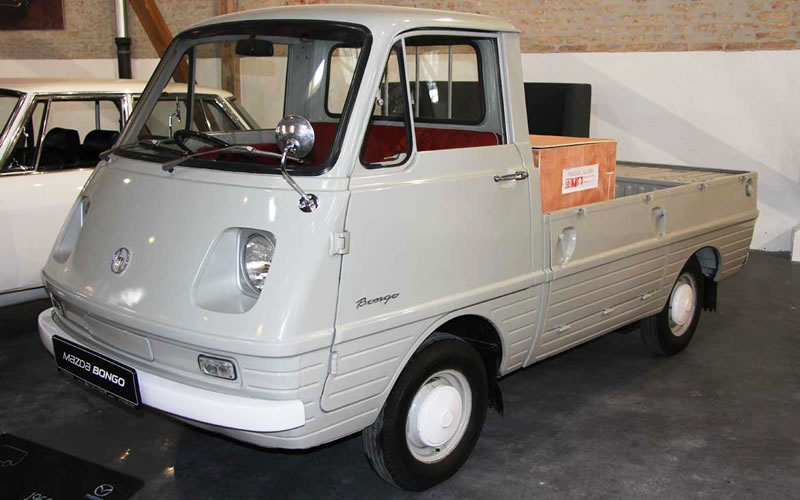
Mazda Bongo F1000 Pickup
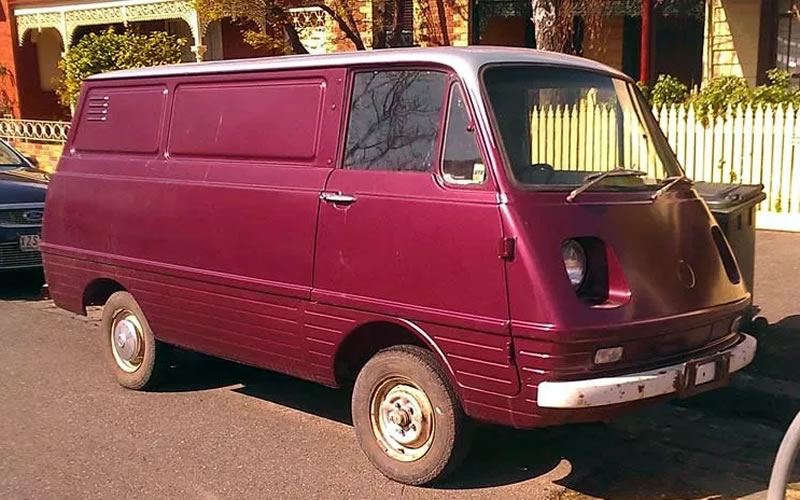
Mazda Bongo F800 Van
The car turned out to be very high-torque due to the gearbox with a reduced gear ratio and could easily carry 1.5 tons. Due to the body's susceptibility to rust and poor maintenance, it's extremely unlikely to see a complete Bongo today.
Second generation (1977−1983)
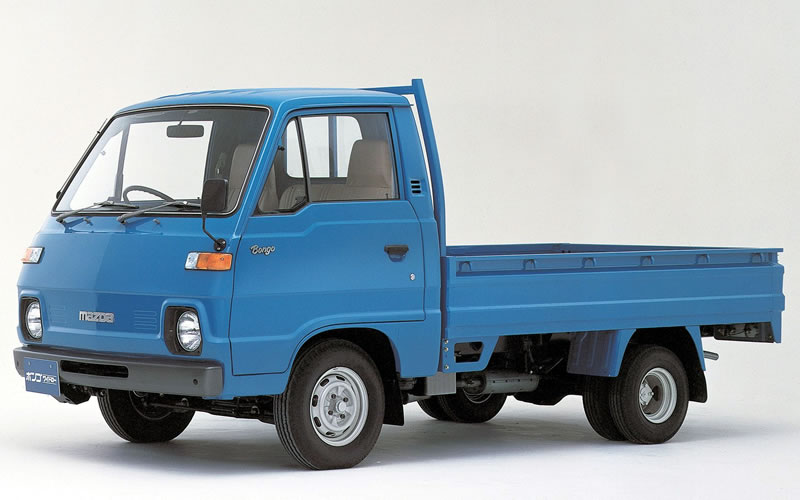
Mazda Bongo 1977-1980 Pickup
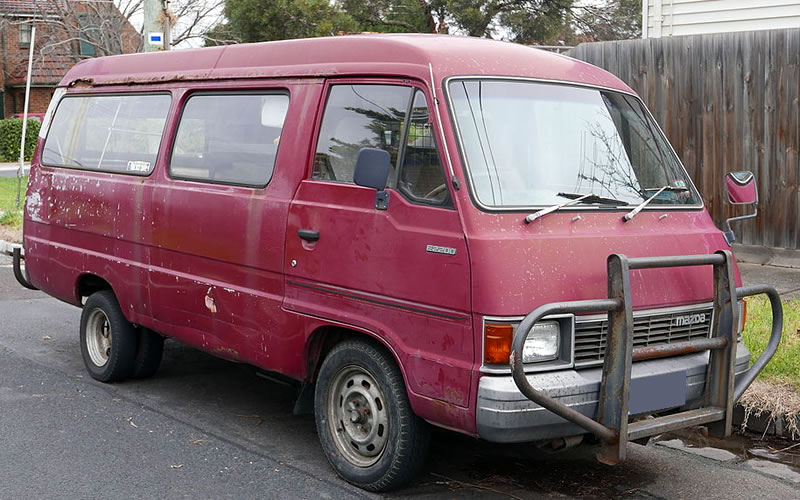
Mazda Bongo 1981-1983 Van
- 1.3 liters (1272 cm3, TC, 60 hp) from 1977 to 1979.
- 1.4 liters (1415 cm3, UC, 70 hp) from 1979 to 1980.
- 1.6 liters (1586 cm3, NA, 80 hp) from 1978 to 1982.
- 2.2 liters (2209 cm3, S2, diesel, 65 hp) from 1980 to 1983.
The original exterior design features round headlights and a grille, followed by a facelift in 1981 with rectangular headlights and a more traditional grille.
Third generation (1983−1999)
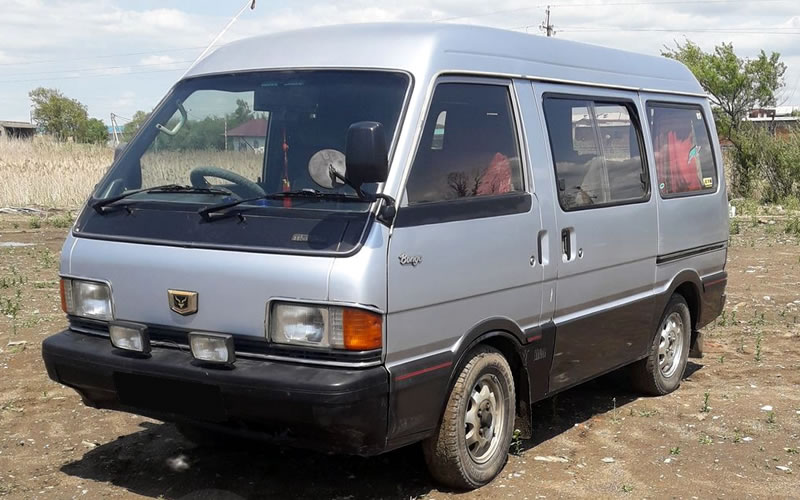
Mazda Bongo 1985 Van
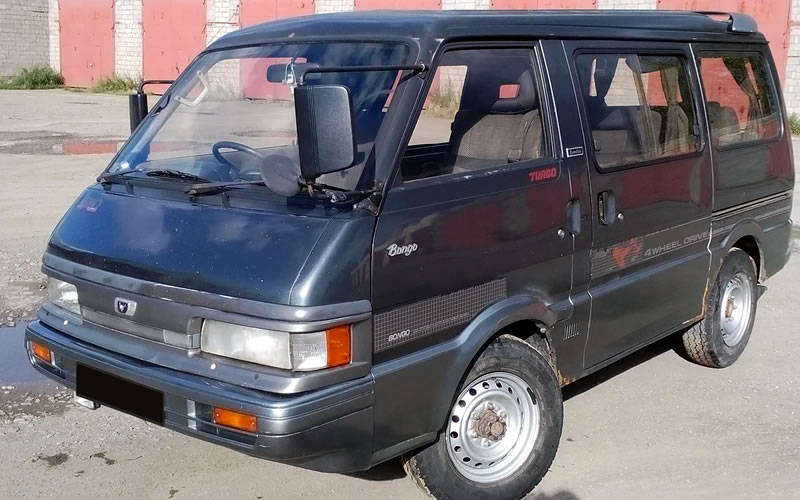
Mazda Bongo 1991 Van
There was also a model with an extended base called «Bongo Brawny». Ford sold it under the name «Econovan Maxi». In Korea, the car was called «Kia Wide Bongo» (truck) And «Kia Besta» (passenger).
Fourth generation (1999−2018)
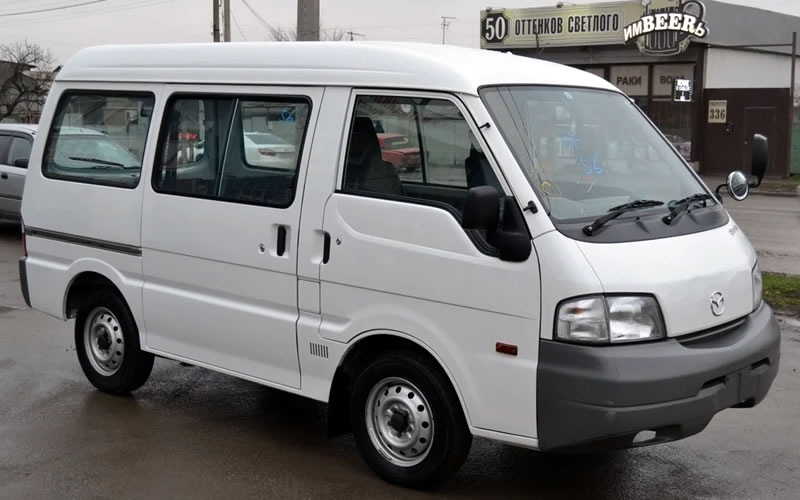
Mazda Bongo 2004 Van
From 1999 to 2010, an extended version of the car was produced called «Bongo Brawny».
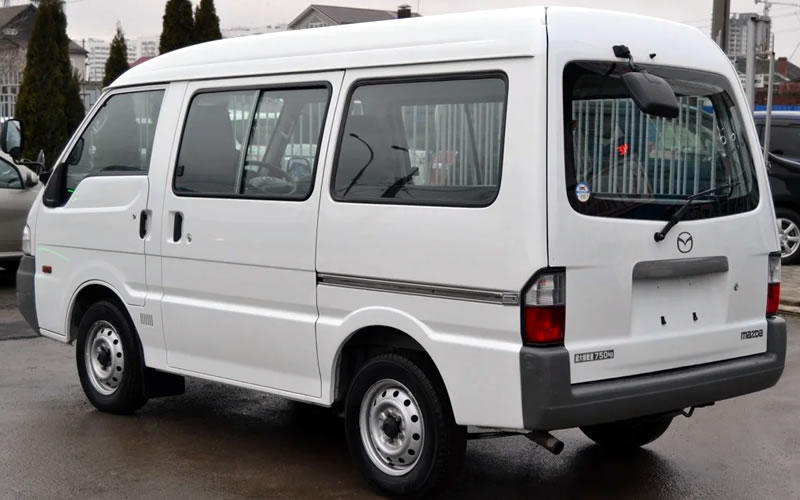 Mazda Bongo 2004 back view | 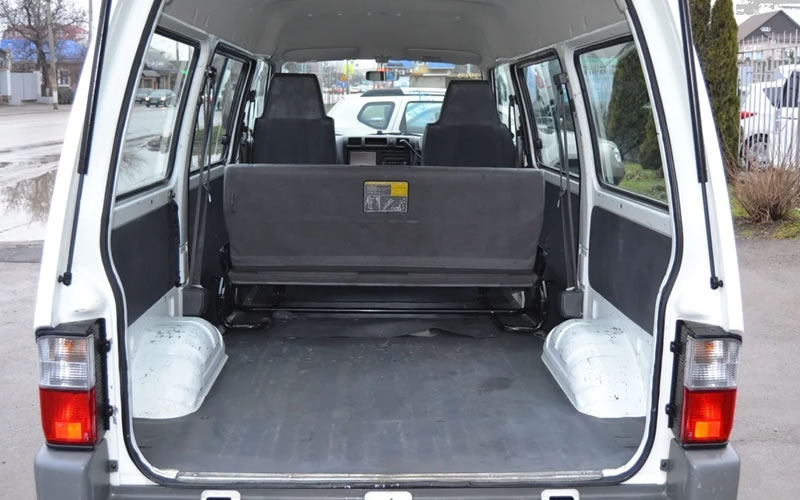 Mazda Bongo 2004 interior | 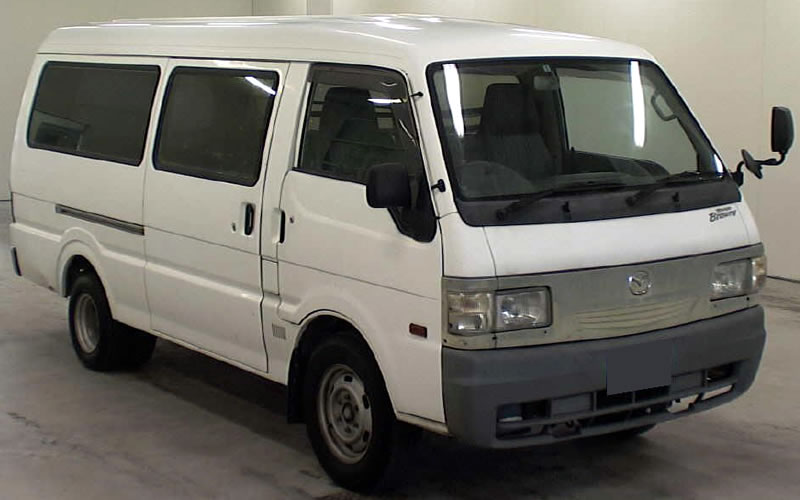 Bongo Brawny 2006 |
Mazda BT-50
Mazda BT-50 2007
First generation (J97M, 2006−2011)
Mazda BT-50 2007 side view
Mazda BT-50 2007 interior
In the first quarter of 2008, the BT-50 received a slight restyling.
Second generation (UP, UR, 2011-present)
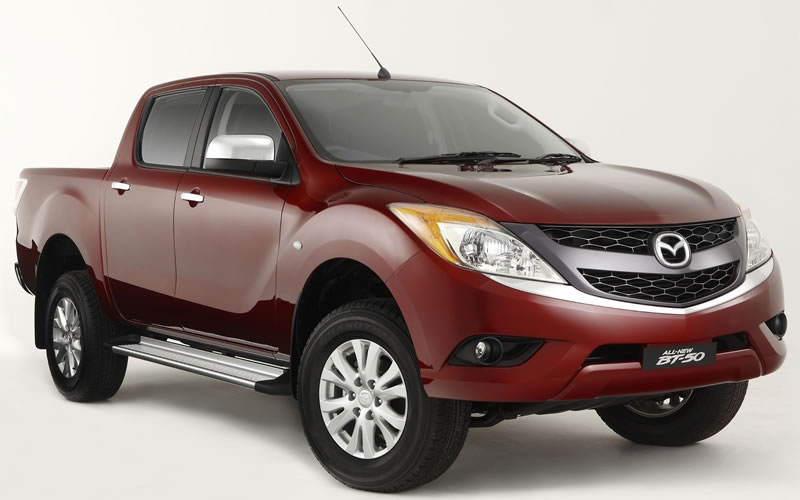
Mazda BT-50 2012
Engines installed only diesel Duratorq «MZ-CD» 2.2 liters (2198 cm3, four-cylinder I4, 153 hp) and 3.2 liters (3198 cm3, five-cylinder I5, 185 hp). Transmissions 6-cylinder automatic or manual.
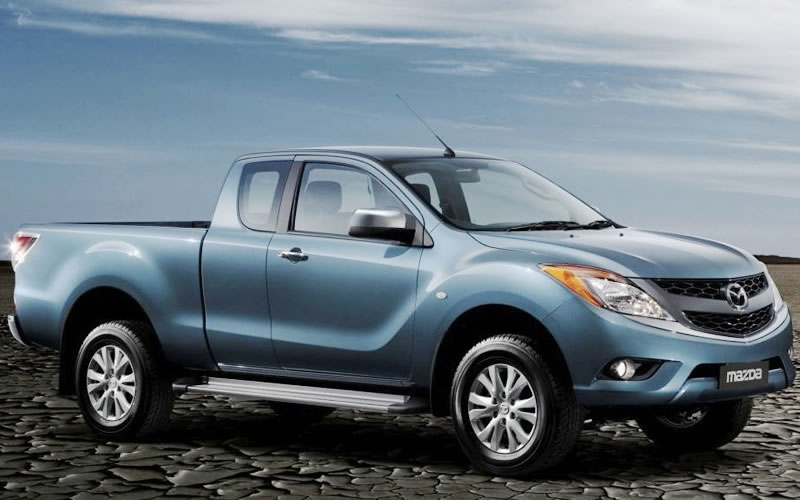 Mazda BT-50 2012 2-door | 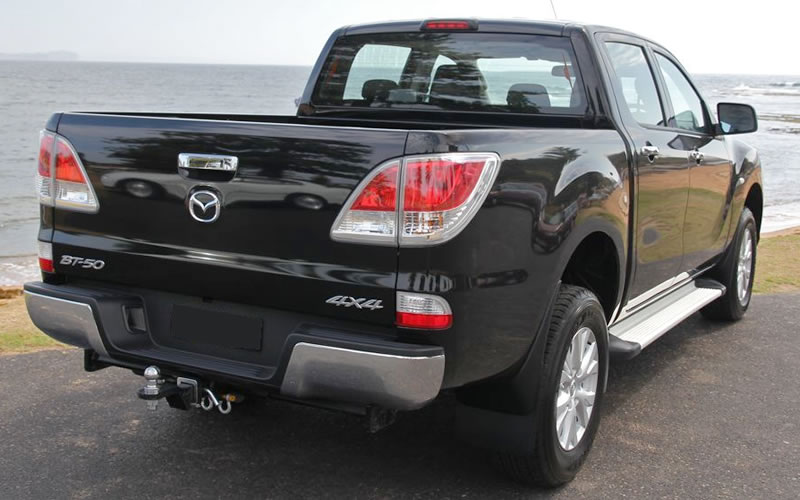 Mazda BT-50 2012 back view | 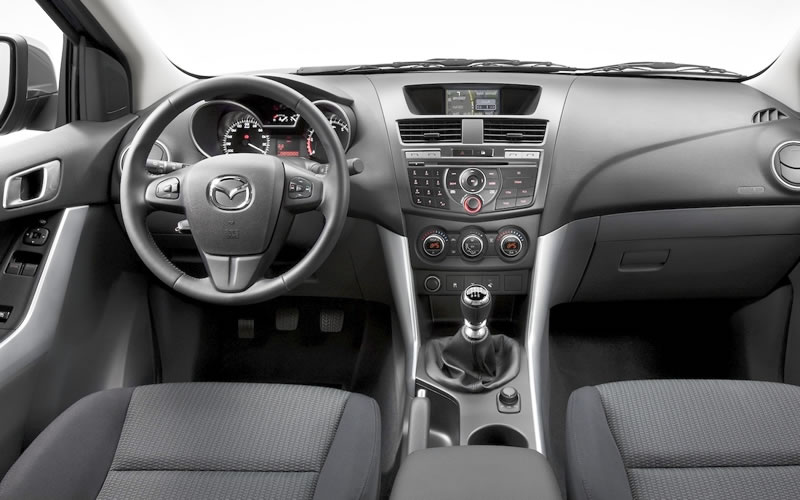 Mazda BT-50 2012 interior |
Link in different formats to this article
TEXTHTMLBB Code
- General information
- Introduction to guide
- User manual
- Maintenance
- Power unit
- Engine repair (diesel)
- Cooling and lubrication system
- Fuel injection system
- Intake and exhaust system
- Engine electrical equipment
- Transmission
- Clutch
- Mechanical gearbox
- All-wheel drive system
- Transfer case and gearboxes
- Chassis
- Front suspension
- Rear suspension
- Steering
- Brake system
- Body
- Exterior (external elements)
- Interior (internal elements)
- Heating and air conditioning
- Security system SRS
- Electrical equipment
- Equipment and devices
- Electrical circuits
- General information
- User manual
- Maintenance
- Power unit
- Petrol engine 1.3 l
- Petrol engine 1.25/1.4 l
- Diesel engine
- Lubrication system
- Cooling system
- Ignition system
- Supply system
- Fuel injection (gasoline)
- Fuel injection (diesel)
- Exhaust system
- Transmission
- Clutch
- Car gearbox
- Chassis
- Front suspension
- Rear suspension
- Steering
- Brake system
- Wheels and tires
- Body
- Exterior (external elements)
- Interior (internal elements)
- Doors, windows and locks
- Heating system
- Electrical equipment
- Troubleshooting
- Equipment and devices
- Lighting system
- Power devices
- Electrical circuits
MazBook.ru © 2018–2024 · Mobile version · Articles and news · Sitemap: EN BG BY UA RS HR RO PL SK HU · Feedback · Site search · Add to bookmarks
Familia 5 (BF) · Familia 6 (BG) · Capella 3 (GC) · Capella 3 and 4 (GC) · Capella 5 (GE) · Capella 6 (GF) · Mazda3 BK · Mazda6 GG · CX-5KE · Mazda 121 (3) · Mazda BT-50 (1) ·