


Diesel car engine Mazda BT-50 1

Engine Description
The WL engine is an in-line, four-cylinder, 16-valve diesel engine with overhead camshafts and liquid cooling. The engine displacement is 2.5 liters. The cylinders are...
The WL engine is an in-line, four-cylinder, 16-valve diesel engine with overhead camshafts and liquid cooling. The engine displacement is 2.5 liters. The cylinders are...

Cylinder block
The cylinder block is cast from cast iron. The thickness of the cylinder block walls is reduced, and the rigidity of the cylinder block is increased by increasing its...
The cylinder block is cast from cast iron. The thickness of the cylinder block walls is reduced, and the rigidity of the cylinder block is increased by increasing its...
Crankshaft
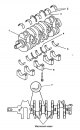
The crankshaft is steel, five-bearing with eight counterweights installed on the continuation of the crankshaft cheeks. Oil is supplied to the crankshaft main journals...
The crankshaft is steel, five-bearing with eight counterweights installed on the continuation of the crankshaft cheeks. Oil is supplied to the crankshaft main journals...

Cylinder head
To reduce vibration and improve noise insulation, the cylinder head cover is made of aluminum alloy. An oil separator is installed in the lower part of the cover to...
To reduce vibration and improve noise insulation, the cylinder head cover is made of aluminum alloy. An oil separator is installed in the lower part of the cover to...

Connecting rods and pistons
The connecting rods of this engine are forged from manganese steel. In the cover of the lower connecting rod preparation, installation pins are made for the correct...
The connecting rods of this engine are forged from manganese steel. In the cover of the lower connecting rod preparation, installation pins are made for the correct...

Cooling system
These engines use a closed-type liquid cooling system with forced circulation of the coolant. The coolant pump is driven by a drive belt of the attachment units. The...
These engines use a closed-type liquid cooling system with forced circulation of the coolant. The coolant pump is driven by a drive belt of the attachment units. The...

Lubrication system
The engine uses a lubrication system with full-flow oil purification and oil supply under pressure to the main moving parts and units of the engine. Gear-type oil pump....
The engine uses a lubrication system with full-flow oil purification and oil supply under pressure to the main moving parts and units of the engine. Gear-type oil pump....

Air intake system
The air intake system is used to supply air to the engine cylinders. The system consists of an air intake, an air filter housing, a turbocharger, a drive and flaps of...
The air intake system is used to supply air to the engine cylinders. The system consists of an air intake, an air filter housing, a turbocharger, a drive and flaps of...

Exhaust and emission control system
The exhaust system serves to clean the cylinders from combustion products of the fuel-air mixture. The exhaust system has a number of elements and systems to reduce the...
The exhaust system serves to clean the cylinders from combustion products of the fuel-air mixture. The exhaust system has a number of elements and systems to reduce the...

Fuel system
The new generation WL engine is equipped with a Bosch Common Rail fuel injection system. The main functions of the system are optimal and correct control of the diesel...
The new generation WL engine is equipped with a Bosch Common Rail fuel injection system. The main functions of the system are optimal and correct control of the diesel...

Checking and adjusting thermal clearances in the valve drive
1. Remove the engine trim panel. 2. Remove the following parts so that the crankshaft can be turned. a) Remove the accessory drive belt (see chapter " Maintenance and...
1. Remove the engine trim panel. 2. Remove the following parts so that the crankshaft can be turned. a) Remove the accessory drive belt (see chapter " Maintenance and...

Timing Belt — Removal and Installation
1. Remove the engine trim panel. 2. Disconnect the cable from the negative terminal of the battery. 3. Remove the parts in the order they are numbered in the figure...
1. Remove the engine trim panel. 2. Disconnect the cable from the negative terminal of the battery. 3. Remove the parts in the order they are numbered in the figure...

Removal and installation the cylinder head
Attention: Fuel vapors are very dangerous. They are highly flammable and can cause serious injury and damage. There should be no sparking objects or open flames in the...
Attention: Fuel vapors are very dangerous. They are highly flammable and can cause serious injury and damage. There should be no sparking objects or open flames in the...
Disassembly, inspection, cleaning and repair of the cylinder head
The procedures for disassembling, checking, cleaning, repairing and disassembling the cylinder head components are discussed in Chapter " Engine - General Repair...
The procedures for disassembling, checking, cleaning, repairing and disassembling the cylinder head components are discussed in Chapter " Engine - General Repair...

Removal and installation rocker arms
Caution: When removing the camshaft, make sure that none of the camshaft lobes press on the rocker arms, otherwise, when removing, the camshaft may be damaged under the...
Caution: When removing the camshaft, make sure that none of the camshaft lobes press on the rocker arms, otherwise, when removing, the camshaft may be damaged under the...
Preliminary disassembly and assembly of the cylinder block
1. Remove the parts in the order they are numbered in the figure "Preliminary disassembly and assembly of the cylinder block". 2. Installation of parts during assembly...
1. Remove the parts in the order they are numbered in the figure "Preliminary disassembly and assembly of the cylinder block". 2. Installation of parts during assembly...

Disassembly, inspection, cleaning and repair of the cylinder block
The procedures for disassembling, checking, cleaning, repairing and disassembling the cylinder block parts are discussed in Chapter " Engine - General Repair Procedures...
The procedures for disassembling, checking, cleaning, repairing and disassembling the cylinder block parts are discussed in Chapter " Engine - General Repair Procedures...

Front Crankshaft Oil Seal — Removal and Installation
1. Disconnect the cable from the negative terminal of the battery. 2. Drain the coolant (see chapter " Maintenance and general check and adjustment procedures "). 3....
1. Disconnect the cable from the negative terminal of the battery. 2. Drain the coolant (see chapter " Maintenance and general check and adjustment procedures "). 3....

Rear Crankshaft Oil Seal — Removal and Installation
1. Disconnect the cable from the negative terminal of the battery. 2. Remove the flywheel. 3. Remove the parts in the order they are numbered in the figure. 1 - rear...
1. Disconnect the cable from the negative terminal of the battery. 2. Remove the flywheel. 3. Remove the parts in the order they are numbered in the figure. 1 - rear...

Power unit
Removal and installation Attention: Fuel vapors are very dangerous. They are highly flammable and can cause serious injury and damage. There should be no sparking...
Removal and installation Attention: Fuel vapors are very dangerous. They are highly flammable and can cause serious injury and damage. There should be no sparking...


Cylinder head — disassembly
1. Remove the parts in the order they are numbered in the "Cylinder Head Disassembly and Assembly" figures. 2. Installation of parts during assembly is carried out in...
1. Remove the parts in the order they are numbered in the "Cylinder Head Disassembly and Assembly" figures. 2. Installation of parts during assembly is carried out in...

Cylinder head — inspection, cleaning and repair
1. Check for signs of water leakage, damage or cracks. If any such faults are present, replace the part. 2. Clean the cylinder head. a) Clean the cylinder head surface...
1. Check for signs of water leakage, damage or cracks. If any such faults are present, replace the part. 2. Clean the cylinder head. a) Clean the cylinder head surface...

Cylinder Block — Disassembly
1. Remove the parts in the sequence shown in the figure "Disassembling and assembling the cylinder block". Disassembly and assembly of the cylinder block. 1 - balance...
1. Remove the parts in the sequence shown in the figure "Disassembling and assembling the cylinder block". Disassembly and assembly of the cylinder block. 1 - balance...

Cylinder Block — Checking, Cleaning and Repairing
1. Clean the cylinder block. a) Check each cylinder for damage and cracks. Replace the cylinder block if necessary. b) Remove any remaining gaskets from the working...
1. Clean the cylinder block. a) Check each cylinder for damage and cracks. Replace the cylinder block if necessary. b) Remove any remaining gaskets from the working...

Disassembling the piston-connecting rod unit of the cylinder block
1. Check the fit of the piston-to-piston pin joint. If the connecting rod does not drop under its own weight, replace the piston, connecting rod and/or piston pin. 2....
1. Check the fit of the piston-to-piston pin joint. If the connecting rod does not drop under its own weight, replace the piston, connecting rod and/or piston pin. 2....

Checking the condition of the piston and connecting rod
1. Clean the piston. a) Check the outer surface. b) Use a scraper to remove carbon deposits and other carbon deposits from the piston crown. c) Clean the piston grooves...
1. Clean the piston. a) Check the outer surface. b) Use a scraper to remove carbon deposits and other carbon deposits from the piston crown. c) Clean the piston grooves...

Checking and repairing the crankshaft
1. Check the main and connecting rod journals for damage, scoring and blockage of the oil hole. 2. Checking the crankshaft runout. a) Place the crankshaft on the prisms....
1. Check the main and connecting rod journals for damage, scoring and blockage of the oil hole. 2. Checking the crankshaft runout. a) Place the crankshaft on the prisms....

Assembly of the piston-connecting rod unit of the cylinder block
1. Assemble the connecting rod and piston group. a) Apply a small amount of engine oil to the piston pin and into the piston boss holes. b) Place the piston pin on the...
1. Assemble the connecting rod and piston group. a) Apply a small amount of engine oil to the piston pin and into the piston boss holes. b) Place the piston pin on the...

Cylinder Block — Assembly
Note: Thoroughly clean all parts to be assembled. Before assembly, lubricate all parts that form rotating or sliding units with fresh engine oil. Apply a generous amount...
Note: Thoroughly clean all parts to be assembled. Before assembly, lubricate all parts that form rotating or sliding units with fresh engine oil. Apply a generous amount...
This section is available on: russian, bulgarian, belarusian, ukrainian, serbian, croatian, romanian, polish, slovak, hungarian
More sections on repairs of other Mazda models
• Model «B» engine: Engine repair Mazda Familia 5 (1985-1989)
• Power unit: Engine in car Mazda Capella 3 (1982-1992, petrol)
• Power unit: Engine device (gasoline) Mazda3 BK (2003-2009)
• Power unit: Engine device Mazda6 GG (2002-2008)
• Model «B» engine: Engine repair Mazda Familia 5 (1985-1989)
• Power unit: Engine in car Mazda Capella 3 (1982-1992, petrol)
• Power unit: Engine device (gasoline) Mazda3 BK (2003-2009)
• Power unit: Engine device Mazda6 GG (2002-2008)
Link in different formats to this section
TEXTHTMLBB Code
- General information
- Introduction to guide
- User manual
- Maintenance
- Power unit
- Engine repair (diesel)
- Cooling and lubrication system
- Fuel injection system
- Intake and exhaust system
- Engine electrical equipment
- Transmission
- Clutch
- Mechanical gearbox
- All-wheel drive system
- Transfer case and gearboxes
- Chassis
- Front suspension
- Rear suspension
- Steering
- Brake system
- Body
- Exterior (external elements)
- Interior (internal elements)
- Heating and air conditioning
- Security system SRS
- Electrical equipment
- Equipment and devices
- Electrical circuits
- General information
- User manual
- Maintenance
- Power unit
- Petrol engine 1.3 l
- Petrol engine 1.25/1.4 l
- Diesel engine
- Lubrication system
- Cooling system
- Ignition system
- Supply system
- Fuel injection (gasoline)
- Fuel injection (diesel)
- Exhaust system
- Transmission
- Clutch
- Car gearbox
- Chassis
- Front suspension
- Rear suspension
- Steering
- Brake system
- Wheels and tires
- Body
- Exterior (external elements)
- Interior (internal elements)
- Doors, windows and locks
- Heating system
- Electrical equipment
- Troubleshooting
- Equipment and devices
- Lighting system
- Power devices
- Electrical circuits