


To reduce weight and improve thermal conductivity, the cylinder head is made of aluminum alloy. Valve train with two camshafts (OHS) (one shaft to drive the intake valves and one to drive the exhaust valves). There are 4 valves installed on each engine cylinder (two inlets and two outlets). By increasing the number of valves (the WL engine has two valves per cylinder) an increase in the cross-sectional area of the intake and exhaust channels was achieved, resulting in improved filling of the cylinders with air and cleaning of the cylinders.
The geometry of the intake ports is optimally selected to reduce pumping losses at the intake.
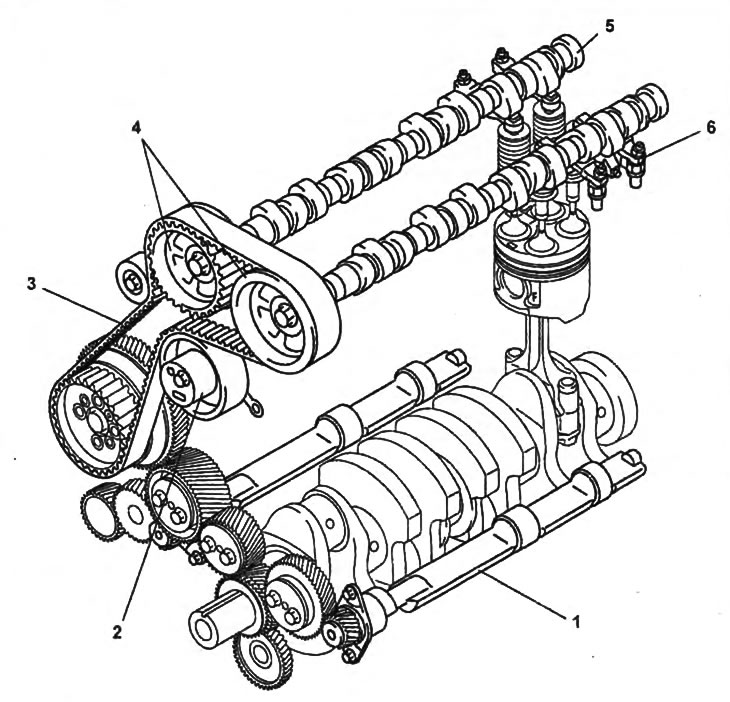
Timing drive.
1 - balance shaft,
2 - timing belt tensioner,
3 - timing belt,
4 - camshaft pulleys,
5 - camshaft,
6 - rocker arm.
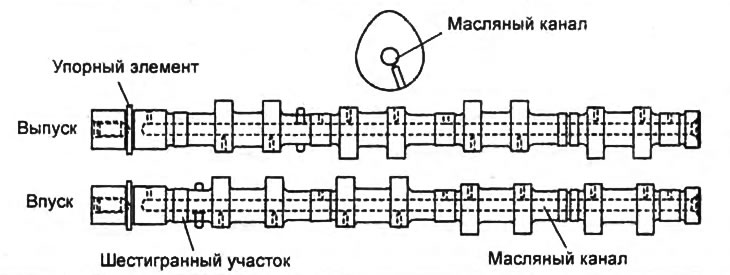
Camshafts.
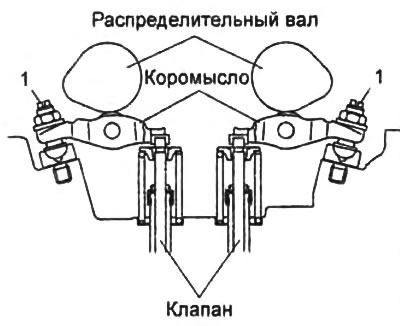
The valves are driven via rocker arms from the camshafts, which in turn are driven by the timing belt from the fuel injection pump pulley. The thermal clearance in the valves is adjusted by adjusting screws (1) located on the rocker arms.
[The original text is published on: MazBook.ru]
The camshafts are made of cast iron. The camshafts are five-bearing. Each camshaft has one horizontal oil cable and several vertical ones, supplying engine oil to the bearings and cams. In the front part, each camshaft has a thrust element that fixes the shaft from axial movement (see the figure "Camshafts").
The cylinder block gasket is made of layered steel. The gaskets are available in three size groups, differing in thickness.