


Attention.
- Hot engine and oil can cause burns. Be careful not to burn yourself when removing/installing various components.
- Fuel vapors are hazardous and flammable, causing serious injury and equipment damage. Keep sparks and open flames away from fuel.
- Leaks and leaks in fuel lines are dangerous. Fuel can ignite, causing equipment damage, serious injury, or even death. Fuel can cause skin and eye irritation. To prevent this, follow safety precautions when handling fuels and lubricants.
- If the camshaft is rotated after the drive chain is removed, the valves may hit the piston crown when the piston is at top dead center, causing engine damage. When rotating the camshaft with the drive chain removed, all pistons in the engine must be set to the middle position.
Removal the cylinder head
1. Disconnect the negative battery terminal.
2. Remove the decorative engine cover.
3. Remove the ignition coils/ion sensors.
4. Remove the front protective tray No.2.
5. Remove the mudguard.
6. Remove the accessory drive belts.
7. Drain the engine oil.
8. Drain the coolant.
9. Remove the intake manifold.
10. Direct the exhaust manifold to the rear of the vehicle.
11. Disconnect the upper and lower radiator hoses.
12. Remove the vacuum pump.
13. Remove the high pressure fuel pump with the rear casing.
14. Disconnect the heater hoses from the inlet and outlet ports.
15. Remove the engine oil pan.
16. Remove the timing chain with the damper (see the relevant section above in this chapter).
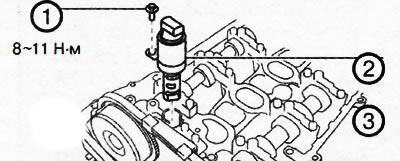
17. Loosen the mounting bolt (1) and remove the oil control valve (OCV) (2).
18. Disconnect and remove all cooling system pipes and hoses from the cylinder head.
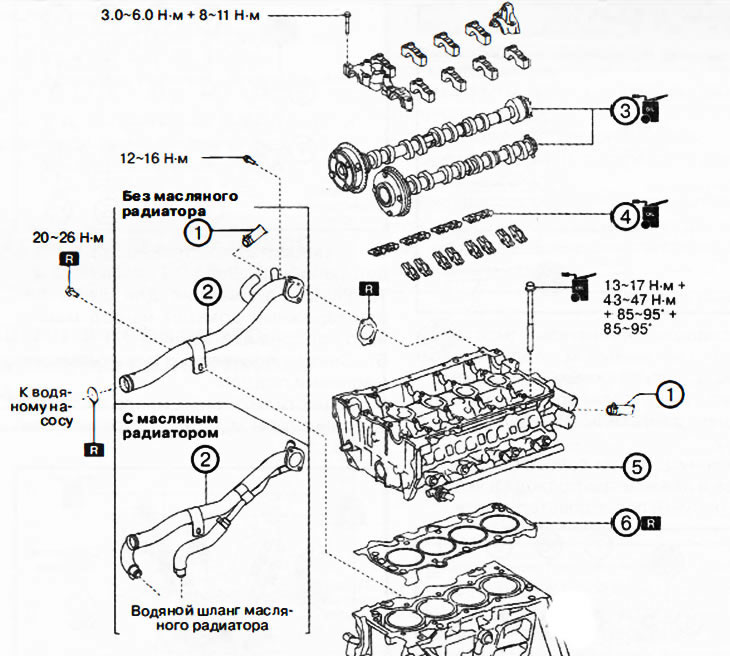
1. Water hose (if equipped).
2. Inlet pipe of the cooling system.
3. Camshafts.
4. Rocker arms.
5. Cylinder head.
6. Cylinder head gasket.
19. Loosen the camshaft cover bolts in two or three steps in the sequence shown in the figure, then remove the covers and remove the camshafts from the cylinder head.
20. Remove the rocker arms from the cylinder head and arrange them in the order corresponding to the cylinders so that they can be installed in their proper places during assembly.
21. Temporarily install an oil pan to support the engine from underneath the vehicle.
Attention.
To prevent deformation of the oil pan, support the engine as follows:
- When using an engine lift, place a piece of rubber of appropriate size (thickness approximately 20 mm) between the lift and the oil pan.
- When using a garage jack, place a piece of rubber of the appropriate size (thickness approximately 20 mm) on the support panel resting against the oil pan.
(The original text can be found on: MAZBOOK.RU)
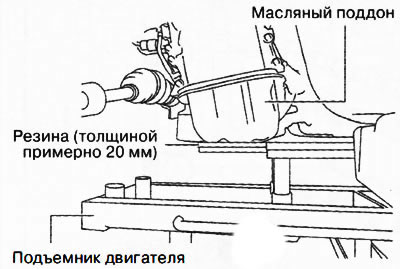
22. Support the engine (oil pan) using a special engine lift or garage jack.
23. Remove the chain from the crossmember on which the engine is suspended and move it to the side.
24. Loosen the cylinder head bolts in two or three steps in the sequence shown in the figure.
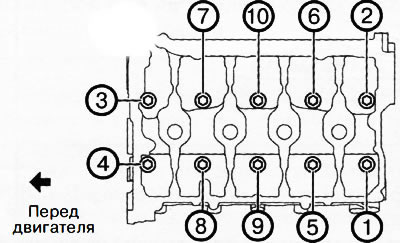
25. Remove the cylinder head.
26. Remove the cylinder head gasket and replace it with a new one.
Installing the cylinder head
1. Thoroughly clean the contact surfaces of the cylinder block and cylinder head.
2. Install a new cylinder head gasket
3. Install the cylinder head onto the engine.
Caution: If the length (L) of the cylinder head bolt exceeds the maximum permissible value (146.5 mm), it must be replaced with a new one.
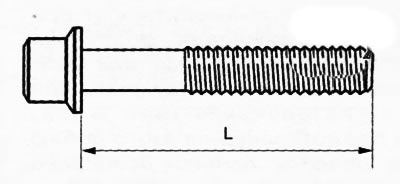
4. If the cylinder head bolts are reused, apply engine oil to the bolt head and cylinder head seating surface.
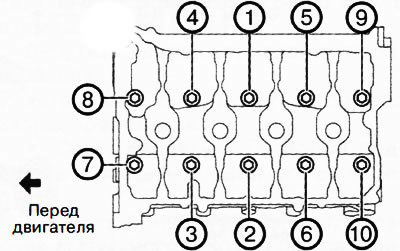
5. Tighten the cylinder head bolts in four stages in the sequence shown in the figure:
- Stage 1: 13-17 Nm
- Stage 2: 43-47 Nm
- Stage 3: 85-95°
- Stage 4: 85-95°
6. Install the crossmember chain to support the engine.
7. Remove the engine hoist or garage jack from under the engine oil pan.
8. Remove the temporarily installed oil pan.
9. Apply engine oil to the hydraulic lifters and valve stem ends.
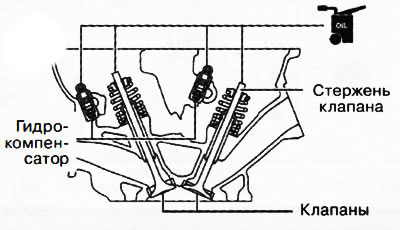
10. Install the rocker arms in the original positions they occupied before removal.
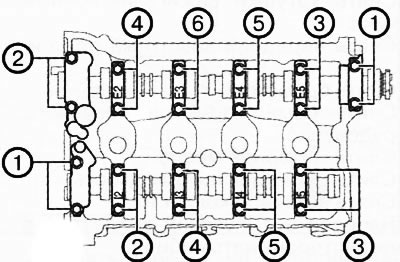
11. Apply transmission oil (SAE 90 or similar) or engine oil to the center of each bearing in the cylinder head as shown in the figure.
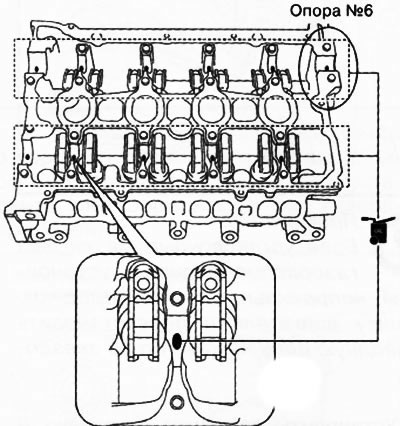
Attention: No more than 0.05 ml of oil should be applied to support #6.
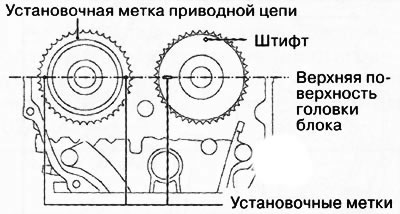
12. Install the camshafts, aligning the timing marks as shown in the figure.
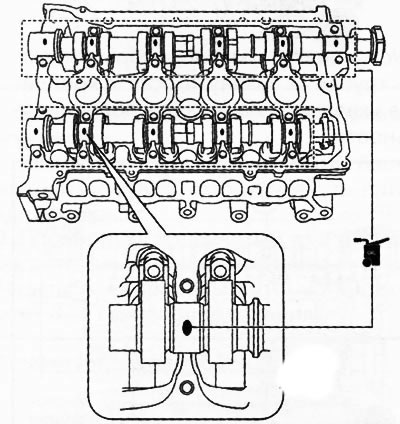
13. Apply transmission oil (SAE 90 or similar) or engine oil to the center of each camshaft journal as shown in the figure.
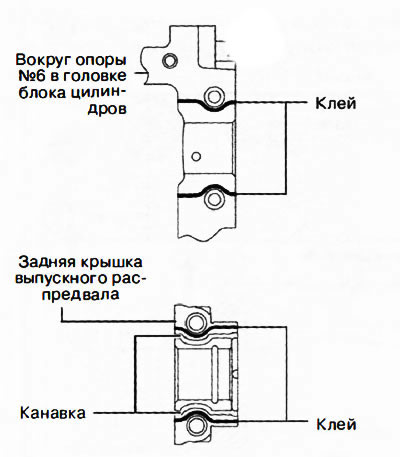
14. Apply adhesive (Loctite 962T) around support No.6 of the cylinder head or on the rear cover of the exhaust camshaft.
Caution: Make sure that no adhesive comes into contact with the camshaft journal.
Note: Adhesive bead width: 0.5-1.5 mm.
15. Install the camshaft covers in numbered order (according to the markings on the lids) and evenly tighten the cap bolts in two or three steps in the sequence shown in the figure.
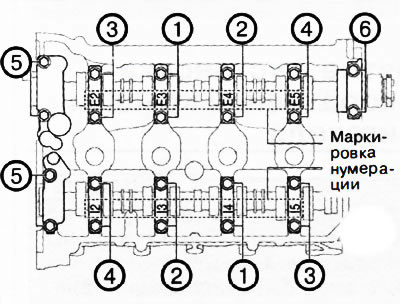
16. Tighten the camshaft cover bolts in two stages in the sequence shown in the figure: first to 3.0-6.0 Nm, then to 8-11 Nm.
17. Remove any remaining sealant from the bolt holes in the cylinder block on the side of the cooling system intake manifold stand.
18. Apply cooling liquid to the O-rings.
Caution: Do not apply too little (engine, transmission, etc.) on the O-rings of the water inlet pipe. Otherwise, the O-ring material may be damaged, which will lead to a loss of tightness.
19. Install the O-ring onto the cooling system inlet pipe.
20. Insert the cooling system inlet pipe into the water pump, being careful not to damage the sealing ring.
21. Install the cooling system inlet pipe gasket so that its protrusions are positioned as shown in the figure.
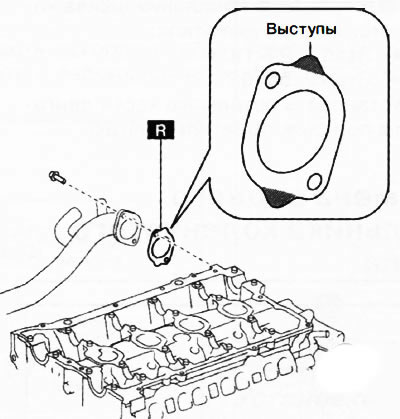
22. Tighten the bolts in the sequence shown in the figure.
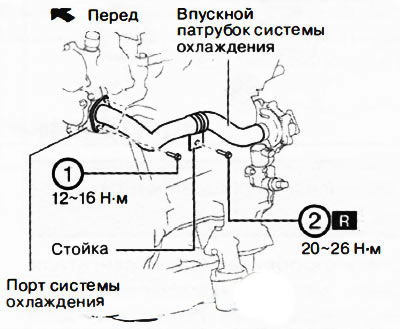
23. Install the remaining parts in the reverse order of removal.
24. Fill with the required amount of engine oil of the required grade (see chapter "Lubrication system").
25. Fill with coolant.
26. Start the engine and check the following:
- Presence of engine oil and coolant leaks.
- Beating and touching of pulleys and belts.
- Ignition timing and idle speed.
- Compression in the cylinders.