

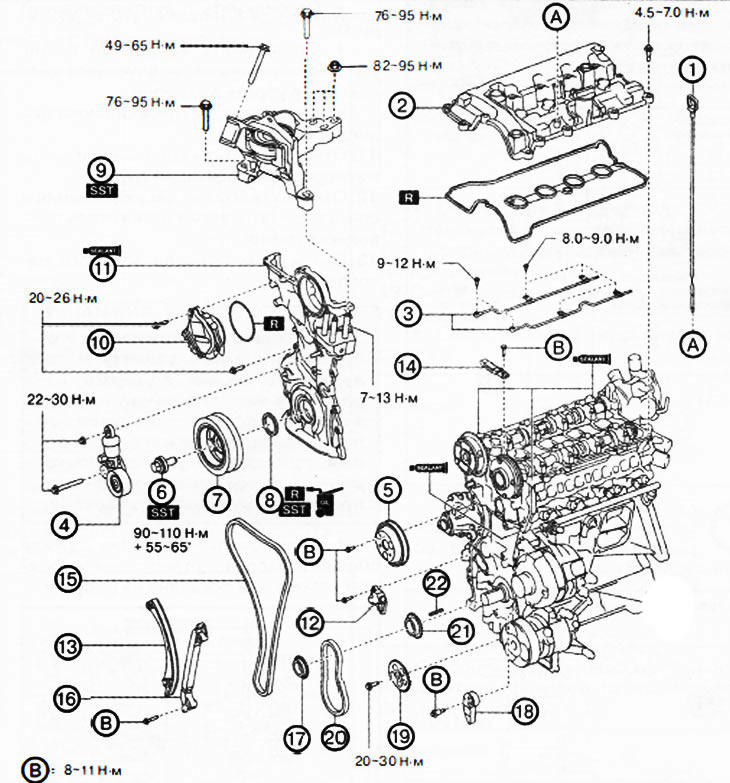
1. Oil dipstick.
2. Cylinder head cover.
3. Oil spray tubes.
4. Automatic drive belt tensioner.
5. Water pump pulley.
6. Crankshaft pulley bolt.
7. Crankshaft pulley.
8. Front crankshaft oil seal.
9. Engine support No.3.
10. Electric drive for changing valve timing.
11. Front engine cover.
12. Timing chain tensioner.
13. Tensioner shoe.
14. Chain tensioner (No. 1).
15. Gas distribution mechanism drive chain.
16. Chain tensioner (No. 2).
17. Crankshaft sprocket.
18. Oil pump chain tensioner.
19. Oil pump drive sprocket.
20. Oil pump drive chain.
21. Oil pump drive sprocket.
22. Key.
Attention.
- A hot engine can cause burns. Before starting work, turn off the engine and wait until it cools down.
- If the camshaft is rotated after the drive chain is removed, then with the piston at the top dead center, the valves may rest against the piston bottom, which will cause engine damage. When rotating the camshaft with the drive chain removed, it is necessary to set all the engine pistons to the middle position.
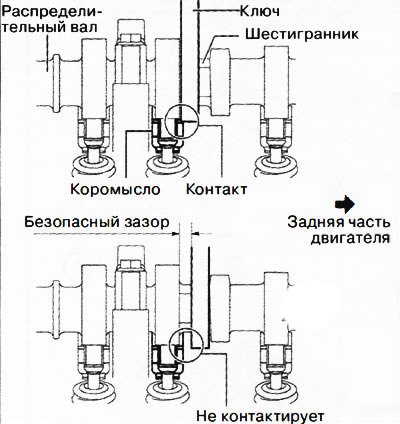
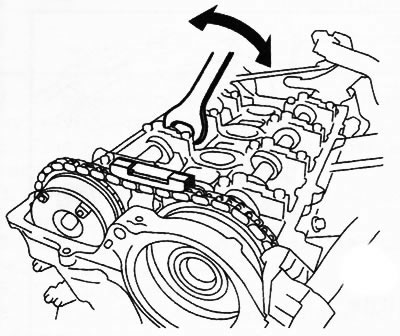
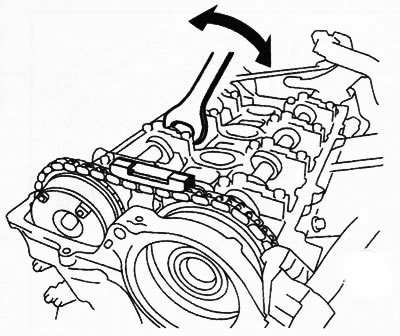
- When turning the camshaft with a wrench on the hexagonal part, the wrench may hit the rocker arm and damage it. To prevent damage to the rocker arm, when holding the camshaft by the hexagonal part, place the wrench closer to the rear of the engine, as shown in the figure, to ensure a safe gap between the wrench and the camshaft lobe.
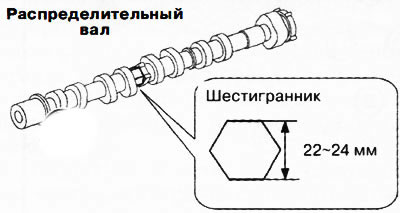
Note: The width of the hexagonal part of the camshaft is 22-24mm.
1. Disconnect the negative battery terminal.
2. Remove the decorative engine cover.
3. Remove the ignition coils/ion sensors.
4. Remove the front protective tray No.2.
5. Remove the mudguard.
6. Remove the accessory drive belts.
7. Drain the engine oil.
8. Remove the oil pan.
9. Remove the oil dipstick from the engine.
10. Remove the cylinder head cover:
- Disconnect the oil flow control valve connector.
- Remove the clamps securing the wiring harness to the cylinder head cover.
- Remove the harness clip from the intake manifold as shown and move the wires out of the way.
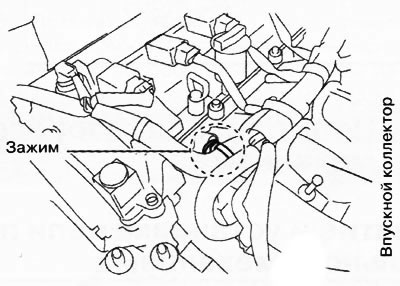
Disconnect the ventilation hose.
Disconnect the brake booster vacuum hose from the intake manifold and set it aside.
Remove the cylinder head cover.
11. Loosen the mounting bolts and remove the oil spray tubes.
12. Loosen the bolt and nut and remove the automatic drive belt tensioner.
13. Remove the water pump drive pulley:
Caution: Be careful not to damage the groove and surface of the water pump pulley when using tools. Otherwise, it will cause wear or breakage of the drive belt, abnormal noise during operation, damage to the pulley and rust.
Align the hole in the water pump pulley with the hole in the water pump as shown in the figure.

Insert a suitable bolt (length about 70 mm) into the hole of the water pump, as shown in the figure, thus fixing the water pump pulley from turning.
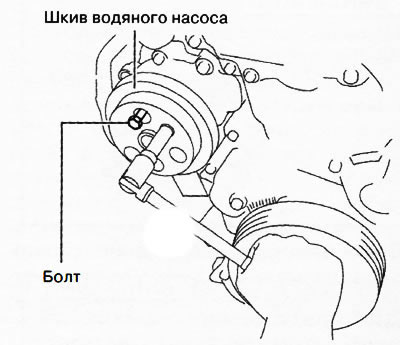
Loosen the mounting bolts and remove the water pump pulley.
Remove the bolt used to secure the water pump pulley from turning.
14. Loosen the crankshaft pulley bolt:
Attention.
- To prevent damage to the crankshaft pulley, it is necessary to protect it with a clean cloth so that the rod part (205-072) of the special device does not touch the crankshaft pulley.
- To prevent damage to the front engine cover, do not allow the tabs to get into (49 B011 105) special device between the crankshaft pulley and the front engine cover.
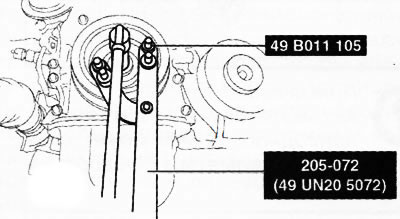
- Install special devices on the crankshaft pulley to prevent it from turning.
- Loosen the crankshaft pulley mounting bolt.
15. Remove the crankshaft pulley.
16. Remove the front crankshaft oil seal.
17. Remove engine support No.3:
- Remove the clamps shown in the figure and move the ground cable to the side.
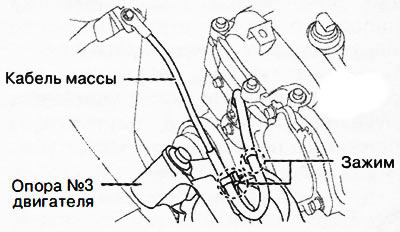
Install the special device using part 99794 1025 or a 25 mm long M10x1.25 bolt as shown in the figure.
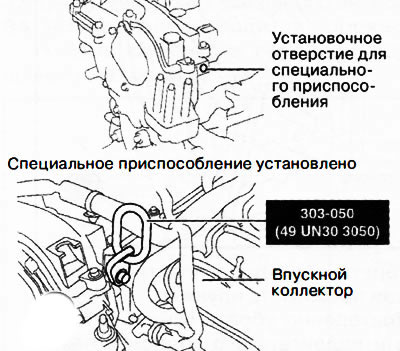
Caution. The engine support No.3 mounting holes are oblong in shape for position adjustment. If the position of engine support No.3 is different from the original position when reinstalled, it will cause increased noise and vibration of the engine. Before removing engine support No.3, apply alignment marks to engine support No.3 so that the support can be installed in the same position later.
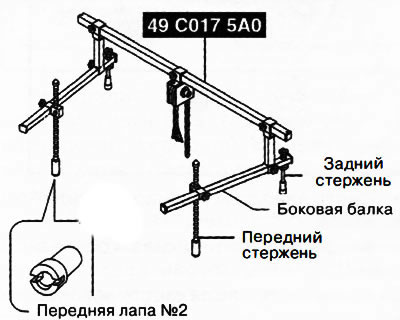
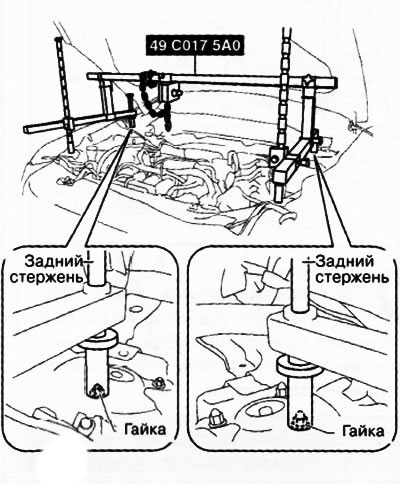
Prepare a crossbar for hanging the 49 C017 5A0 engine.
Attention: Follow the instructions supplied with the crossbar by the manufacturer.
Note: Install front legs #2 on the left and right support rods of the crossbar.
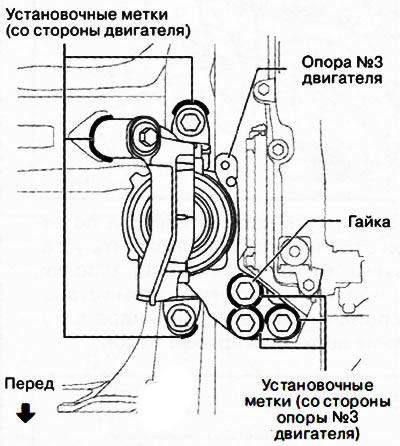
Place alignment marks on the locations shown in the figure so that the engine mount can be installed in the same position later.
Note: Trace around engine support #3 and mounting nuts as shown.
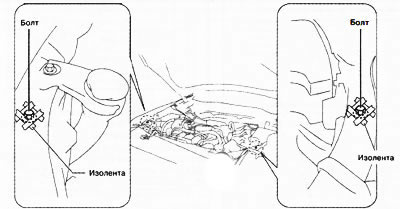
Protect the areas shown in the figure with electrical tape.
Place the rear crossmember support rods onto the left and right suspension strut nuts as shown.
Install the front crossmember support rods onto the left and right bolts.
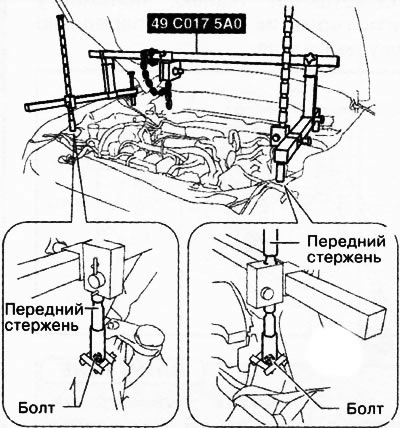
Adjust the height of the left and right side beams of the cross member so that they are level, and then tighten all parts.
Tighten the chain connecting the crossmember to the engine.
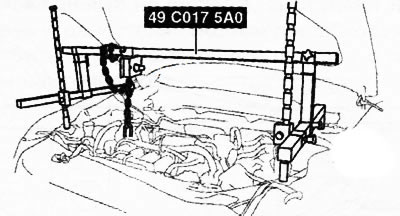
Remove engine support No.3.
18. Loosen the mounting bolts and remove the electric valve timing adjustment drive.
19. Remove the front engine cover:
Remove the insulator shown in the figure.
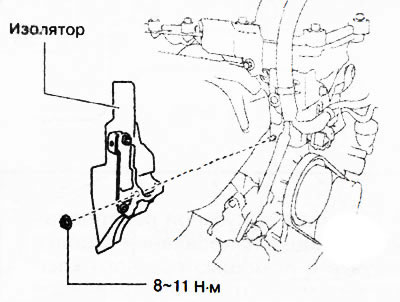
Move the ground cable and wire harness bracket shown in the illustration out of the way.
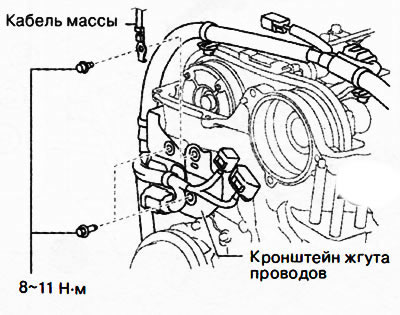
Loosen the front engine cover mounting bolts.
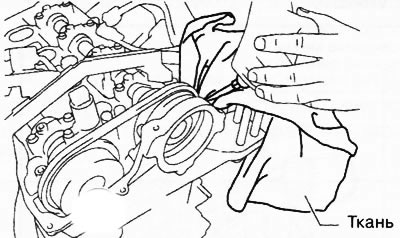
Using a flat-head screwdriver wrapped in cloth, gradually remove the sealant and remove the front engine cover.
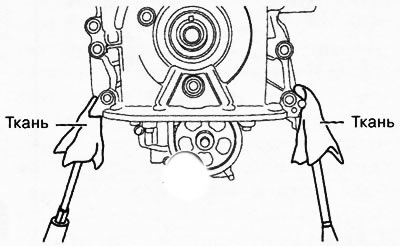
Attention.
- Do not apply excessive force to the screwdriver. Otherwise, you may damage the front engine cover.
- Be careful not to scratch or damage the contact surfaces, otherwise oil leaks may occur later.
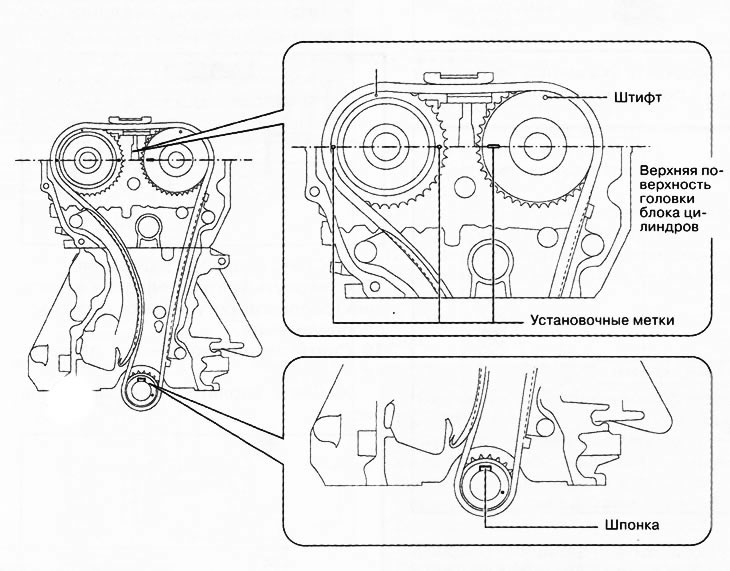
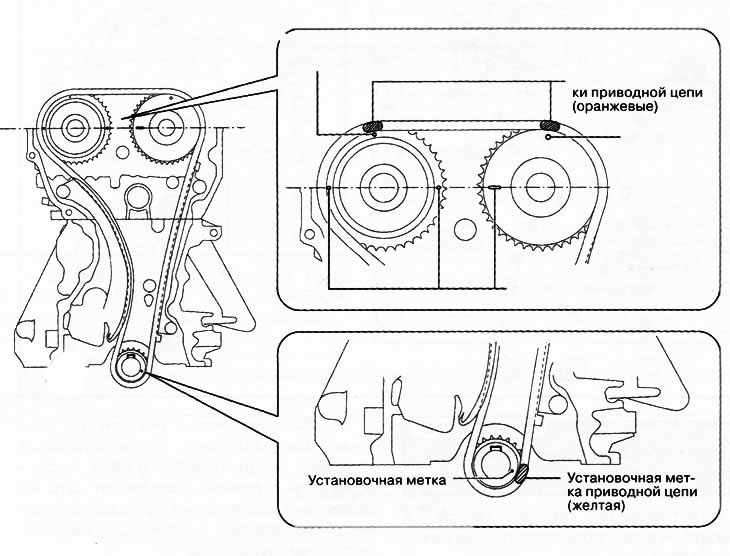
20. Turn the crankshaft clockwise to align the timing marks and the key position as shown in the figure to set the piston of the first cylinder to the top dead center position.
21. While moving the exhaust camshaft back and forth in the direction of the arrow in the figure using a wrench mounted on the hexagonal part, press the drive chain tensioner plate with a screwdriver and release the plunger lock.
 |
 |
Note: As the exhaust camshaft moves back and forth, the drive chain pushes the plunger into the tensioner, facilitating the movement of the plate.
22. Slowly press the plunger in the direction of the arrow in the figure with the plate pressed down.
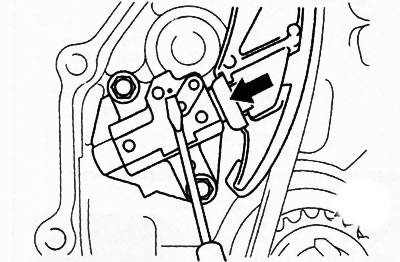
23. Remove the screwdriver from the plate, continuing to press the plunger.
24. Gradually remove the force from the plunger and move it forward and backward by 2-3 mm.
25. Insert a wire with a diameter of approximately 1.5 mm or a paper rolled into a tube into the hole of the plate and the tensioner body to fix the plate and lock the plunger.
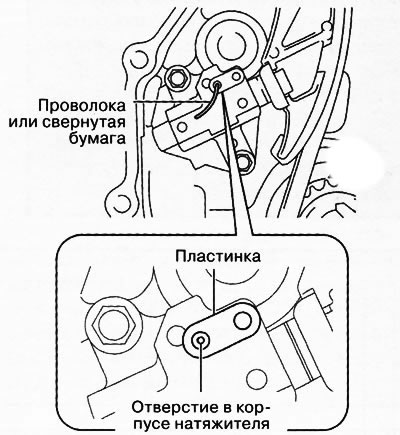
26. Remove the chain tensioner, tensioner shoe and chain guide No.1.
27. Remove the timing chain.
28. Loosen the mounting bolts and remove chain guide No.2.
29. Remove the crankshaft sprocket.
30. Loosen the mounting bolt and remove the oil pump drive chain tensioner.
31. Remove the oil pump drive sprocket:
- Temporarily tighten the crankshaft pulley bolt and secure the oil pump from turning as shown in the figure.
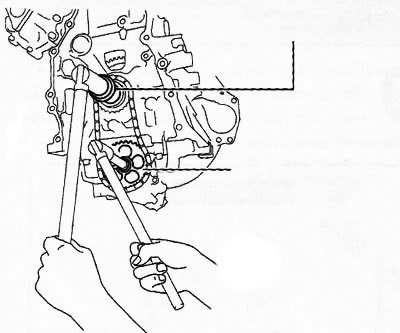
- Remove the oil pump drive sprocket.
- Remove the crankshaft pulley bolt.
32. Remove the oil pump drive chain.
33. Remove the oil pump sprocket and remove the key.
34. Installation is carried out in the reverse order of removal, taking into account the following:
Install the timing chain according to the installation marks.
 |
 |
Remove oil, dirt and sealant residue from the mating surfaces of the front engine cover, cylinder head and cylinder block.
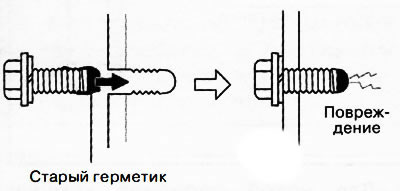
When reusing the front engine cover mounting bolts, remove any remaining fixing compound from their threads.
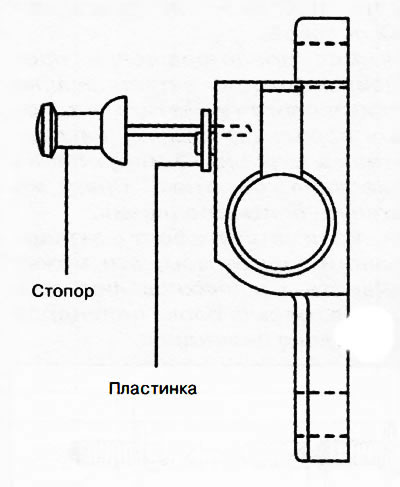
If a new chain tensioner is used, remove the installed stopper.
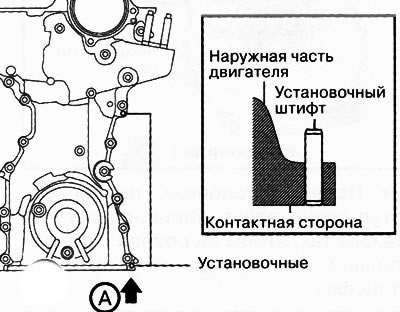
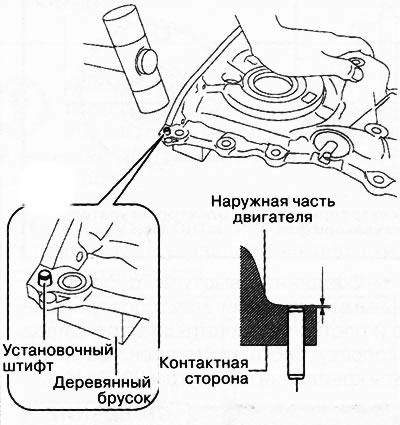
For the new front engine cover, the two dowel pins shown in the picture protrude out of the engine, so you will need to hammer these dowel pins in.
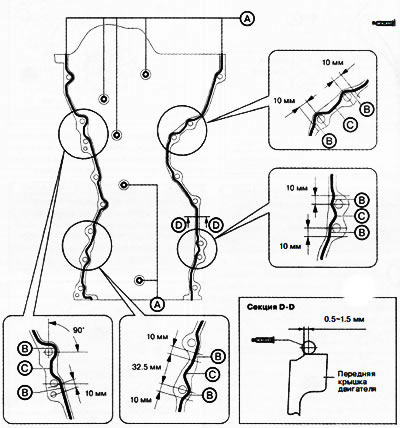
Thickness of sealant bead: A: 2-6 mm; H: 4-6 mm; C: 4-8 mm
Apply silicone sealant as shown in the picture.
Attention.
- Apply silicone sealant in an even, continuous strip.
- To prevent premature hardening of the silicone sealant, install the front cover on the engine within 10 minutes after applying the sealant. Tighten the mounting bolts immediately.
- Tightening a bolt with hardened sealant may cause a crack in the cylinder head or cylinder block.
Apply sealant also to the areas shown in the following figure.
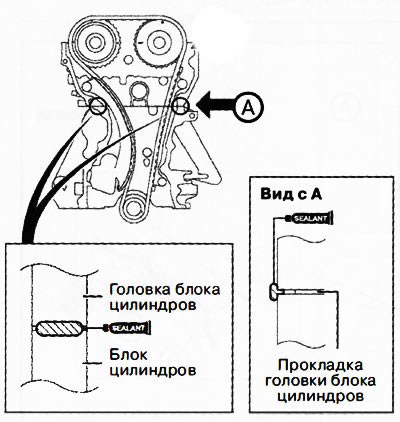
Caution: Apply silicone sealant so that it enters the cylinder head gasket.
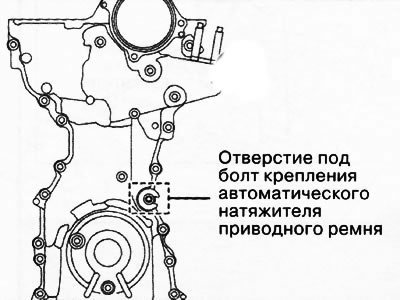
Note: Temporarily install a suitable bolt into the seat belt automatic tensioner mounting bolt hole to prevent sealant from entering the hole. Use a 40mm long M8x1.25 bolt for this purpose.
Tighten the front engine cover mounting bolts in the sequence shown in the figure to a torque of 20-26 Nm.
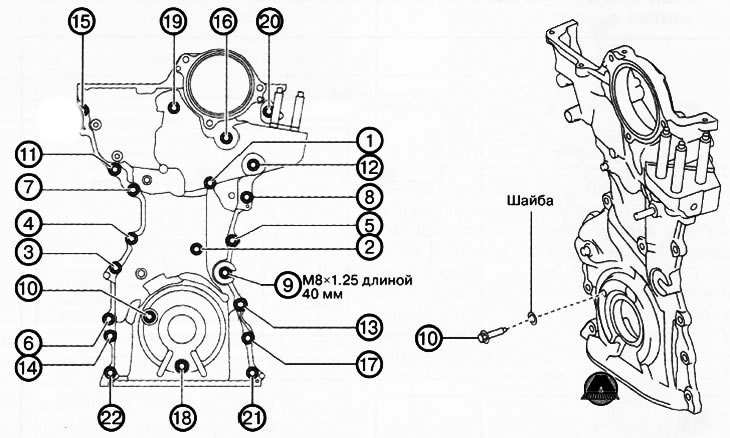
Note: Bolt #10 must be installed with a washer.
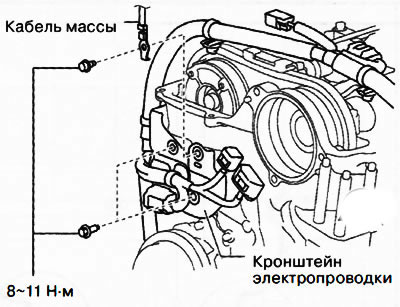
Install the ground cable and wiring bracket as shown in the figure.
Install new O-rings into the corresponding grooves of the front engine cover.
Caution: To prevent damage to the phase regulator electric drive, do not apply excessive force (100 N (10.2 kgf) or more) to the shaded areas in the figure.
The original text can be found on MAZBOOK.RU
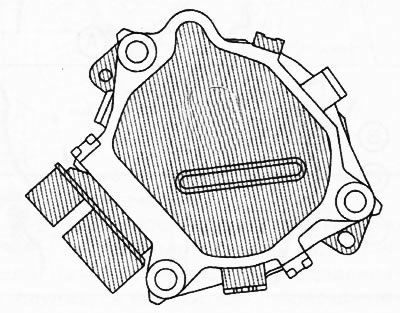
Note:
- The eccentric shaft on the phase regulator side can rotate left and right.
- The phase regulator electric drive can be assembled with the eccentric shaft connecting groove located in any position. This does not affect the engine performance and does not cause any damage.
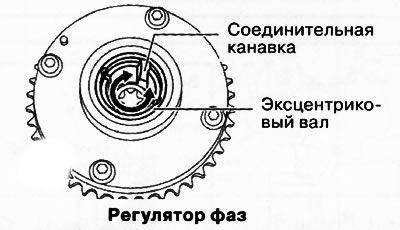
Before installation, turn the protrusion on the end of the phase regulator electric drive so that it coincides with the connecting groove on the phase regulator side.
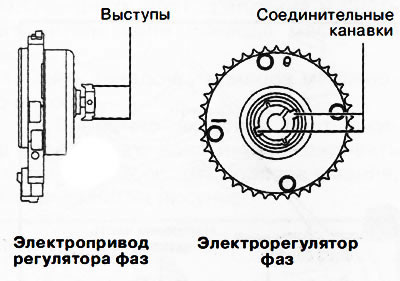
Connect the protrusions with the connecting grooves of the electric phase regulator and tightly install the electric drive on the cylinder head. Tighten the mounting bolts with a torque of 20-26 Nm.
Caution. If the position of engine support No.3 is different from the original position when reinstalled, this will lead to increased engine noise and vibration. Before removing engine support No.3, apply alignment marks to engine support No.3 so that the support can be installed in the same position later.
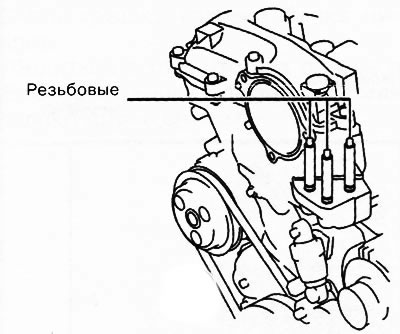
Screw the threaded studs into the front engine cover and tighten to a torque of 7-13 Nm.
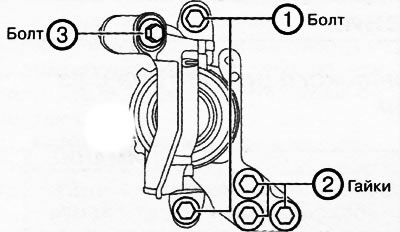
Align the alignment marks made during removal with engine support No.3 and install the bolts shown in the following figure.
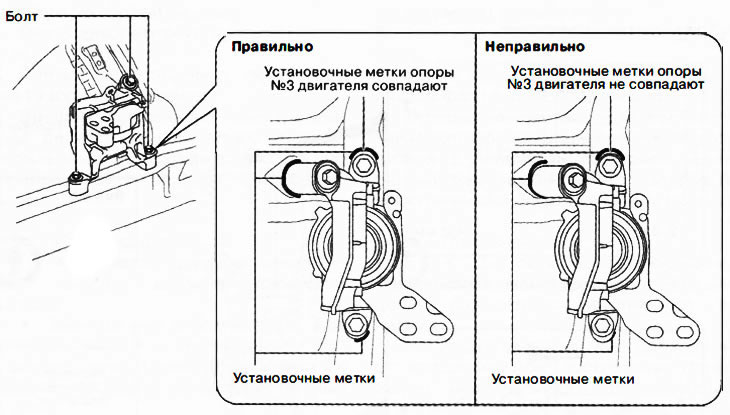
Fit the nuts shown in the following figure, aligning the corresponding alignment marks on engine support No.3.
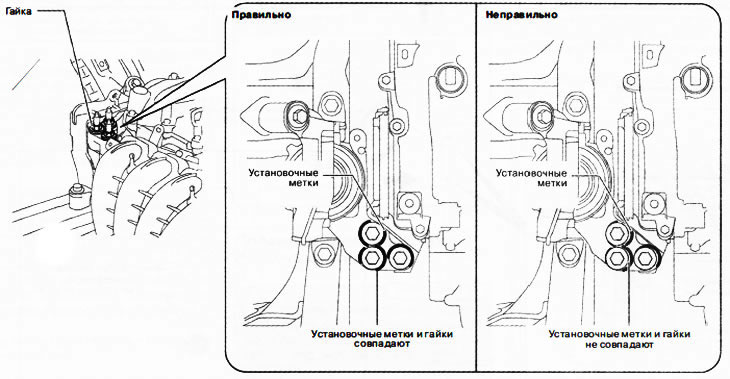
Note: If the alignment marks do not match, align them by moving the engine slightly, then tighten the nuts.
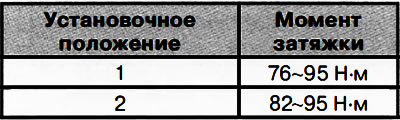
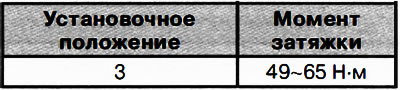
Tighten the bolts and nuts of engine support No.3 in the sequence shown in the figure.
Install the oil spray tubes and tighten the mounting bolts in the sequence shown in the figure.
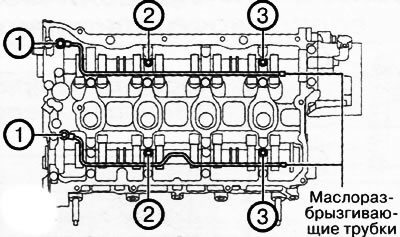
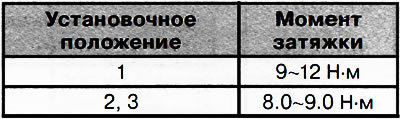
Attention.
- To ensure the tightness of the cylinder head cover, the following must be observed:
- Make sure that the cylinder head cover gasket is inserted into the cover groove and install the cylinder head cover.
- Remove oil, dirt and sealant residue from contact surfaces.
- To prevent premature hardening of the silicone sealant, install the cylinder head cover on the engine within 10 minutes after applying the sealant and immediately tighten the mounting bolts.
Apply silicone sealant to the areas shown in the figure.
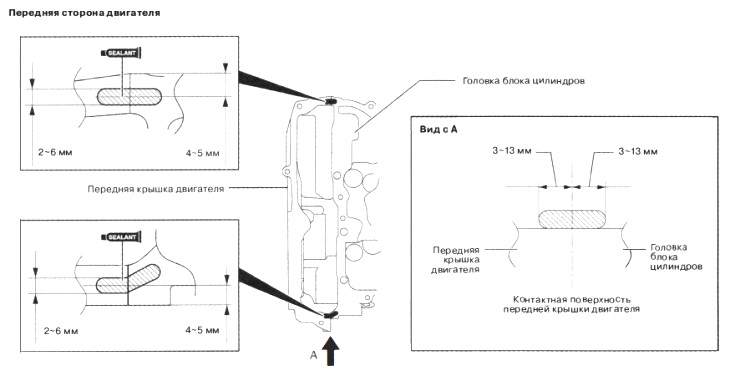
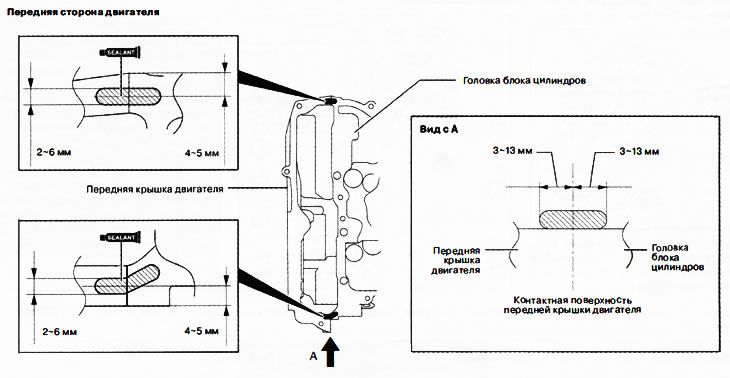
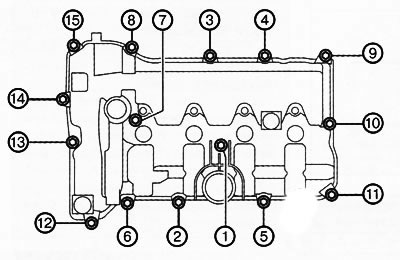
Tighten the cylinder head cover bolts in the sequence shown in the figure to a torque of 4.5-7.0 Nm.