


Description and history of the car Mazda 3 (Axela)
Mazda 3 - a small family car C-class, produced by the Japanese automaker Mazda Motor from 2003 to the present. In Japan and China it is called «Mazda Axela». Replaced the previous model «Familia/323». From launch to 2017, more than 1.6 million vehicles have been sold in North America.
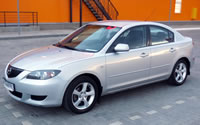
Mazda3 BK, sedan
The engine is located transversely in front, front-wheel drive or all-wheel drive. The body was produced as a 4-door sedan or 5-door hatchback. The main competitors are Citroen C4, Volkswagen Golf, Ford Focus, Honda Civic, Hyundai Elantra, Kia ceed, Renault Fluence, Subaru Impreza, Chevrolet Cruze, LADA Vesta, Opel Astra, Mitsubishi Lancer, Peugeot 308, Skoda Octavia, Toyota Corolla and Nissan Sentra. In 2014 car «Mazda 3» became Mazda Motor Company's best-selling vehicle with total sales of over 4 million units.
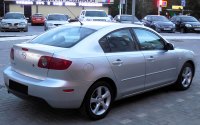
Mazda3 BK, sedan, back view
In October 2003, the first Mazda 3 was introduced in Japan under the code «BK». The car is based on a platform «Ford C1», which also builds the Ford Focus and Volvo S40. Under the leadership of Mazda's chief designer Hideki Suzuki, the development of this car began in 1999. In 2001, the project was won by Hasip Girggin, who completed work on the car project in 6 months in the city of Hiroshima. The body was produced as a 4-door sedan (length: 4506-4540 mm, width: 1750 mm, height: 1500 mm) or fastback and 5 door hatchback (length: 4485-4591 mm, width: 1750 mm, height: 1500 mm). The curb weight was 1340 kg. The car was assembled in Japan, China, Colombia, South Africa, Zimbabwe and the Philippines.
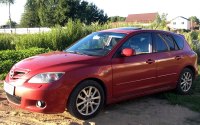
Mazda3 BK, hatchback
European versions of cars were equipped with the following models of gasoline four-cylinder engines with the code «MZR» - 1.4 liters (83 hp), 1.6 liters (103 hp), 2.0 liters (148 l.m.) and 2.3 liters (DISI Turbo, 256 hp). Diesel engines with injection «common-rail» there were three modifications - 1.6 liters «MZ-CD» (107 hp), 2.0 liters «MZR-CD» (141 hp) and 2.2 liters «MZR-CD» (182 hp).
Cars for the Japanese market were equipped with three 1.5-liter gasoline engines (86 hp), 2.0 liters (108 hp) and 2.3 liters (124 hp). North American models were equipped with more powerful 2.0-liter gasoline engines (148 hp) and 2.3 liters (160 hp), as well as a 2.3-liter diesel «MZR» (DISI Turbo, 263 hp). Gearboxes automatic 4 and 5 speed or mechanical 5 and 6 speed.
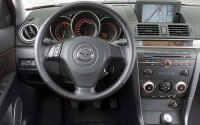
Mazda3 BK, interior
The front suspension is a MacPherson strut with coil springs and anti-roll bar. Rear suspension multi-link «E-Link», developed by Ford, with four arms per wheel each and an anti-roll bar, on coil springs that are mounted inward from the shock absorbers to reduce space in the trunk of the car. The braking system is equipped with ABS (anti-lock system) and electronic brake force distribution. There are several levels of trim and equipment.
In 2007, they carried out a minor restyling of the car with minimal external, internal and mechanical changes.
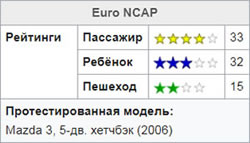 Mazda3 has six airbags in the base, belts with pretensioners. The front bumper is designed to minimize injury to pedestrians. Car body designed with MAIDAS technology (collision energy absorption and distribution system). The 2006 model was tested by the European committee Euro NCAP, the results of which you can see in the table.
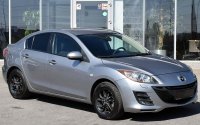
Mazda3 BL, sedan
Development of the second generation, under the direction of designer Kunihiko Kurisu, began in 2005 and ended in 2006, and production began in October 2008 as a 2009 model. The car was coded «BL», it is based on the platform «Ford C1». The body was produced in the form of a 4-door sedan and a 5-door hatchback. Body length was 4595 mm (sedan) and 4505 mm (hatchback), width 1755 mm, height 1470 mm, curb weight 1260 kg. The car was assembled in Japan, Thailand, Taiwan, Malaysia, Iran, Colombia and South Africa.
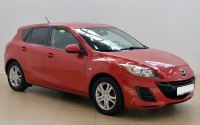
Mazda3 BL, hatchback
The range of engines in Japanese cars includes gasoline engines of the following characteristics - 1.5 liters «ZY-VE» (1498 cm3, 109 hp), 2.0 liters «LF» (1999 cm3, 148 and 141 hp) and 2.3 liters «L3-VDT» (2261 cm3, 260 hp).
European cars had the following gasoline engines - 1.6 liters (1598 cm3, 104 hp), 2.0 liters (1999 cm3, 149 and 150 hp) and 2.3 liters (2261 cm3, 260 hp), as well as diesel engines - 1.6 liters (1560 cm3, 114 hp) and 2.2 liters (2184 cm3, 150 and 182 hp).
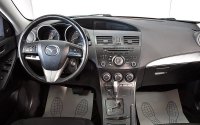
Mazda3 BL, interior
Cars in the USA were equipped with the following gasoline engines - 2.0 liters (1999 cm3, 144, 150 and 155 hp), 2.5 liters (2488 cm3, 165 and 167 hp) and 2.3 liters (2261 cm3, turbo, 263 hp). Canadian models had similar characteristics.
Australian cars were delivered with the following petrol engines - 2.0 liters (1999 cm3, 150 and 153 hp), 2.5 liters (2488 cm3, 167 hp) and 2.3 liters (2261 cm3, turbo, 255 hp), and there was also one diesel engine with a volume of 2.2 liters (2183 cm3, 150 hp).
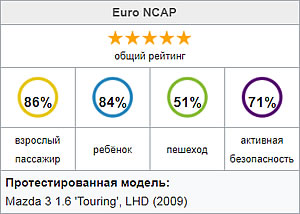 In 2012, there was a model update that was announced at the Canadian International Auto Show in Toronto in February 2011. Of the technical innovations, this is the SkyActiv chassis, which reduces fuel consumption and increases the power of the power plant. There are also minor external changes. The 2009 Mazda 3 model has been tested for safety by the European committee Euro NCAP, the results of which you can see in the table.
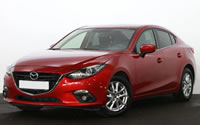
Mazda3 BN, sedan
Third generation with code «BM» was unveiled at the Australian Motor Show on June 26, 2013 as a 2014 model. The car is built on a new chassis «SkyActiv» abandoning the platform entirely «Ford C1». The body design was developed taking into account the ideology of Mazda called KODO (Spirit of movement), The interior has also been completely redone. The drag coefficient of the sedan's body is only 0.26, which, combined with the new chassis, makes the car very economical. The body was produced as a 4-door gray and 5-door hatchback. Body length was 4580 mm (sedan) and 4460 mm (hatchback), width 1795 mm, height 1455 mm, curb weight 1300-1315 kg. The car was assembled in Japan, Mexico and Thailand.
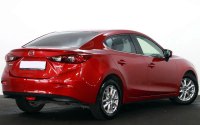
Mazda3 BN, sedan, back view
European models were equipped with 1.5-liter gasoline engines (1496 cm3, 99 hp) and 2.0 liters (1998 cm3, 120 and 163 hp), as well as diesel engines with a volume of 2.2 liters (2191 cm3) 150 hp
In the US and Canada, the car was equipped with 2.0-liter gasoline engines (1998 sm3, 155 hp) and 2.5 liters (2488 cm3, 184 hp).
 Australian models were with two 2.0 liter petrol engines (1998 cm3, 153 hp) and 2.5 liters (2488 cm3, 184 hp), as well as one diesel engine with a volume of 2.2 liters (2191 cm3) 173 hp
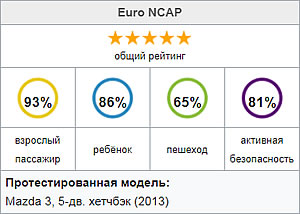
In August 2016, the model was restyled and assigned a new code «BN». Changed the front and rear of the car, as well as a new dashboard design. The 2013 model year hatchback has been crash tested by the European committee Euro NCAP, the results of which you can see in the table.
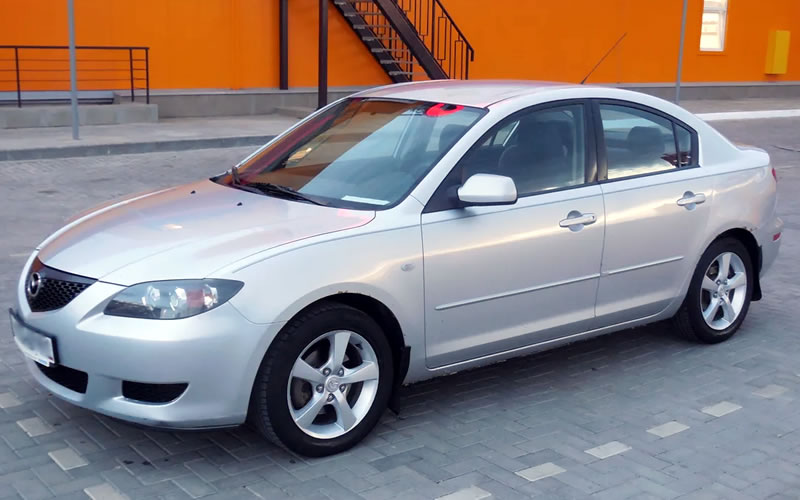
Mazda3 BK, sedan
First generation (BK, 2003−2009)
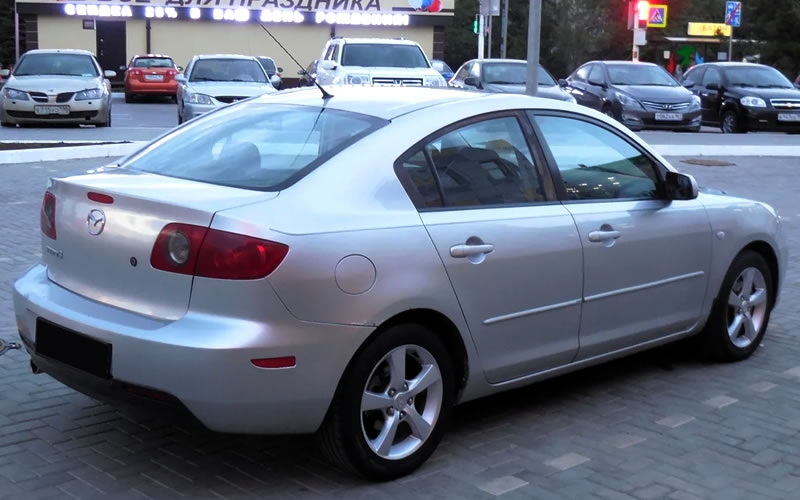
Mazda3 BK, sedan, back view
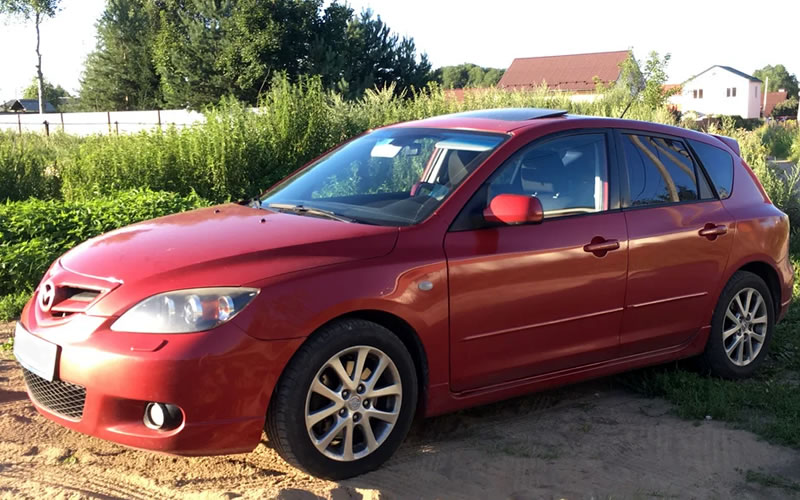
Mazda3 BK, hatchback
Cars for the Japanese market were equipped with three 1.5-liter gasoline engines (86 hp), 2.0 liters (108 hp) and 2.3 liters (124 hp). North American models were equipped with more powerful 2.0-liter gasoline engines (148 hp) and 2.3 liters (160 hp), as well as a 2.3-liter diesel «MZR» (DISI Turbo, 263 hp). Gearboxes automatic 4 and 5 speed or mechanical 5 and 6 speed.
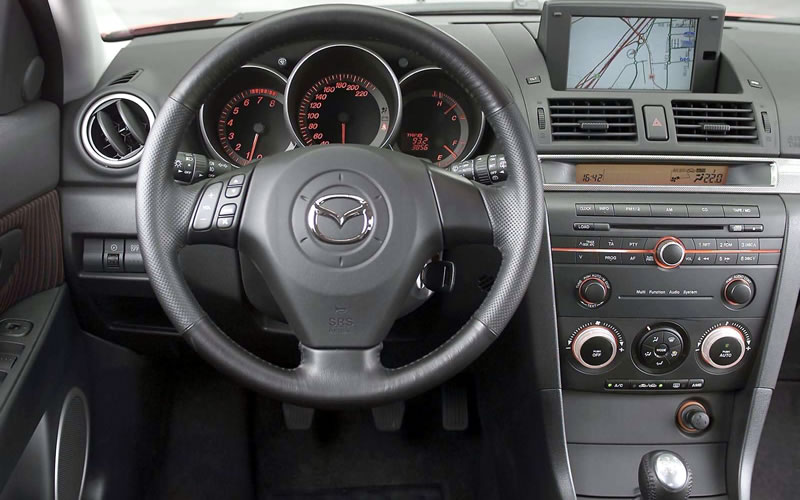
Mazda3 BK, interior
In 2007, they carried out a minor restyling of the car with minimal external, internal and mechanical changes.
Second generation (BL, 2009−2013)
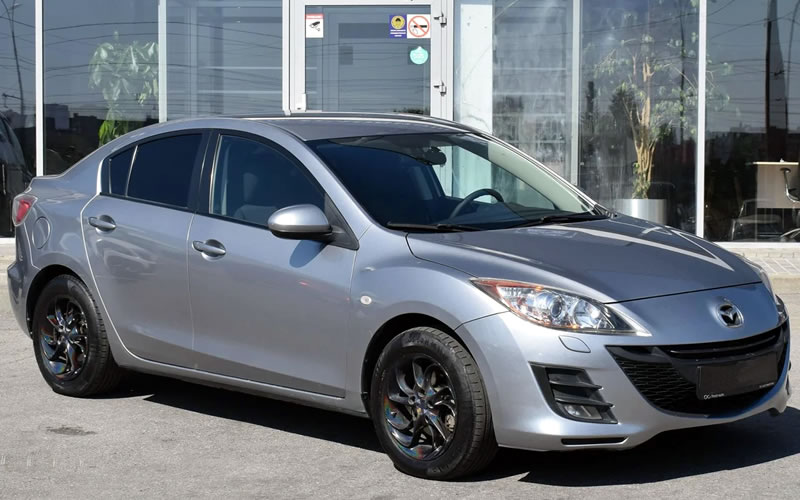
Mazda3 BL, sedan
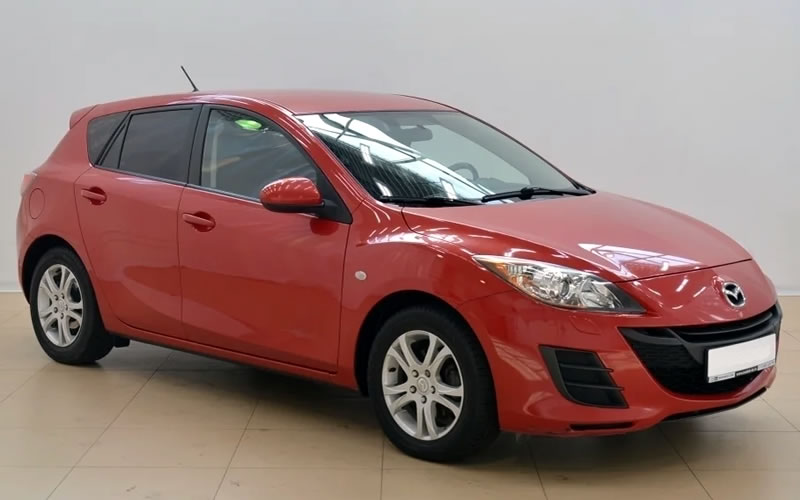
Mazda3 BL, hatchback
European cars had the following gasoline engines - 1.6 liters (1598 cm3, 104 hp), 2.0 liters (1999 cm3, 149 and 150 hp) and 2.3 liters (2261 cm3, 260 hp), as well as diesel engines - 1.6 liters (1560 cm3, 114 hp) and 2.2 liters (2184 cm3, 150 and 182 hp).
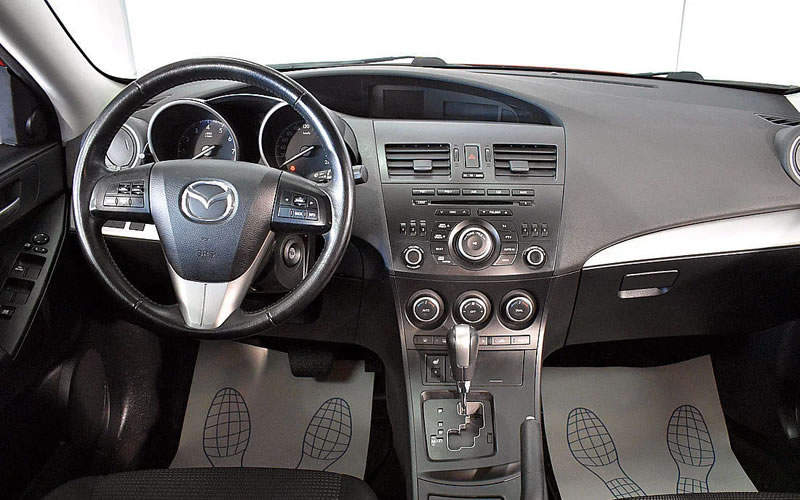
Mazda3 BL, interior
Australian cars were delivered with the following petrol engines - 2.0 liters (1999 cm3, 150 and 153 hp), 2.5 liters (2488 cm3, 167 hp) and 2.3 liters (2261 cm3, turbo, 255 hp), and there was also one diesel engine with a volume of 2.2 liters (2183 cm3, 150 hp).
Third generation (BM, BN, 2013-present)
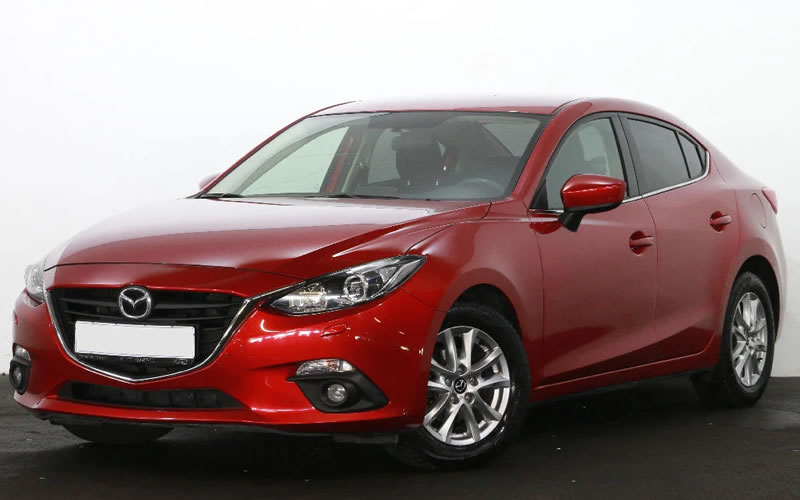
Mazda3 BN, sedan
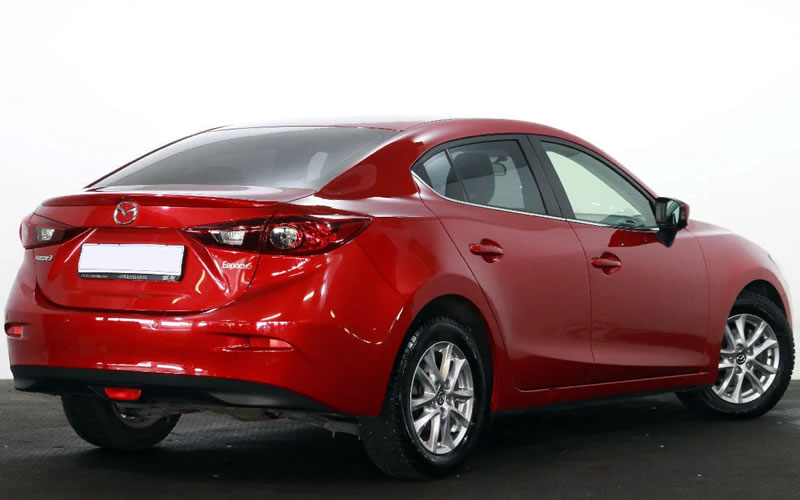
Mazda3 BN, sedan, back view
In the US and Canada, the car was equipped with 2.0-liter gasoline engines (1998 sm3, 155 hp) and 2.5 liters (2488 cm3, 184 hp).
In August 2016, the model was restyled and assigned a new code «BN». Changed the front and rear of the car, as well as a new dashboard design. The 2013 model year hatchback has been crash tested by the European committee Euro NCAP, the results of which you can see in the table.
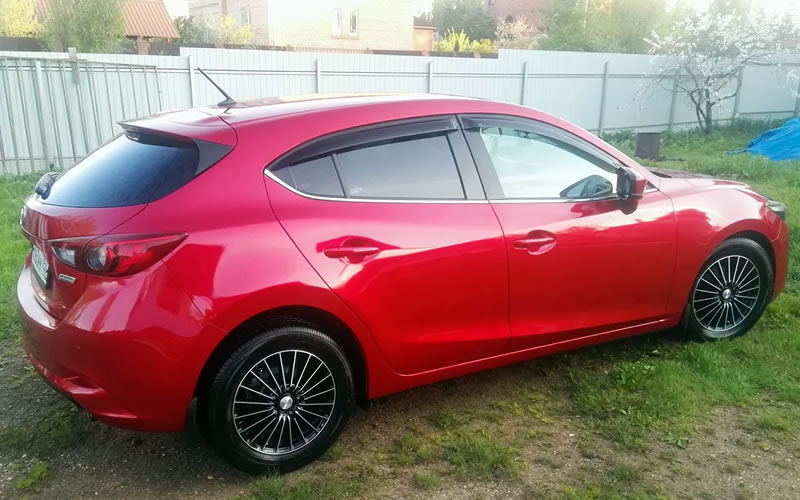 Mazda3 BN, hatchback | 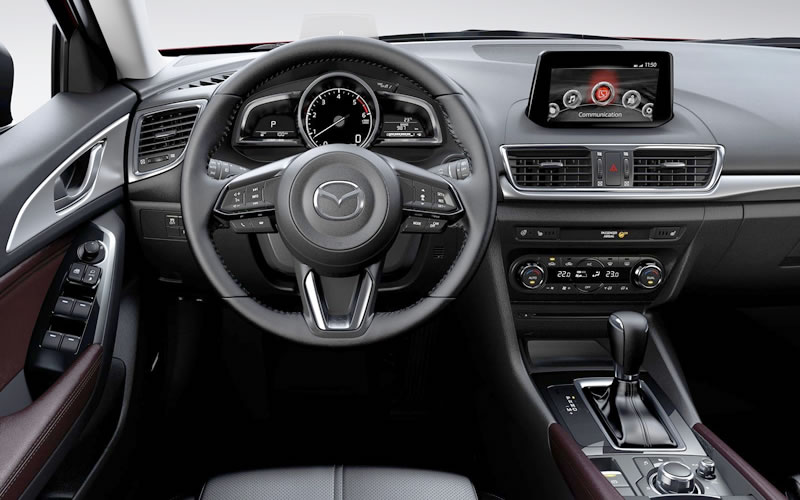 Mazda3 BN, interior | 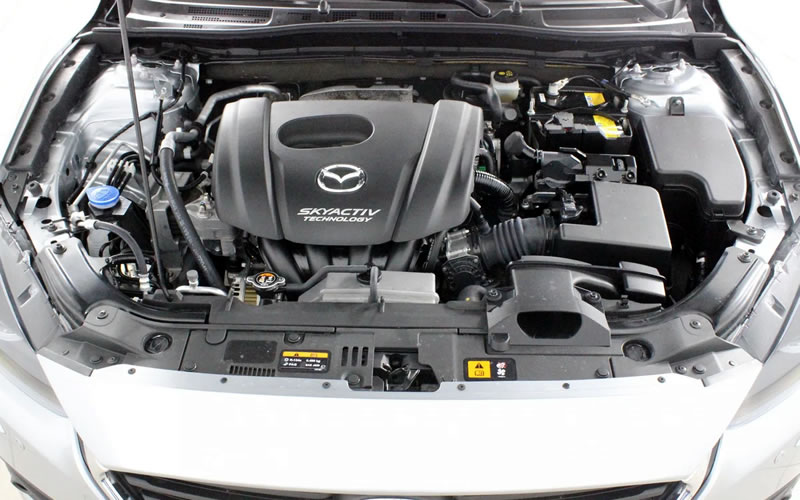 Mazda3 BN, engine bay |
Link in different formats to this article
TEXTHTMLBB Code
- User manual
- Vehicle description
- Keys, locks and alarms
- Controls and instruments
- Air conditioning and heater
- Seat adjustment
- Security systems
- Driving and operation
- Faults en route
- Maintenance
- Power unit
- Engine device (gasoline)
- Engine repair (gasoline)
- Diesel engine (Z6)
- Lubrication system
- Cooling system
- Fuel system
- Exhaust system
- Engine electrical equipment
- Engine management system
- Transmission
- Clutch
- Mechanical gearbox
- Automatic gearbox
- Drive mechanism
- Chassis
- Suspension and wheels
- Steering
- Brake system
- Body
- Body elements
- Doors and windows
- Air conditioning and heater
- Electrical equipment
- Equipment and devices
- Power devices
- Lighting system
- Windshield wipers and washers
- Equipment checks
MazBook.ru © 2018–2024 · Mobile version · Articles and news · Sitemap: EN BG BY UA RS HR RO PL SK HU · Feedback · Site search · Add to bookmarks
Familia 5 (BF) · Familia 6 (BG) · Capella 3 (GC) · Capella 3 and 4 (GC) · Capella 5 (GE) · Capella 6 (GF) · Mazda3 BK · Mazda6 GG · CX-5KE · Mazda 121 (3) · Mazda BT-50 (1) ·