


Driving and operating a vehicle Mazda 3 (BK)

Starting the engine
Fig. 1.147. Ignition switch positions Mazda 3 cars can be started in two ways - with a regular key and an auxiliary key with a wearable card "Advanced Key" (fig. 1.147).
Fig. 1.147. Ignition switch positions Mazda 3 cars can be started in two ways - with a regular key and an auxiliary key with a wearable card "Advanced Key" (fig. 1.147).
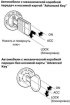
Starting the engine with a regular key
If the steering wheel is locked to prevent theft of the vehicle, the key can be removed from the ignition switch if the ignition switch is in the "LOCK" position...
If the steering wheel is locked to prevent theft of the vehicle, the key can be removed from the ignition switch if the ignition switch is in the "LOCK" position...

Starting the engine using an auxiliary key with a portable card «Advanced Key»
Wearable map "Advanced Key" must be carried by the driver, since it contains an electronic immobilizer microcircuit, which exchanges coded signals with the engine...
Wearable map "Advanced Key" must be carried by the driver, since it contains an electronic immobilizer microcircuit, which exchanges coded signals with the engine...

Switching off the engine using the auxiliary key
1. Move the range selector lever to the "P" (parking) position (in a car with automatic transmission). 2. Turn the ignition switch from the "ON" position (ignition on)...
1. Move the range selector lever to the "P" (parking) position (in a car with automatic transmission). 2. Turn the ignition switch from the "ON" position (ignition on)...
Manual transmission control
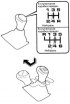
Fig. 1.152. Gear shift diagram The car uses a conventional gear shift pattern as shown in the figure (for 5- and 6-speed gearboxes) (fig. 1.152). When changing gears,...
Fig. 1.152. Gear shift diagram The car uses a conventional gear shift pattern as shown in the figure (for 5- and 6-speed gearboxes) (fig. 1.152). When changing gears,...

Automatic transmission control
Fig. 1.153. Shift diagram of the range selector lever The starter can be engaged if the range selector is in the "P" (park) or "N" (neutral) position (fig. 1.153). In...
Fig. 1.153. Shift diagram of the range selector lever The starter can be engaged if the range selector is in the "P" (park) or "N" (neutral) position (fig. 1.153). In...
Locking the range selector lever (automatic transmission)
The locking system does not allow the lever to be moved out of the "P" (parking) position unless the brake pedal is pressed. To move the lever out of the "P" (park)...
The locking system does not allow the lever to be moved out of the "P" (parking) position unless the brake pedal is pressed. To move the lever out of the "P" (park)...

Disabling the range selector lever lock (automatic transmission)
If the shift lever cannot be moved out of the "P" (Park) position in the normal manner while holding the brake pedal depressed, perform the following steps. 1. Using a...
If the shift lever cannot be moved out of the "P" (Park) position in the normal manner while holding the brake pedal depressed, perform the following steps. 1. Using a...
Manual gear shift mode (automatic transmission)
Manual gear shift mode allows, to a certain extent, to simulate the control of a manual transmission and gives the driver the ability to control the engine speed and...
Manual gear shift mode allows, to a certain extent, to simulate the control of a manual transmission and gives the driver the ability to control the engine speed and...

Gear indicator (automatic transmission)
Fig. 1.155. Gear engagement and range indication The gear number on the dashboard lights up (fig. 1.155). If downshifting is not possible due to vehicle speed being too...
Fig. 1.155. Gear engagement and range indication The gear number on the dashboard lights up (fig. 1.155). If downshifting is not possible due to vehicle speed being too...
Shifting to higher gears in manual mode (automatic transmission)
To shift the transmission to an adjacent higher gear (relative to the current transmission), press the lever back (+). If the vehicle is moving slowly, the transmission...
To shift the transmission to an adjacent higher gear (relative to the current transmission), press the lever back (+). If the vehicle is moving slowly, the transmission...
Shifting to lower gears in manual mode (automatic transmission)
To shift the transmission to an adjacent lower gear (relative to the current transmission), press the lever forward. If the vehicle is moving at high speed, the...
To shift the transmission to an adjacent lower gear (relative to the current transmission), press the lever forward. If the vehicle is moving at high speed, the...
Second gear lock mode (automatic transmission)
If the vehicle is stationary or the vehicle speed does not exceed 10 km/h, then pressing the lever back (+) switches the transmission to the second gear lock mode. In...
If the vehicle is stationary or the vehicle speed does not exceed 10 km/h, then pressing the lever back (+) switches the transmission to the second gear lock mode. In...

Gear shift points (automatic transmission)
Shifting to higher gears The table shows the values of the maximum vehicle speeds below which switching to the corresponding higher gears is impossible. Shifting into...
Shifting to higher gears The table shows the values of the maximum vehicle speeds below which switching to the corresponding higher gears is impossible. Shifting into...
Power steering — general information
Power steering only works when the engine is running. If the engine is off or the power steering system is faulty, you can still steer the car, but it will require more...
Power steering only works when the engine is running. If the engine is off or the power steering system is faulty, you can still steer the car, but it will require more...
Power steering malfunction indicator
The indicator lights up when the ignition switch is turned to the "ON" position (ignition on) and goes out after the engine starts. The indicator lights up when the...
The indicator lights up when the ignition switch is turned to the "ON" position (ignition on) and goes out after the engine starts. The indicator lights up when the...
Vehicle stability control system (cruise control)
The cruise control system allows you to set and automatically maintain a constant vehicle speed (but not less than 30 km/h). Warning: Using the cruise control system...
The cruise control system allows you to set and automatically maintain a constant vehicle speed (but not less than 30 km/h). Warning: Using the cruise control system...
Turning cruise control on/off
To turn on the cruise control system, press the main "ON/OFF" switch. The green "CRUISE" indicator will light up. To turn off the cruise control system, press the main...
To turn on the cruise control system, press the main "ON/OFF" switch. The green "CRUISE" indicator will light up. To turn off the cruise control system, press the main...
Setting the stabilized speed value
1. Turn on the cruise control system by pressing the main "ON/OFF" switch. 2. Accelerate the car to the required speed (not less than 30 km/h). Press and release the...
1. Turn on the cruise control system by pressing the main "ON/OFF" switch. 2. Accelerate the car to the required speed (not less than 30 km/h). Press and release the...
Increasing the stabilized speed
You can increase the vehicle's stabilized speed value in two ways. Press and hold the "RES/ACCEL" switch button. The car will accelerate. Release the switch button when...
You can increase the vehicle's stabilized speed value in two ways. Press and hold the "RES/ACCEL" switch button. The car will accelerate. Release the switch button when...
Reduction of the stabilized speed
Press and hold the "SET/COAST" switch button. The car will gradually slow down. Release the switch button when the desired speed is reached. If the cruise control...
Press and hold the "SET/COAST" switch button. The car will gradually slow down. Release the switch button when the desired speed is reached. If the cruise control...
Turning off the cruise control system
To turn off the cruise control system, use one of the methods below. Press the "ON/OFF" switch. Press the brake pedal lightly. Press the clutch pedal (cars with manual...
To turn off the cruise control system, use one of the methods below. Press the "ON/OFF" switch. Press the brake pedal lightly. Press the clutch pedal (cars with manual...
Traction Control System (TCS)
The anti-skid system (ASS) helps to improve the traction properties of the vehicle and driving safety by regulating the torque developed by the engine and braking the...
The anti-skid system (ASS) helps to improve the traction properties of the vehicle and driving safety by regulating the torque developed by the engine and braking the...

Anti-skid system (DSC)
The anti-skid system (ASS) automatically controls wheel braking and regulates the torque developed by the engine, together with the anti-lock and anti-slip systems,...
The anti-skid system (ASS) automatically controls wheel braking and regulates the torque developed by the engine, together with the anti-lock and anti-slip systems,...
Rear suspension stabilization
When the load on the rear wheels increases, the rear suspension springs are deformed, the rear part of the body is lowered and the ground clearance decreases. The...
When the load on the rear wheels increases, the rear suspension springs are deformed, the rear part of the body is lowered and the ground clearance decreases. The...

Traction device
To tow a trailer, use a towing hitch of the appropriate design. It is recommended to install a genuine Mazda towing hitch on the vehicle. To install the hitch, use the...
To tow a trailer, use a towing hitch of the appropriate design. It is recommended to install a genuine Mazda towing hitch on the vehicle. To install the hitch, use the...
Recommendations for towing a trailer
Check that the vehicle body remains approximately horizontal when coupled with a loaded or empty trailer. Do not operate the road train if the vehicle body is tilted...
Check that the vehicle body remains approximately horizontal when coupled with a loaded or empty trailer. Do not operate the road train if the vehicle body is tilted...
This section is available on: russian, bulgarian, belarusian, ukrainian, serbian, croatian, romanian, polish, slovak, hungarian
More sections on repairs of other Mazda models
• Transmission: Front wheel drive Mazda Familia 5 (1985-1989)
• User manual: Driving and operation Mazda6 GG (2002-2008)
• Transmission: Front wheel drive Mazda Familia 5 (1985-1989)
• User manual: Driving and operation Mazda6 GG (2002-2008)
Link in different formats to this section
TEXTHTMLBB Code
- User manual
- Vehicle description
- Keys, locks and alarms
- Controls and instruments
- Air conditioning and heater
- Seat adjustment
- Security systems
- Driving and operation
- Faults en route
- Maintenance
- Power unit
- Engine device (gasoline)
- Engine repair (gasoline)
- Diesel engine (Z6)
- Lubrication system
- Cooling system
- Fuel system
- Exhaust system
- Engine electrical equipment
- Engine management system
- Transmission
- Clutch
- Mechanical gearbox
- Automatic gearbox
- Drive mechanism
- Chassis
- Suspension and wheels
- Steering
- Brake system
- Body
- Body elements
- Doors and windows
- Air conditioning and heater
- Electrical equipment
- Equipment and devices
- Power devices
- Lighting system
- Windshield wipers and washers
- Equipment checks