


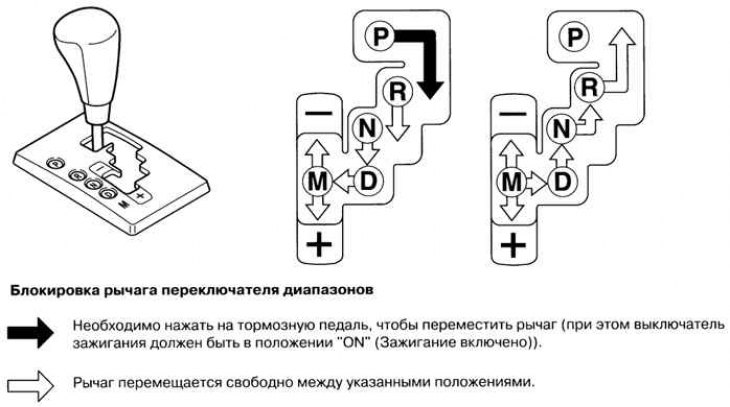
Fig. 1.153. Shift diagram of the range selector lever
The starter can be engaged if the range selector is in the "P" (park) or "N" (neutral) position (fig. 1.153).
In the "P" (parking) position of the range selector, the front wheels are mechanically locked from rotating.
Caution! Moving the range selector lever to the "P" (park), "N" (neutral) or "R" positions (reverse) while the vehicle is moving may cause damage to the transmission.
Caution! Shifting the range selector lever to the "D" (drive) or "R" position (reverse), when the engine is running above idle speed, can cause damage to the transmission.
If the lever is in the "R" position (reverse), the reverse gear is engaged and the car can move backwards. It is necessary to engage and disengage the reverse gear only after the car has come to a complete stop. The exception is rare cases when it is necessary to get the car out of a jam by rocking.
In the "N" (neutral) position, no gear is engaged in the transmission and the front wheels are disconnected from the engine. The vehicle can roll freely even on a slight incline unless the parking brake is applied or the brake pedal is depressed.
Note: To prevent the vehicle from moving unexpectedly, set the parking brake or depress the brake pedal before moving the shift lever out of the "N" (neutral) position.
The "D" range (driving) is designed for normal driving conditions. After the car starts moving and as it accelerates, the gears are automatically sequentially shifted from first to fourth.
Original version of the article on the website www.mazbook.ru
Position "M" (manual switching) is designed for manual gear shifting. The driver can sequentially shift the transmission to higher or lower gears by moving the lever in the appropriate direction.