


Description and history of the car Mazda 626 (Capella)
Mazda Capella (Chapel) - a small C-class family car until 1987, and after that it moved to the D-segment or mid-size car. Production has been carried out since 1970 by the Japanese automaker Mazda Motor, and in 2002 was replaced by the model Mazda 6. Called Capella in the Japanese domestic market and known as Capella in other large markets Mazda 626. Ford partnered with Mazda to use the Capella platform to create the Ford Telstar and Ford Probe.
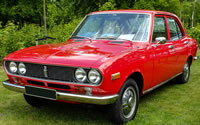
Mazda 616, sedan
During its life, the car has undergone six generations. For the first two generations, the engine was located in front longitudinally with rear wheel drive, starting from the third generation (since 1982) produced front-wheel drive cars with a front transverse engine, and from the fourth generation (since 1987) There were also all-wheel drive transmission options. The body was in the form of a sedan, hatchback, station wagon and coupe. The main competitors were cars of the following models − Citroën Xantia, Ford Taurus, Honda Accord, Hyundai Sonata, Mitsubishi Sigma, Nissan Bluebird, Opel Vectra, Peugeot 406, Renault Laguna, Subaru Legacy and Toyota Corona.
The car was named after Capella, the brightest star in the constellation Auriga, the sixth brightest star in the entire night sky and the third brightest in the northern celestial hemisphere, after Arcturus and Vega.
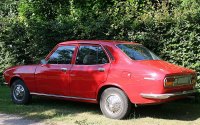
Mazda 616, sedan, back view
The first car appeared in May 1970 as a cross between a small car Mazda Familia (323) and Mazda Luce business class car (929). Also called as «Mazda 616/618» And «Mazda RX-2» in different markets. The internal coding, depending on the installed engine, was as follows - SNA, SU2A, CB1V, S122A and CB12. The body was in the form of a 4-door sedan and a 2-door coupe. The length of the car was 4150 mm until 1974 and 4260 mm later, the width was 1580 mm, the height was 1375-1430 mm. The engine is located in front longitudinally, rear-wheel drive. Manufactured in Japan (Hiroshima) and South Africa (Mr. _ Durban).
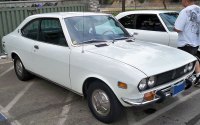
Mazda 616, coupe
The line of gasoline piston engines was the following models - 1.5 liters «UB» (1490 cm3, SOHC I4 SU2A, 92 hp), 1.6 liters «NA» (1586 cm3, SOHC I4 SNA, 100 hp), 1.8 liters «VC» (1769 cm3, SOHC I4 CB1V, 84 hp), 1.8 liters «VB» (1796 cm3, SOHC I4, 99 hp). Also, the car was equipped with two rotary engines with a volume of 1146 cm3 (Wankel 12A rotary, S122A, 110 or 130 hp) And (Wankel 12B rotary, CB12). Gearboxes were 3-speed automatic and 4 or 5-speed manual.
In February 1974, the car underwent a rather serious restyling. The length of the body increased by 110 mm, the design of the front of the car was greatly changed, and the instrument panel was also redesigned. In Japan, a rotary engine is much more profitable for a car owner when paying a vehicle tax, so after restyling, rotary engines began to be installed on this model, which was called «Capella Rotary» in Japan or «Mazda RX-2» for export. This is the only generation of Capella with rotary engines, which later branched off into a separate model «Mazda RX-».
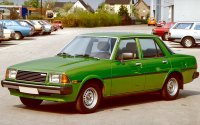
Mazda 626 CB, sedan
The third generation of the Capella was available from October 1978. In most markets, the car was called «Mazda 626», and in the UK «Montrose». The body was available as a 4-door sedan and 2-door coupe. The coupe and sedan chassis are mechanically identical. Body length was 4260-4300 mm, width 1580-1660 mm, height 1395-1420 mm. The curb weight was 975-1080 kg. The aerodynamics of the car was seriously worked on, achieving a drag coefficient Cx =0.38. The engine is located in front longitudinally with rear wheel drive. Manufactured in Japan (Hiroshima) and New Zealand (Auckland).
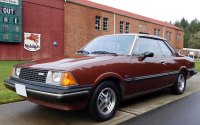
Mazda 626 CB, coupe
The car was equipped with 4-cylinder in-line gasoline engines of the following characteristics: for Japan - 1.6 liters «NA» (1586 cm3, 74 hp), 1.8 liters «VC» (1769 cm3, 98 hp) and 2.0 liters «MA» (1970 cm3, 108 hp); for export - 1.6 liters «NA» (1586 cm3, 74 hp) and 2.0 liters «MA» (1970 cm3, 89 hp); for North America - 2.0 liters «MA» (1970 cm3, 74 or 80 hp). Gearboxes were as follows - 4 and 5-speed manual or 3-speed automatic «Jatco».
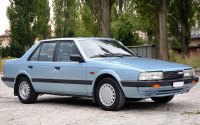
Mazda 626 GC, sedan
On a new platform «Mazda GC» in September 1982, the third generation of Capella was released. The most important difference from the previous modification is the transition from rear to front-wheel drive, as well as the transverse arrangement of the engine in front. The international version of the car was also called «Mazda 626». The body was produced as a 4-door sedan, 2-door coupe and 5-door hatchback. Vehicle length 4520 mm, width 1690 mm and height 1410 mm. The curb weight was 1050 kg. The car was assembled in Japan (Hofu), Colombia (Bogota) and New Zealand (Auckland).
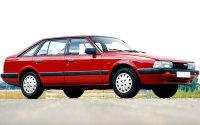
Mazda 626 GC, hatchback
During the release period, this generation received several awards «Car of the Year» from magazines and various organizations. In Europe, it immediately gained popularity and its sales increased significantly.
The line of gasoline engines was the following models - 1.6 liters «F6» (I4; 80 hp), 1.8 liters «F8» (I4, 91 hp), 2.0 liters «FE» (I4; 89, 91, 94 and 101 hp) and 2.0 liters «FE» (I4; EGi injection; 91, 109 and 118 hp). There was also one 2.0 liter diesel engine «RF» (I4; 63 hp). Gearboxes 3 or 4-speed automatic and 5-speed manual.
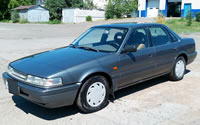
Mazda 626 GD, sedan
In May 1987, the fourth generation of Capella was introduced on the platform «Mazda GD» (wagon on the platform «GV»). The name is also the most common «Mazda 626 «. Body styles were introduced as a 4-door sedan, 2-door coupe, 5-door hatchback and, for the first time, a 5-door station wagon. The length of the car was 4515-4610 mm, width 1690 mm, height 1370 mm (hatchback) and 1410 (sedan). The engine was front-mounted transversely with front-wheel drive, and all-wheel drive models also appeared for the first time. The car was assembled in Japan (Hofu), USA (Flat Rock), Colombia (Bogota) and Zimbabwe (Harare).
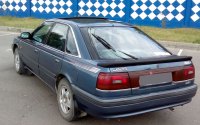
Mazda 626 GD, hatchback
Significantly expanded the range of gasoline engines, the characteristics of which were as follows - 1.6 liters «F6» (1587 cm3, I4, 8 valves; 80 hp), 1.6 liters «B6» (1597 cm3, I4, 8 valves; 72 hp), 1.8 liters «F8» (1789 cm3, I4, 8 valves; 89 hp), 1.8 liters «F8» (1789 cm3, I4, 12 valves; 81, 83 and 96 hp), 1.8 liters «F8» (1789 cm3, I4 DOHC, 16 valves; 113 hp), 2.0 liters «FE» (1998 cm3, I4, 8 valves; 89 and 100 hp), 2.0 liters «FE» (1998 cm3, I4, 12 valves; 107 hp), 2.0 liters «FE-DOHC» (1998 cm3, I4 DOHC, 16 valves, EGi injection; 138, 143, 145 and 148 hp), 2.2 liters «F2» (2184 cm3, I4, 12 valves, EGi injection; 108 and 113 hp) and 2.2 liters «F2T» (2184 cm3, I4, 12 valves, EGi injection, turbo; 145 hp).
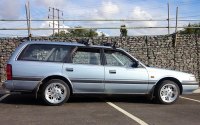
Mazda 626 GV, wagon
There were also two diesel engine models, both 2.0 liter (1998 cm3) — «RF» (I4, 60 hp) And «RF-CX» (I4, Comprex, turbo; 81 and 87 hp). There were three models of gearboxes - 4 and 5-speed manual or 4-speed automatic.
In February 1988, some models were equipped with four active wheel steering. In 1990, this generation underwent modernization. Although main production in Japan ended in 1991, Ford continued to produce the series sedans «GD» entitled «Telstar Classic», and the station wagon was available in some markets until 1997.
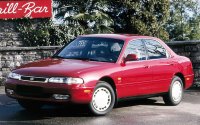
Mazda 626 GE, sedan
The fifth generation was released in November 1991. Name «Capella» was abolished, on international markets only «Mazda 626 «, and in Japan the car became known as «Cronos» (sedan) And «ɛ̃fini MS-6» (hatchback). Station wagon and coupe bodies ceased to be produced, only a 4-door sedan remained (length 4670 mm) and 5 door hatchback (length 4695 mm). The remaining dimensions were the same: width 1750 mm and height 1400 mm. The curb weight was 1180 kg for the sedan and 1340 kg for the hatchback. Japanese models are slightly narrower due to taxation in Japan which takes into account the width of the car. The drive was carried out on the front wheels or you could choose all-wheel drive, the engine was located transversely in front. Manufactured in Japan (Hofu), Colombia (Bogota) and USA (Flat Rock).
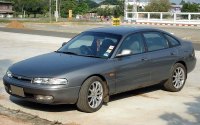
Mazda 626 GE, hatchback
Gasoline engines were installed in the following modifications - 1.8 liters «FP» (1840 cm3, I4; 104 hp), 2.0 liters «FS» (1991 cm3, I4; 113 and 118 hp), as well as for the first time on this car six-cylinder 2.0-liter engines «KF-ZE» (1995 cm3, V6; 160 hp) and 2.5 liters «KL» (2497 cm3, V6; 163 and 164 hp). One 2.0 liter diesel engine was installed «RFT» (1998 hp, I4, Comprex, turbo; 80 hp). The transmission was installed in two versions - a 5-speed manual or a 4-speed automatic Ford CD4E.
In 1992 «626» became «Car of the Year» according to Wheels magazine.
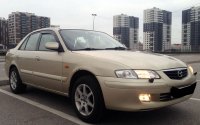
Mazda 626 GF, sedan
In 1997, the sixth and final generation appeared «Mazda 626», platform based «GF». Name «Cronos» stopped being used. The body was produced in three versions - a 4-door sedan, a 5-door hatchback and a 5-door station wagon (platform «GW»). The length of the car was 4575 mm, 4660 mm (station wagon), 4750 mm (USA); width 1760 mm or 1695 mm (Japan); height 1400 mm. The engine was traditionally located transversely in front, front-wheel drive, in Japan you can find all-wheel drive. The car was assembled in Japan (Hofu), Colombia (Bogota), USA (Flat Rock) and Zimbabwe.
There were four models of gasoline engines with the following characteristics - 1.8 liters «FP-DE» (1839 cm3, I4, 90 hp), 2.0 liters «FS-DE» (1991 cm3, I4, 115 hp), 2.0 liters «FS-ZE» (1991 cm3, I4, 136 hp) and six-cylinder 2.5 liters «KL-ZE» (2496 cm3, V6, 167 hp). Also one 2.0 liter diesel «RF-T» (1998 cm3), 4-cylinder in-line turbocharged 101 hp The transmission was a 5-speed manual or 4-speed automatic.
Models for the North American market differed from cars for the rest of the world in design, more powerful engines and body length. In 1999 there was a small update of this generation.
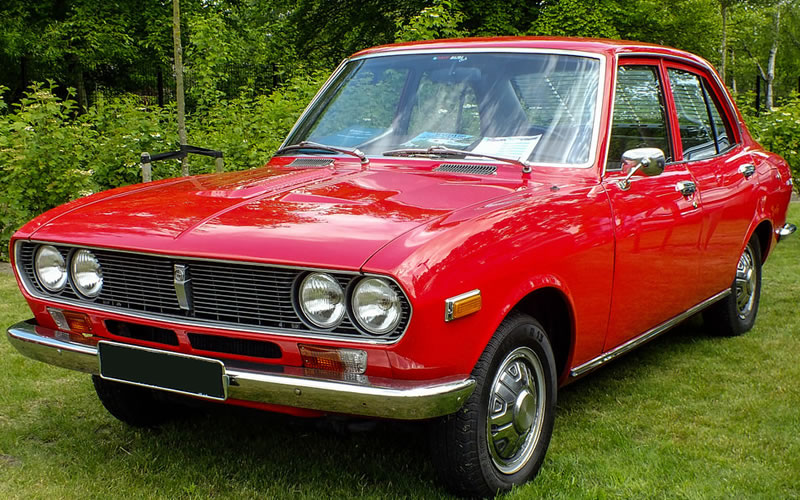
Mazda 616, sedan
The car was named after Capella, the brightest star in the constellation Auriga, the sixth brightest star in the entire night sky and the third brightest in the northern celestial hemisphere, after Arcturus and Vega.
First generation (SNA, 1970−1978)
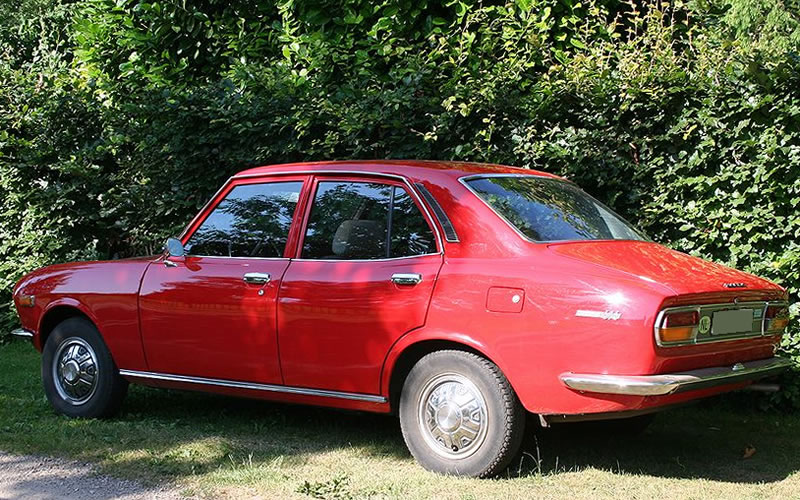
Mazda 616, sedan, back view
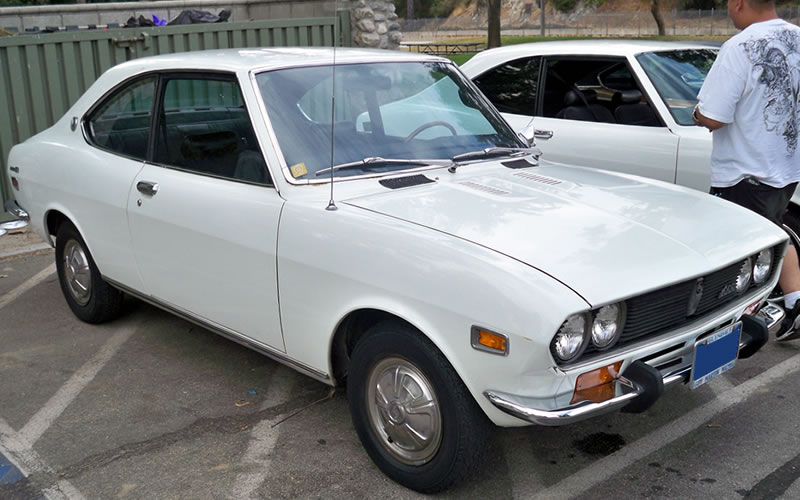
Mazda 616, coupe
In February 1974, the car underwent a rather serious restyling. The length of the body increased by 110 mm, the design of the front of the car was greatly changed, and the instrument panel was also redesigned. In Japan, a rotary engine is much more profitable for a car owner when paying a vehicle tax, so after restyling, rotary engines began to be installed on this model, which was called «Capella Rotary» in Japan or «Mazda RX-2» for export. This is the only generation of Capella with rotary engines, which later branched off into a separate model «Mazda RX-».
Second generation (CB, 1978−1982)
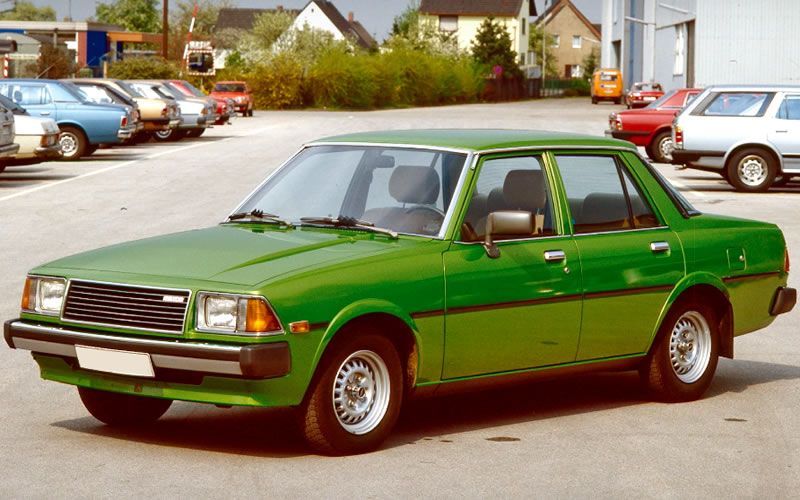
Mazda 626 CB, sedan
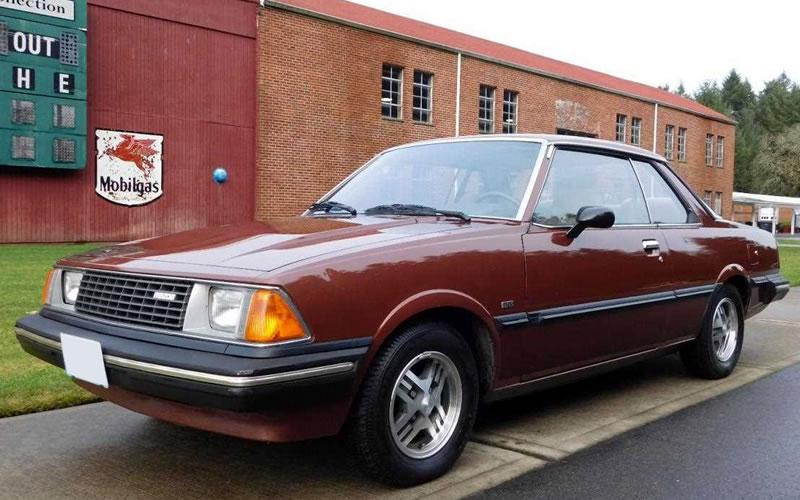
Mazda 626 CB, coupe
Third generation (GC, 1982−1987)
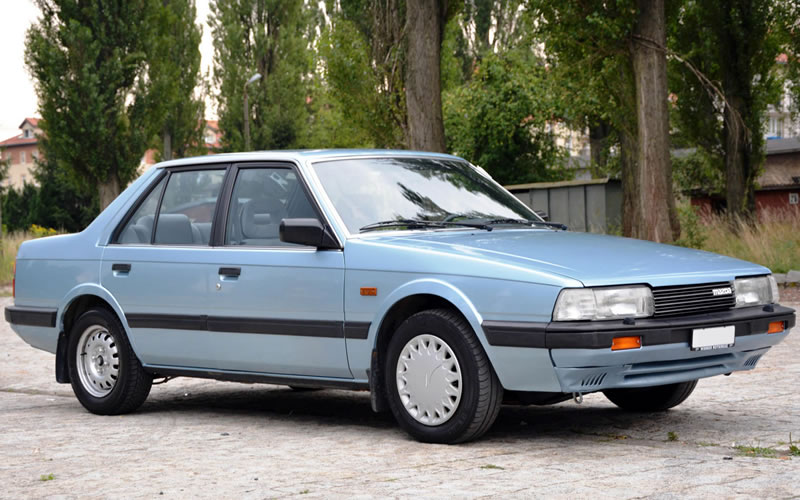
Mazda 626 GC, sedan
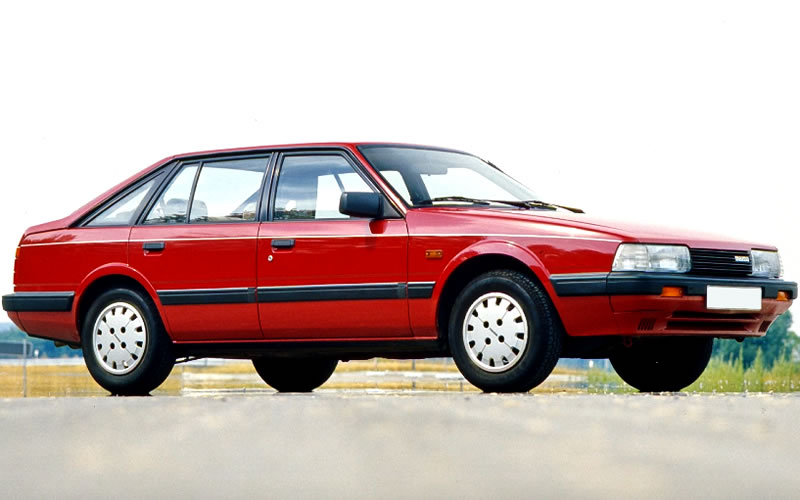
Mazda 626 GC, hatchback
The line of gasoline engines was the following models - 1.6 liters «F6» (I4; 80 hp), 1.8 liters «F8» (I4, 91 hp), 2.0 liters «FE» (I4; 89, 91, 94 and 101 hp) and 2.0 liters «FE» (I4; EGi injection; 91, 109 and 118 hp). There was also one 2.0 liter diesel engine «RF» (I4; 63 hp). Gearboxes 3 or 4-speed automatic and 5-speed manual.
Fourth generation (GD, GV, 1987−1992)
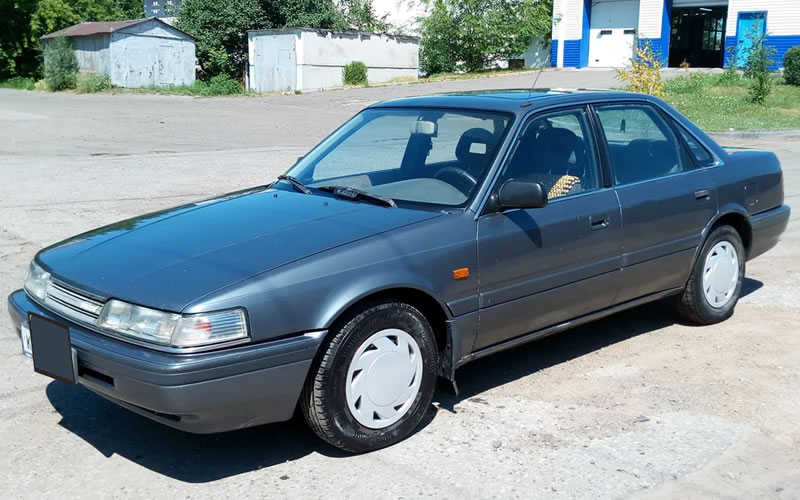
Mazda 626 GD, sedan
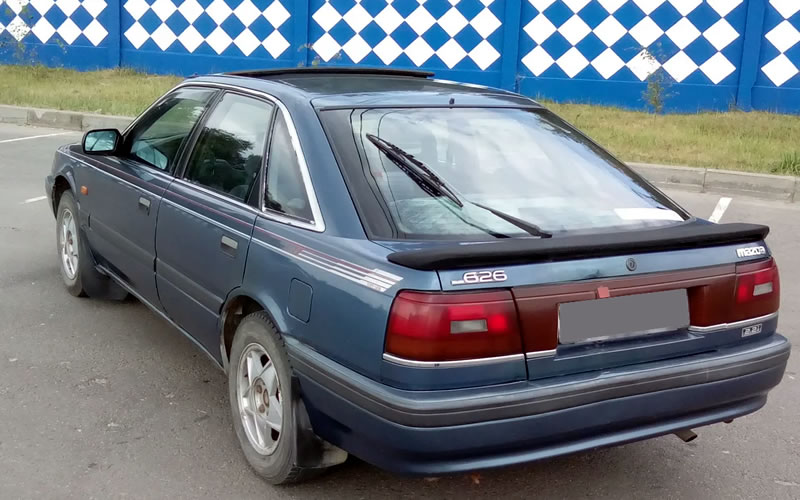
Mazda 626 GD, hatchback
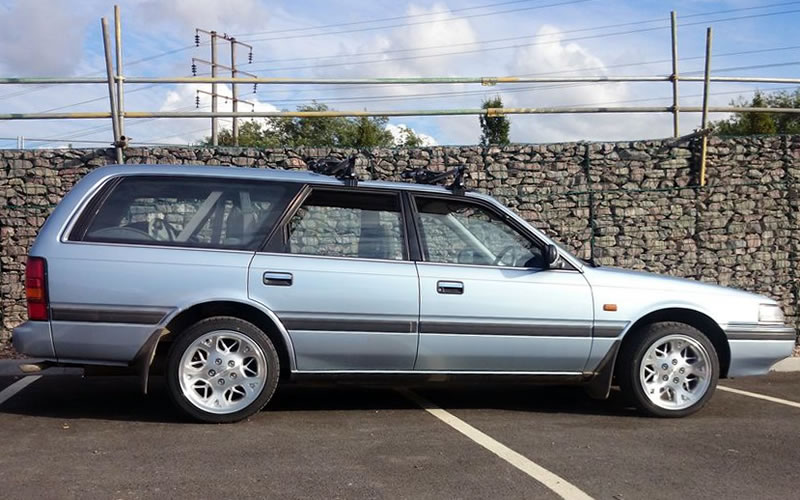
Mazda 626 GV, wagon
In February 1988, some models were equipped with four active wheel steering. In 1990, this generation underwent modernization. Although main production in Japan ended in 1991, Ford continued to produce the series sedans «GD» entitled «Telstar Classic», and the station wagon was available in some markets until 1997.
Fifth generation (GE, 1991−1997)
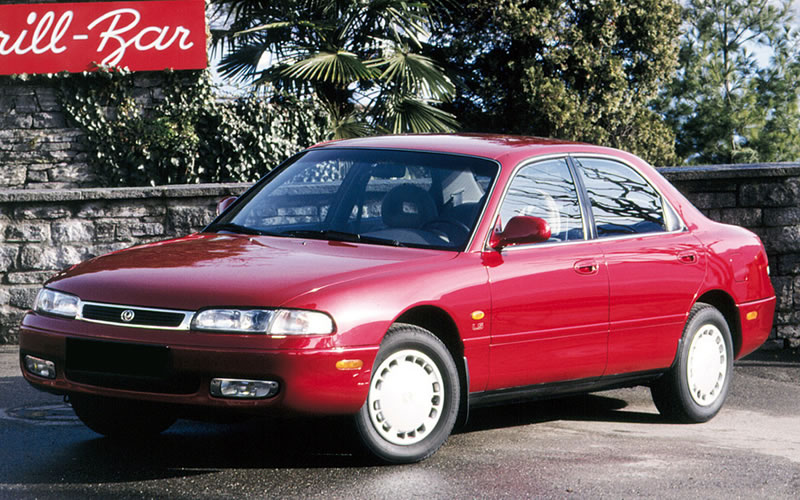
Mazda 626 GE, sedan
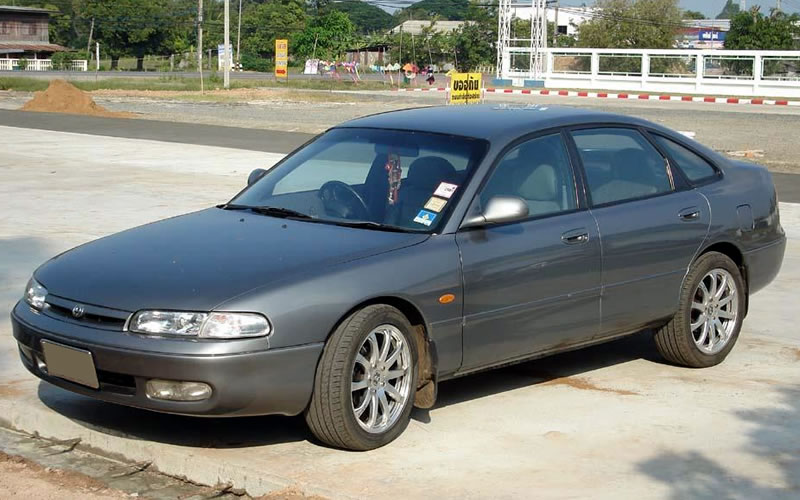
Mazda 626 GE, hatchback
In 1992 «626» became «Car of the Year» according to Wheels magazine.
Sixth generation (GF, GW, 1997−2005)
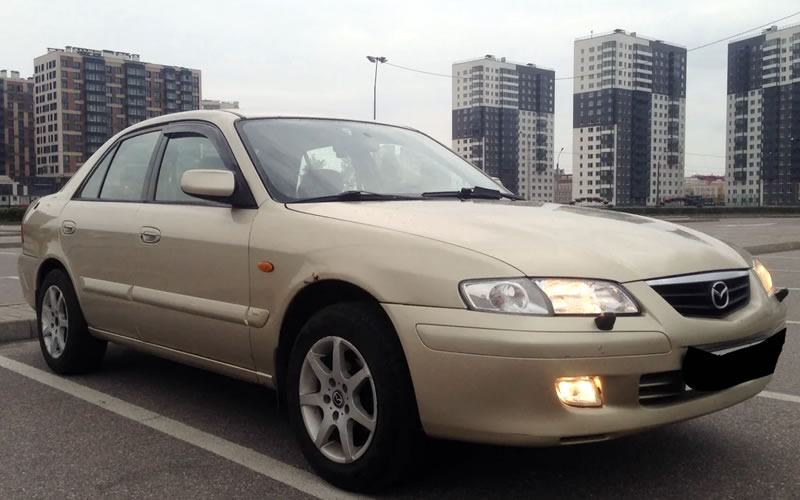
Mazda 626 GF, sedan
There were four models of gasoline engines with the following characteristics - 1.8 liters «FP-DE» (1839 cm3, I4, 90 hp), 2.0 liters «FS-DE» (1991 cm3, I4, 115 hp), 2.0 liters «FS-ZE» (1991 cm3, I4, 136 hp) and six-cylinder 2.5 liters «KL-ZE» (2496 cm3, V6, 167 hp). Also one 2.0 liter diesel «RF-T» (1998 cm3), 4-cylinder in-line turbocharged 101 hp The transmission was a 5-speed manual or 4-speed automatic.
Models for the North American market differed from cars for the rest of the world in design, more powerful engines and body length. In 1999 there was a small update of this generation.
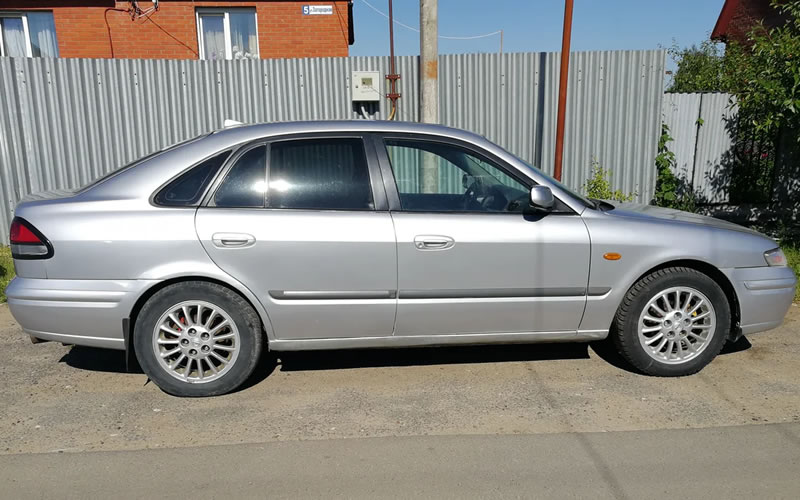 Mazda 626 GF, hatchback | 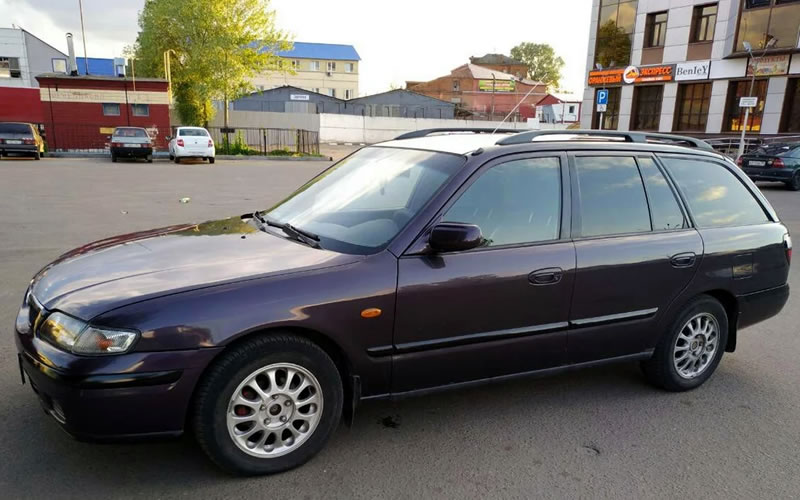 Mazda 626 GW, wagon | 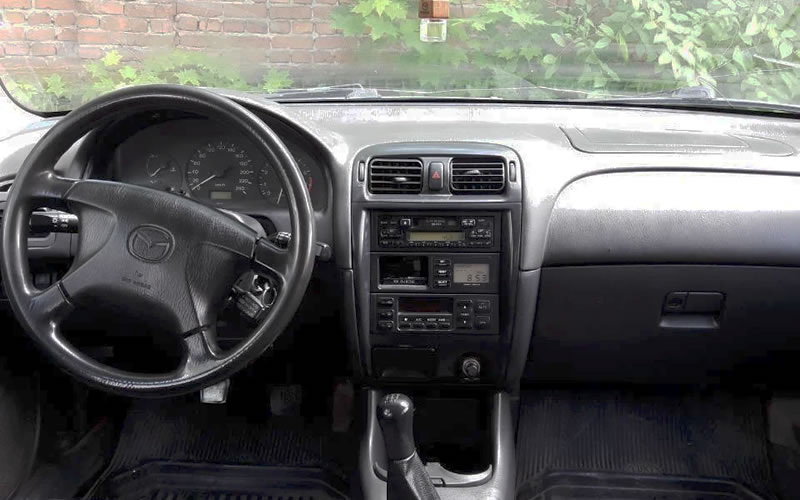 Mazda 626 GF, interior |
Link in different formats to this article
TEXTHTMLBB Code
- General information
- Introduction to guide
- User manual
- Troubleshooting
- Maintenance
- Power unit
- 4-cylinder engines
- 6-cylinder engines
- Engine overhaul
- Cooling and ventilation
- Power and exhaust systems
- Engine electrics
- Control system
- Transmission
- Mechanical gearbox
- Automatic gearbox
- Clutch and drive shafts
- Chassis
- Brake system
- Car suspension
- Steering
- Body
- Exterior (external elements)
- Interior (internal elements)
- Doors, windows and locks
- Electrical equipment
- Equipment and devices
- Electrical circuits
- General information
- User manual
- Maintenance
- Helpful hints
- Power unit
- Petrol engines 1.6 and 1.8
- Petrol engines 2.0
- 2.5 petrol engines
- Overhaul engines 1.6 and 1.8
- Overhaul engines 2.0 and 2.5
- Diesel engine 2.0
- Engine electrics
- Cooling system
- Air conditioner
- Carburetor Nikki 30/34
- Power system (1.6 and 1.8)
- Power system (2.0 and 2.5)
- Control system
- Transmission
- Mechanical gearbox
- Automatic gearbox
- Clutch and axles
- Chassis
- Brake system
- Suspension and wheels
- Steering
- Body
- Exterior (external elements)
- Interior (internal elements)
- Doors and windows
- Electrical equipment
- Equipment and devices
- Electrical circuits
- General information
- User manual
- Maintenance
- Power unit
- Gasoline engine
- Engine overhaul (gasoline)
- Diesel engine
- Cooling and heating
- Supply system
- Ignition system
- Emission reduction
- Transmission
- Clutch
- Mechanical gearbox
- Automatic gearbox
- Drive shafts
- Chassis
- Brake system
- Suspension and wheels
- Steering
- Body
- Exterior (external elements)
- Interior (internal elements)
- Electrical equipment
- Equipment and devices
- Power devices
- Electrical circuits
- General information
- User manual
- Maintenance
- Troubleshooting
- Late models
- Power unit
- Engine in car
- Engine overhaul
- Cooling and heating system
- Fuel and exhaust system
- Engine electrical system
- Emission control system
- Transmission
- Mechanical gearbox
- Automatic gearbox
- Clutch and drive shafts
- Chassis
- Brake system
- Suspension and wheels
- Steering
- Body
- Exterior (external elements)
- Interior (internal elements)
- Electrical equipment
- Equipment and devices
- Lighting and lamps
- Electrical circuits
MazBook.ru © 2018–2024 · Mobile version · Articles and news · Sitemap: EN BG BY UA RS HR RO PL SK HU · Feedback · Site search · Add to bookmarks
Familia 5 (BF) · Familia 6 (BG) · Capella 3 (GC) · Capella 3 and 4 (GC) · Capella 5 (GE) · Capella 6 (GF) · Mazda3 BK · Mazda6 GG · CX-5KE · Mazda 121 (3) · Mazda BT-50 (1) ·