


Brake system of the car Mazda 626 (6)

Technical data of the brake system
Basic data Brake pedal: Height (to the carpet): Models produced from 1993 to 1997 - 192-197 mm Models produced since 1999 - 193 mm Free play: Models produced from 1993...
Basic data Brake pedal: Height (to the carpet): Models produced from 1993 to 1997 - 192-197 mm Models produced since 1999 - 193 mm Free play: Models produced from 1993...
Basic information about the braking system
General information Vehicles described in this manual. equipped with front and rear hydraulic brake systems and a vacuum booster. The front brakes are disc type, the...
General information Vehicles described in this manual. equipped with front and rear hydraulic brake systems and a vacuum booster. The front brakes are disc type, the...

Anti-lock braking System-basic information and fault codes
General information 1. In a conventional braking system, when you press the brake pedal hard, the wheels lock up (that is, they stop rotating) and the car becomes...
General information 1. In a conventional braking system, when you press the brake pedal hard, the wheels lock up (that is, they stop rotating) and the car becomes...

Disc brake pads — replacement
Caution! Dust generated by brake pad wear contains asbestos. dangerous to your health. Do not blow compressed air into the brakes or inhale the dust. Before working on...
Caution! Dust generated by brake pad wear contains asbestos. dangerous to your health. Do not blow compressed air into the brakes or inhale the dust. Before working on...

Disc Brake Caliper — removal and installation
Caution! Dust generated by brake pad wear contains asbestos. dangerous to your health. Do not blow compressed air into the brakes or inhale the dust. Before working on...
Caution! Dust generated by brake pad wear contains asbestos. dangerous to your health. Do not blow compressed air into the brakes or inhale the dust. Before working on...

Brake disc — inspection, removal and installation
Application: This procedure applies to both front and rear disc brakes. Examination 1. Loosen the wheel nuts. raise the car and place it on supports. Remove the wheel...
Application: This procedure applies to both front and rear disc brakes. Examination 1. Loosen the wheel nuts. raise the car and place it on supports. Remove the wheel...

Drum brake shoes — replacement
Warning. Brake pads must be replaced on both wheels at the same time. Never replace the pads on just one wheel. In addition, the dust generated by brake pad wear...
Warning. Brake pads must be replaced on both wheels at the same time. Never replace the pads on just one wheel. In addition, the dust generated by brake pad wear...

Wheel cylinder — removal and installation
Note: If brake fluid leaks from the cylinder, the cylinder must be replaced. The manufacturer does not recommend repairing the wheel cylinder. Removal 1. Raise the rear...
Note: If brake fluid leaks from the cylinder, the cylinder must be replaced. The manufacturer does not recommend repairing the wheel cylinder. Removal 1. Raise the rear...

Master cylinder — removal and installation
Note: If the master cylinder is faulty, replace it. The manufacturer does not recommend repairing the master cylinder. Removal 1. The master cylinder is located in the...
Note: If the master cylinder is faulty, replace it. The manufacturer does not recommend repairing the master cylinder. Removal 1. The master cylinder is located in the...

Brake system pipes and hoses — inspection and replacement
1. Approximately every 6 months, inspect the flexible brake hoses that connect the lines to the wheel cylinders and check for cracks, swelling, signs of brake fluid...
1. Approximately every 6 months, inspect the flexible brake hoses that connect the lines to the wheel cylinders and check for cracks, swelling, signs of brake fluid...

Bleeding the hydraulic brake system
Caution! When bleeding the brake system, take precautions to protect your eyes. If brake fluid gets into your eyes, rinse immediately with plenty of water and seek...
Caution! When bleeding the brake system, take precautions to protect your eyes. If brake fluid gets into your eyes, rinse immediately with plenty of water and seek...

Vacuum booster — inspection, removal and installation
Checking the work 1. Press the brake pedal and start the engine. If the brake pedal sinks slightly, the booster is working properly. 2. With the engine running, press...
Checking the work 1. Press the brake pedal and start the engine. If the brake pedal sinks slightly, the booster is working properly. 2. With the engine running, press...
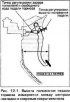
Brake pedal height and free travel adjustment
Note: Beginning in 1998, vehicles were equipped with a brake light switch that could only be adjusted once. If it is necessary to adjust the brake pedal height, this...
Note: Beginning in 1998, vehicles were equipped with a brake light switch that could only be adjusted once. If it is necessary to adjust the brake pedal height, this...

Parking brake adjustment
1. Remove the center console cover around the parking brake lever ( see chapter 11 ). 2. Place chocks under the front wheels, raise the rear of the car and place it on...
1. Remove the center console cover around the parking brake lever ( see chapter 11 ). 2. Place chocks under the front wheels, raise the rear of the car and place it on...

Parking brake cable — replacement
1. Place chocks under the front wheels. Loosen the rear wheel nuts, raise the rear of the vehicle and place it on supports. 2. On models with rear drum brakes, remove...
1. Place chocks under the front wheels. Loosen the rear wheel nuts, raise the rear of the vehicle and place it on supports. 2. On models with rear drum brakes, remove...

Low Brake Fluid Warning Light Switch — checking and replacing
Examination 1. To check the switch, disconnect the wiring connector, then remove the cap from the brake master cylinder reservoir. 2. Check the resistance between the...
Examination 1. To check the switch, disconnect the wiring connector, then remove the cap from the brake master cylinder reservoir. 2. Check the resistance between the...
This section is available on: russian, bulgarian, belarusian, ukrainian, serbian, croatian, romanian, polish, slovak, hungarian
More sections on repairs of other Mazda models
• Chassis: Brake system Mazda Familia 5 (1985-1989)
• Chassis: Brake system Mazda3 BK (2003-2009)
• Chassis: Brake system Mazda6 GG (2002-2008)
• Chassis: Brake system Mazda CX-5KE (2012-2017)
• Chassis: Brake system Mazda 121 (3) (1996-2003)
• Chassis: Brake system Mazda Familia 5 (1985-1989)
• Chassis: Brake system Mazda3 BK (2003-2009)
• Chassis: Brake system Mazda6 GG (2002-2008)
• Chassis: Brake system Mazda CX-5KE (2012-2017)
• Chassis: Brake system Mazda 121 (3) (1996-2003)
Link in different formats to this section
TEXTHTMLBB Code
- General information
- Introduction to guide
- User manual
- Troubleshooting
- Maintenance
- Power unit
- 4-cylinder engines
- 6-cylinder engines
- Engine overhaul
- Cooling and ventilation
- Power and exhaust systems
- Engine electrics
- Control system
- Transmission
- Mechanical gearbox
- Automatic gearbox
- Clutch and drive shafts
- Chassis
- Brake system
- Car suspension
- Steering
- Body
- Exterior (external elements)
- Interior (internal elements)
- Doors, windows and locks
- Electrical equipment
- Equipment and devices
- Electrical circuits
- General information
- User manual
- Maintenance
- Helpful hints
- Power unit
- Petrol engines 1.6 and 1.8
- Petrol engines 2.0
- 2.5 petrol engines
- Overhaul engines 1.6 and 1.8
- Overhaul engines 2.0 and 2.5
- Diesel engine 2.0
- Engine electrics
- Cooling system
- Air conditioner
- Carburetor Nikki 30/34
- Power system (1.6 and 1.8)
- Power system (2.0 and 2.5)
- Control system
- Transmission
- Mechanical gearbox
- Automatic gearbox
- Clutch and axles
- Chassis
- Brake system
- Suspension and wheels
- Steering
- Body
- Exterior (external elements)
- Interior (internal elements)
- Doors and windows
- Electrical equipment
- Equipment and devices
- Electrical circuits
- General information
- Introduction to manual
- Vehicle specifications
- Power unit
- Engine repair
- Lubrication system
- Cooling system
- Fuel system (carburetor)
- Fuel injection (FE)
- Fuel injection (DOHC)
- Fuel system (diesel)
- Ignition system
- Transmission
- Clutch
- Gearbox
- Drive shafts
- Chassis
- Front suspension
- Rear suspension
- Steering system
- Brake system
- Electrical equipment
- Equipment and devices
- Electrical circuits
- General information
- User manual
- Maintenance
- Power unit
- Gasoline engine
- Engine overhaul (gasoline)
- Diesel engine
- Cooling and heating
- Supply system
- Ignition system
- Emission reduction
- Transmission
- Clutch
- Mechanical gearbox
- Automatic gearbox
- Drive shafts
- Chassis
- Brake system
- Suspension and wheels
- Steering
- Body
- Exterior (external elements)
- Interior (internal elements)
- Electrical equipment
- Equipment and devices
- Power devices
- Electrical circuits
- General information
- User manual
- Maintenance
- Troubleshooting
- Late models
- Power unit
- Engine in car
- Engine overhaul
- Cooling and heating system
- Fuel and exhaust system
- Engine electrical system
- Emission control system
- Transmission
- Mechanical gearbox
- Automatic gearbox
- Clutch and drive shafts
- Chassis
- Brake system
- Suspension and wheels
- Steering
- Body
- Exterior (external elements)
- Interior (internal elements)
- Electrical equipment
- Equipment and devices
- Lighting and lamps
- Electrical circuits