

a) Check each cylinder for damage and cracks. Replace the cylinder block if necessary.
b) Remove any remaining gaskets from the working surfaces of the cylinder block.
c) Using solvent and a soft brush, thoroughly clean the cylinder block.
2. Check the cylinder block gas joint surface for flatness using a precision ruler and a flat feeler gauge, as shown in the figure.
Caution: regrinding of the cylinder block surface is not permitted.
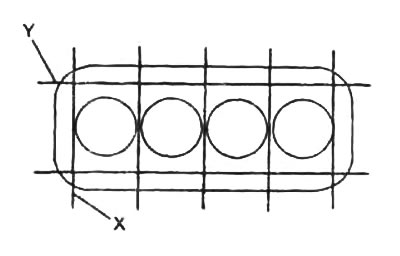
Maximum non-flatness:
- in the "X" direction - 0.02 mm
- in the "Y" direction - 0.05 mm
If the flatness exceeds the specified value, replace the cylinder block.
3. Check the cylinder bore for vertical scratches. If possible, ream the cylinder block to the next repair size. If there are deep scratches, replace the cylinder block.
4. If necessary, remove the wear step in the upper compression ring stop umbrella at TDC.
5. Using a bore gauge, measure the cylinder diameter as shown in the figure.
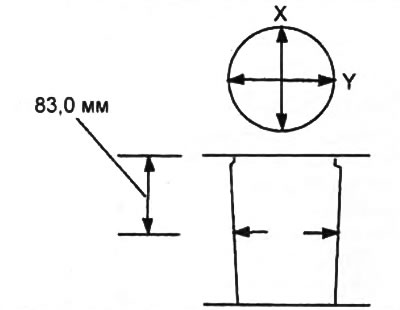
Cylinder diameter:
nominal - 93,000 - 93,022 mm
repair size:
- (0.25) — 23.250-93.272 mm
- (0.50) — 93.500-93.522 mm
Maximum wear value - 0.15 mm
If the diameter is greater than the maximum, bore all cylinders to the repair size or replace the cylinder block.
6. Check the oil injector bypass bolt.
a) Apply pressure to the oil injector bypass bolt from side "A".
- Pressure - 138-196 kPa
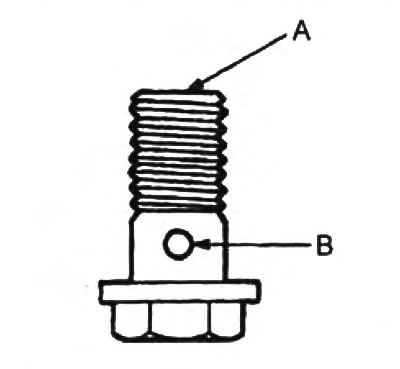
b) Make sure that air comes out from the side of replace "B". Otherwise, replace the bypass bolt.
7. Check the axial clearance of the connecting rod bearing.
Caution: Before measuring clearance, install the connecting rod lower end cap.
Axial clearance:
- nominal - 0.110-0.260 mm
- maximum - 0.35 mm

If the axial clearance is greater than the maximum, replace the connecting rod assembly.
Replace the crankshaft if necessary.
8. Remove the connecting rod lower head cover and check the connecting rod bearing radial clearance.
a) Unscrew the two bolts securing the lower connecting rod head cover.

b) Using a plastic-faced hammer, lightly tap the connecting rod bolts and remove the lower connecting rod cap by rocking it from side to side.
Note: The lower bearing shell must remain in the connecting rod lower end cap!
c) Clean the crankpin and bearings.
d) Check the surfaces of the connecting rod journal and bearing for pitting and scratches.
If there are any scratches or scoring, replace the liners. If necessary, regrind the journals or replace the crankshaft.
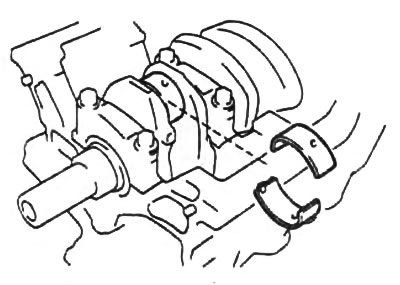
d) Install the plastic bearing clearance gauge as shown in the figure.
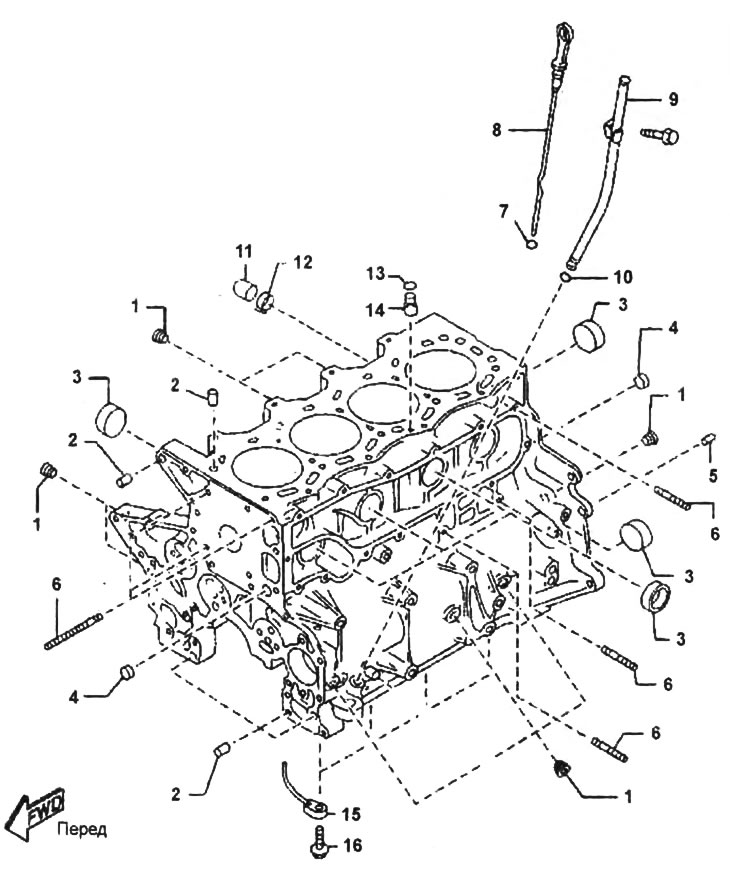
Cylinder block.
1 - threaded plug for hexagon,
2 - hollow pin,
3 - sealing plug,
4 - plug,
5 - mounting pin,
6 - hairpin,
7, 10, 13 - sealing ring,
8 - oil dipstick,
9 - oil dipstick guide tube,
11 - cover,
12 - clamp,
14 - valve,
15 - oil nozzle,
16 - bypass bolt.

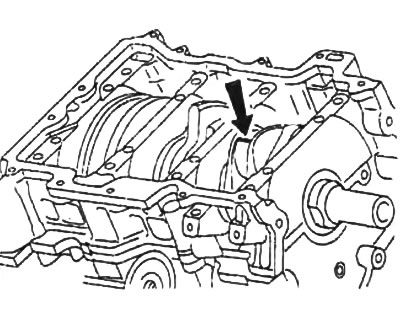
e) Install the connecting rod lower head cover and tighten the mounting bolts.
g) Remove the lower connecting rod head cover.
h) Measure the width of the flattened plastic gauge at its widest point and determine the size of the connecting rod bearing clearance.
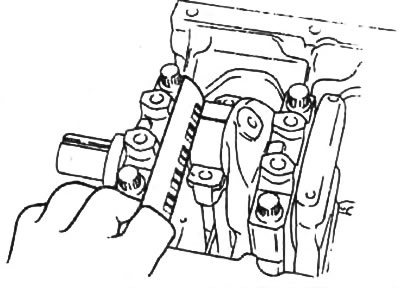
- Nominal clearance - 0.025 - 0.052 mm
- Maximum gap - 0.08 mm
Thickness of liners
connecting rod bearings:
- nominal size - 1.507 - 1.516 mm
repair size:
- (0.25) — 1.624-1.634 mm
- (0.50) — 1.749-1.759 mm
- (0.75) — 1.874-1.884 mm
If the axial clearance is greater than the maximum, replace the connecting rod bearings or grind the crankshaft journal and install connecting rod bearings of an oversize size.
i) Remove any remaining plastic gauge from the working surfaces of the neck and liner.
9. Check the balance shafts.
a) Install the balance shafts and tighten the thrust plate mounting bolts.
- Tightening torque: 8-11 Nm
b) Measure the axial clearance of the balance shafts.
- Nominal clearance - 0.04-0.16 mm
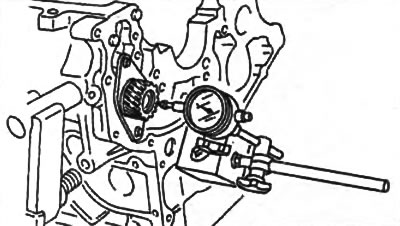
If necessary, replace the thrust washer or thrust plate. If the clearance is still not within the specified limits, replace the balance shaft or cylinder block,
c) Measure the journals of the balance shafts in two mutually perpendicular planes in the directions "X" and "Y", as shown in the figure.
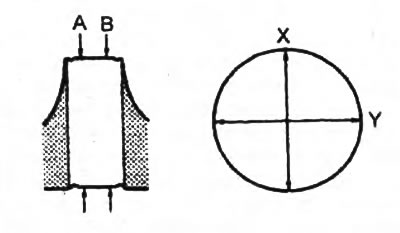
Nominal diameter:
- neck No.1 41.945 - 41960 mm
- neck N92 - 30.450 - 39.960 mm
- neck No.3 - 37.975 - 37.990 mm
Replace the balance shaft if necessary.
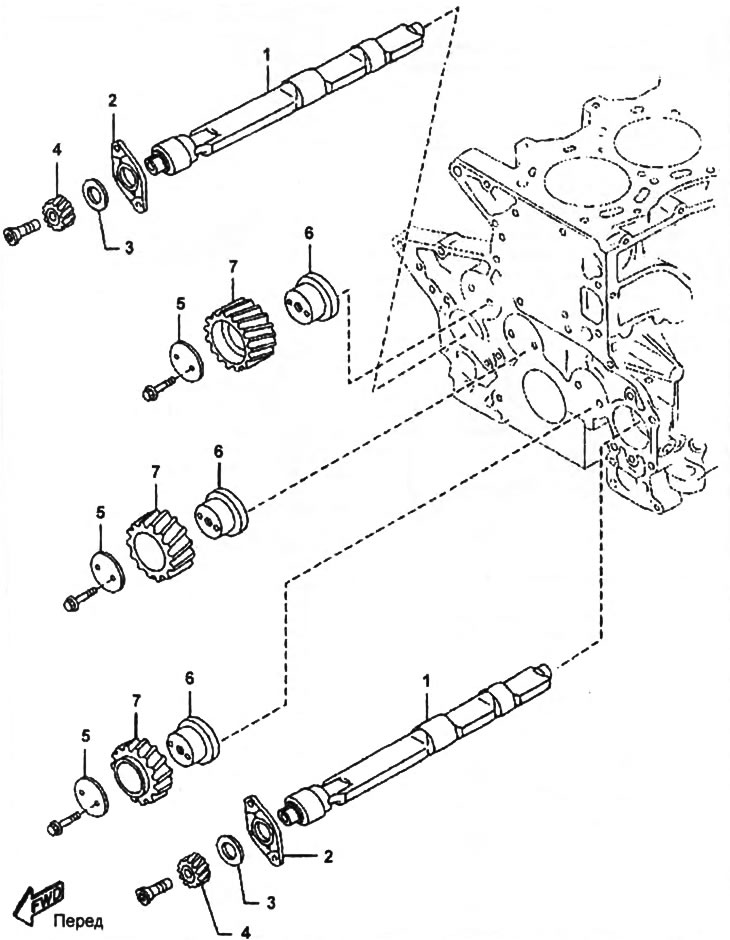
Balance shafts.
1 - balance shaft,
2 - thrust plate (P/N - WL84-22-704),
3 - thrust washer (P/N - WL84-11-797),
4 - balance shaft gear,
5 - thrust plate,
6 - intermediate gear hub,
7 - intermediate gear.
d) Using a bore gauge, measure the inner diameter of the hole for the balance shaft in the cylinder block.
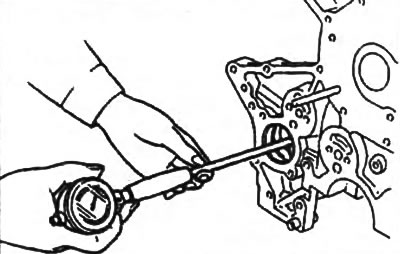
d) Calculate the clearance "balance shaft - balance shaft bore". If the clearance is greater than the permissible value, replace the balance shaft or cylinder block.
Nominal clearance:
- 1 and 3 necks - 0.050 - 0.115 mm
- 2 neck - 0.080 - 0.145 mm
10. Remove the piston and connecting rod assembly.
a) Remove carbon deposits from the top of the cylinder.
b) Remove the piston assembly with the connecting rod and upper bearing shell.
Note: Store pistons with connecting rods, liners and caps in sets to avoid confusion during installation.
11. Use an indicator to measure the axial clearance of the crankshaft, moving the latter "back and forth" with a screwdriver.
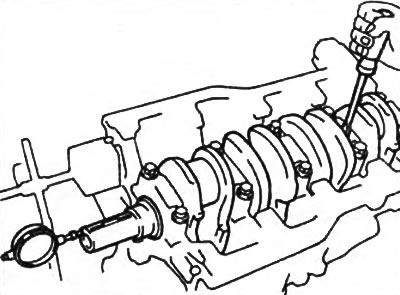
Axial clearance:
- nominal - 0.040 - 0.282 mm
- maximum - 0.30 mm
If the axial clearance is greater than the maximum, replace the thrust washers and/or the crankshaft.
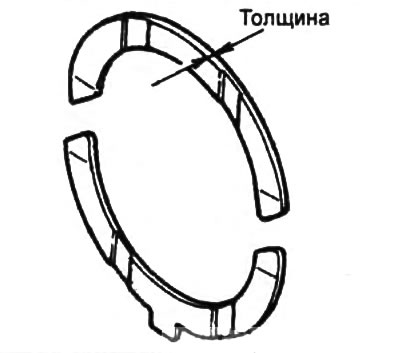
Thickness of thrust half rings:
- nominal size - 0.450 - 2.550 mm
- repair size (0.35) — 2.530 - 2.680 mm
12. Remove the main bearing caps and check the radial oil clearances.
a) Remove the main bearing caps (see subsection "Disassembly").
Note:
- Remove the main bearing cap by slowly rocking it from side to side to avoid damaging the mating surfaces of the bearing cap and cylinder block.
- Keep the main bearing caps together with the lower bearing shells to avoid mixing them up during installation.
b) Raise the crankshaft.
c) Clean each main journal and bearings.
d) Check the surface of each main journal and bearing for pitting and scratches. If the journal or bearing is damaged, replace the bearings. If necessary, regrind or replace the crankshaft.
d) Install the upper crankshaft main bearing shells and place the crankshaft in the cylinder block.
e) Place a plastic bearing clearance gauge on each main journal.
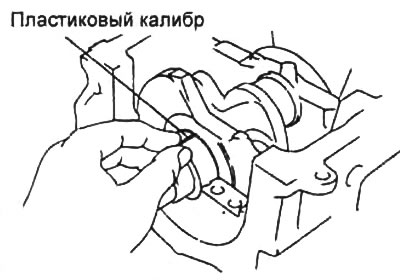
g) Install the main bearing caps.
h) Apply a layer of engine oil to the threads and under the heads of the main bearing cap bolts and tighten the bolts (see subsection "Assembly").
i) Remove the main bearing caps (see subsection "Disassembly").
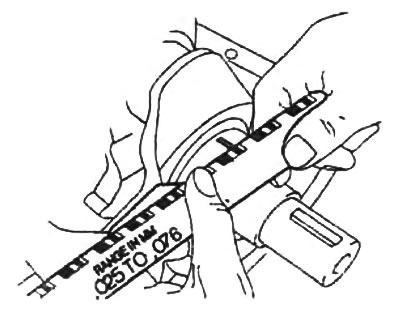
k) Measure the maximum width of the flattened plastic gauge, using it to determine the value of the radial oil clearance.
Nominal clearance:
- necks No.1, 2, 4, 1 — 0.021 - 0.041 mm
- neck #3 — 0.044 - 0.062 mm
Maximum gap - 0.08 mm
Main bearing shell thickness:
- Nominal size - 2.006-2.021 mm
Repair size:
- (0.25) — 2.124 - 2.134 mm
- (0.50) — 2.249 - 2.259 mm
- (0.75) — 2.314 - 2.364 mm
If the oil clearance is greater than the maximum, replace the bearings. If necessary, regrind or replace the crankshaft.
l) If the clearance value exceeds the limit value, even if the main bearing is replaced, repair the crankshaft by grinding and use bearings of repair size.
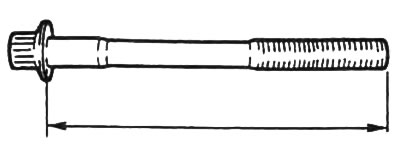
13. Check the length of each main and connecting rod bearing cap bolt. If the maximum value is exceeded, replace the bolt.
Main Bearing Cap Bolts:
- normal length - 84.1 - 81.3 mm
- maximum length - 86.0 mm
Connecting Rod Bearing Cap Bolts:
- normal length - 55.45 - 56.05 mm
- maximum length - 16.11 mm