


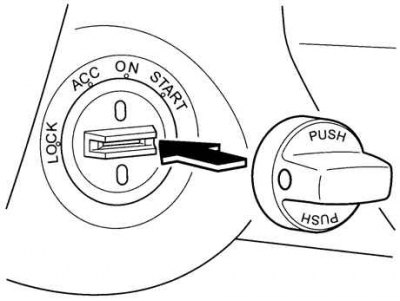
Fig. 1.153. Installing the auxiliary key handle on the ignition switch
Before you turn the ignition switch handle and turn the starter to start the engine, check that the handle is securely fastened to the switch. If the handle has come off the ignition switch, reattach it by placing the handle on the switch holder and pressing it down (fig. 1.153).
1. Make sure that the card you are wearing "Advanced Key" is with you.
2. The driver and all passengers in the vehicle must fasten the appropriate seat belts.
3. Check that the parking brake is engaged.
4. Press the brake pedal.
5. For vehicles with manual transmission: Fully depress the clutch pedal and move the gearshift lever to the neutral position. Keep the clutch pedal fully depressed while the starter operates.
For vehicles with automatic transmission: Move the range selector lever to the "P" (Park) position. If you need to start the engine while the vehicle is moving, move the range selector lever to the "N" (Neutral) position.
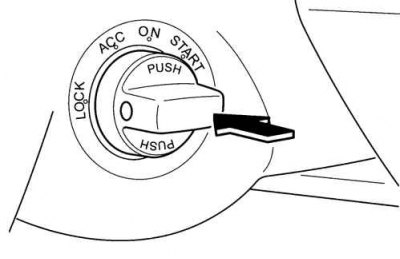
Fig. 1.154. Pressing the ignition switch handle
6. Slowly press the ignition switch handle and push it all the way in (fig. 1.154).
7. Check that the green "KEY" indicator on the instrument panel lights up. A lit red "KEY" indicator indicates that the engine cannot be started.
Note: The red "KEY" indicator lights up in the following cases: (the engine will not start):
- - the battery of the portable card is discharged "Advanced Key";
- - wearable map "Advanced Key" is outside the system coverage area;
- - wearable map "Advanced Key" is in an area where the system cannot detect a signal;
- - there is a key of a different brand within the system's coverage area, which is similar to the wearable card "Advanced Key".
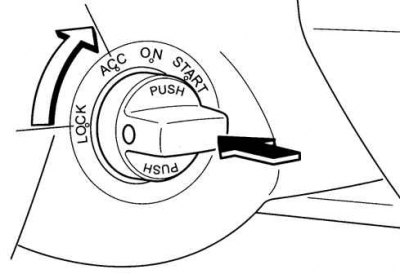
Fig. 1.155. Turning the auxiliary ignition key
8. Press and push the ignition switch handle, turn the ignition switch to the "ACC" position (auxiliary consumers of electricity) (fig. 1.155).
9. Turn the ignition switch from the "ACC" position to the "START" position and hold the handle in this position until the engine starts (but not longer than 10 s). If the engine does not start immediately, do not turn off the starter earlier than 10 seconds. This may make it difficult to start the engine at low ambient temperatures.
10. After starting, let the engine idle for about 10 seconds.