

Contents: Checking the condition of the belt…⇓ Checking the ELR mechanism…⇓ Checking the ELR mechanism of the…⇓ Checking the seat belt load limiter ⇓
Checking the condition of the belt tape
1. Make sure the belt is installed correctly without twists or loops.
2. Make sure that there is no damage to the seat belt tape and that there is no deformation of the metal fasteners.
3. If any defects are found, replace the seat belt with a new one.
Checking the ELR mechanism (emergency rewind lock), except for the central rear seat belt
1. Make sure that the belt is removed and retracted smoothly. If a fault is found, replace the seat belt with a new one.
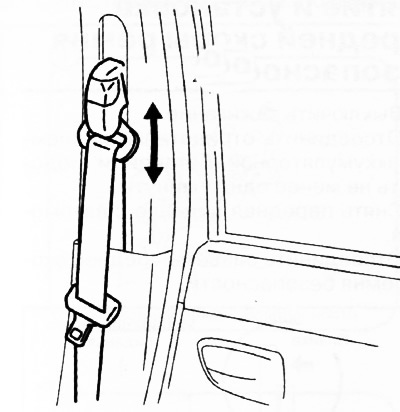
2. Make sure that the retractor mechanism locks when the seat belt is quickly removed. If a fault is found, replace the seat belt with a new one.
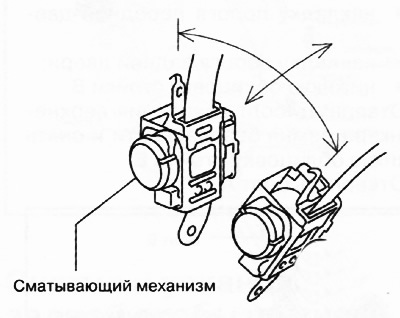
3. Remove the winding mechanism.
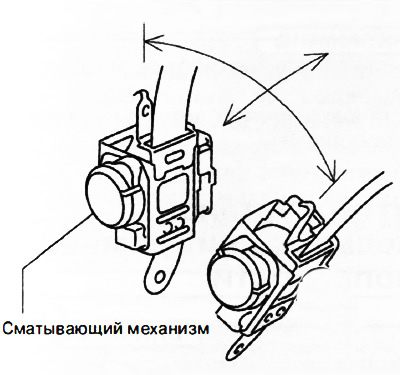
4. Pull the seat belt outward and check that it does not lock when the retractor is slowly tilted up to 15° from the installed position and that it locks when the retractor is tilted 40° or more. If a fault is found, replace the seat belt with a new one.
Checking the ELR mechanism of the central rear seat belt
Caution: The ELR mechanism of the center rear seat belt will only operate after the belt has been pulled out a certain amount. To check the ELR, fasten the center rear seat belt in the center rear buckle and perform the check after pulling the center rear seat belt out 130 mm (eLR trigger state). If the test is performed in a different state, the functionality of the mechanism will not be determined.
1. Fasten the center rear seat belt into the center rear buckle and pull out the belt webbing by 130 mm.
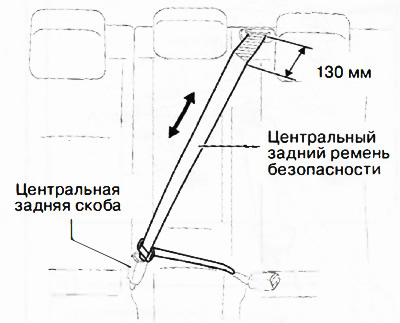
2. Make sure that the belt is removed and retracted smoothly. If a fault is found, replace the seat belt with a new one.
3. Make sure that the retractor mechanism locks when the seat belt is quickly removed. If a fault is found, replace the seat belt with a new one.
4. Remove the winding mechanism.
5. Pull the seat belt outward and check that it does not lock when the retractor is slowly tilted up to 15° from the installed position and that it locks when the retractor is tilted 40° or more. If a fault is found, replace the seat belt with a new one.
Checking the seat belt load limiter
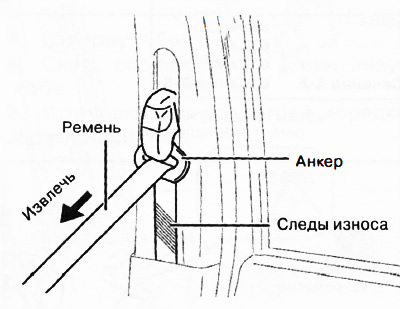
Warning: When the load limiter is triggered, the belt and anchor rub against each other with force, leaving traces of wear. If the seat belt is used in this condition, it is likely that it will not be able to fully perform its functions, which threatens to cause injury to passengers. If the load limiter is triggered, the seat belt must be replaced with a new one.
If the vehicle has been involved in a road traffic accident, remove the belt from the retractor and check for signs of wear (evidence of load limiter operation) visual inspection and touching. If any defects are found, replace the seat belt with a new one.