


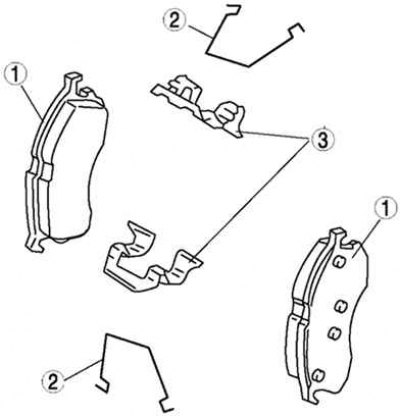
Fig. 6.42. Front brake pads: 1 – brake pads; 2 – tension springs; 3 – clamping plates
Visual inspection of pad thickness
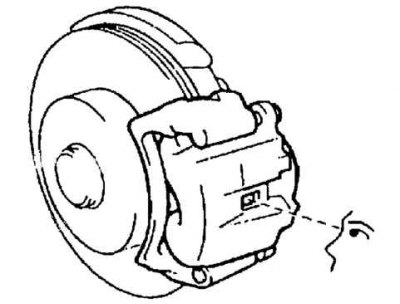
Fig. 6.43. Visual inspection of brake pad thickness
Check the thickness of the pads. To do this, lift the car, remove the wheel and look through the inspection hole in the cylinder body (Fig. 6.43).
- Minimum thickness of brake pads: 1mm.
- Wear limit: 2.0 mm.
Removal brake pads
Caution: When replacing brake pads, always replace the inner and outer linings and lining caps as a set.
Drain the brake fluid.
Remove the front wheel and temporarily secure the wheel rim with two nuts.
Loosen the bolt and disconnect the brake hose bracket.
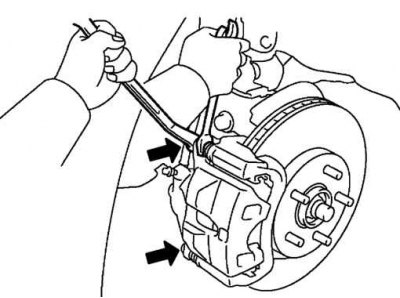
Fig. 6.44. Loosening the caliper mounting bolts
Holding the guide pins, unscrew the caliper mounting bolts (Fig. 6.44).
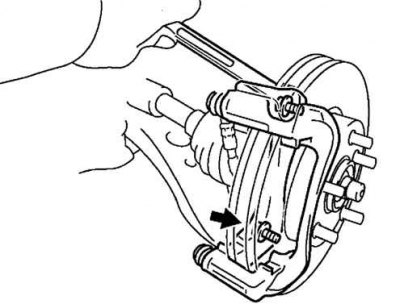
Fig. 6.45. Removing the caliper housing
Unscrew the caliper housing mounting bolts and remove the caliper (Fig. 6.45).
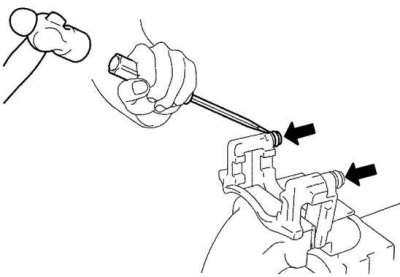
Fig. 6.46. Removing the guide pin dust boots
Holding the caliper in a vice with soft jaws, use a screwdriver and hammer to remove the guide pin dust boots (Fig. 6.46).
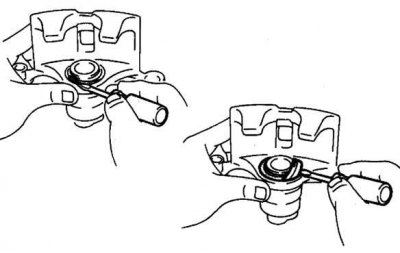
Fig. 6.47. Removing the brake cylinder boot
Using a screwdriver, remove the brake cylinder boot spring ring and boot (Fig. 6.47).
Place a rag between the piston and the cylinder.
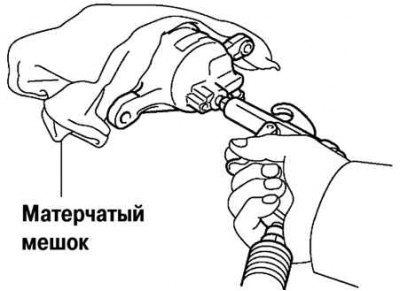
Fig. 6.48. Removing the piston from the cylinder
Using compressed air, remove the piston from the cylinder (Fig. 6.48).
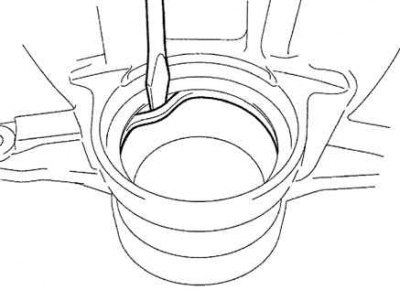
Fig. 6.49. Removing the oil seal
Using a screwdriver, remove the seal (Fig. 6.49).
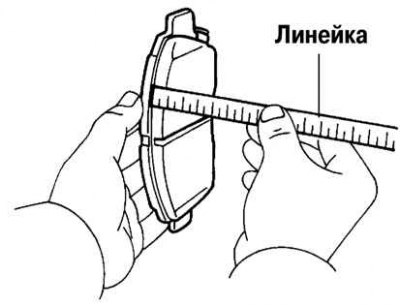
Fig. 6.50. Measuring the thickness of brake shoe linings
Measure the thickness of the brake shoe linings with a ruler (Fig. 6.50).
- Standard thickness: 12 mm.
- Minimum thickness: 1.0 mm.
If the minimum pad thickness is not as specified, replace the pads.
Press the piston completely into the cylinder using a special tool.
Install the brake disc pad.