


Note: It is recommended to measure the compression in engine cylinders in the following cases: decreased engine power, increased engine oil consumption, increased fuel consumption.
Warm up the engine to normal operating temperature, stop it and wait 10 minutes.
Remove the spark plug coils.
Remove all spark plugs from the cylinder heads.
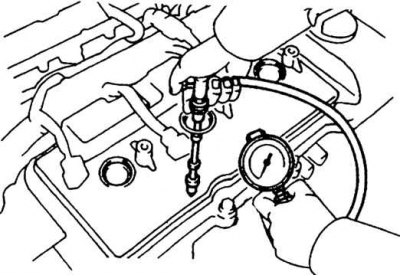
Fig. 2.73. Installation of compression gauges
Insert the compression tester tip into the spark plug hole of the cylinder head and measure the compression in the engine cylinders (Fig. 2.73).
Open the throttle fully.
Read the compression gauge readings while cranking the engine crankshaft with the starter.
Note: When measuring compression, the battery must be fully charged, since for correct measurement the engine crankshaft speed must be at least 300 min⁻¹.
Repeat the measurement operation for each cylinder.
Note: The duration of compression measurement in each cylinder should be as short as possible.
Compression values for L8 engines:
- standard - 1750 kPa (17.855 kg/cm²);
- minimum allowable - 1225 kPa (12.492 kg/cm²).
Difference in measured compression values by engine cylinders (for a serviceable engine) should not exceed 196.1 kPa (1.99 kg/cm²).
Compression values for LF model engines:
- standard - 1720 kPa (17.539 kg/cm²);
- minimum allowable - 1204 kPa (12.277 kg/cm²).
Difference in measured compression values by engine cylinders (for a serviceable engine) should not exceed 196.1 kPa (1.99 kg/cm²).
Compression values for L3 engines:
- standard - 1430 kPa (14.581 kg/cm²);
- minimum permissible - 1000 kPa (10.197 kg/cm²).
Difference in measured compression values by engine cylinders (for a serviceable engine) should not exceed 196.1 kPa (1.99 kg/cm²).
If the compression value in one or more cylinders is below the minimum permissible value, pour a small amount of engine oil into the cylinder through the spark plug hole and re-measure the compression in this cylinder.
If the compression value increases after oil has been poured into the cylinder, then most likely there is wear or damage to the piston rings or cylinder walls.
If the compression value has not changed after oil has been poured into the cylinder, then most likely the valve is stuck or not seated tightly in the seat, or there is a leak through the cylinder head gasket.
Replace the spark plugs.
Install the spark plug coils in place.