


All engines
Compression testing allows you to draw conclusions about the condition of the engine. Namely, when checking, you can determine whether the valves and pistons are in order (piston rings), or they are worn out. In addition, the test results indicate that the engine requires repair. To check, you need a compression gauge, which for gasoline engines can be purchased inexpensively in the brand network.
The pressure difference between individual cylinders can be a maximum of 2.0 Bar. If the pressure in one or more cylinders differs by more than 2.0 Bar, this is a sign of faulty valves, worn piston rings or cylinder surfaces. If the wear limit is reached, the engine must be repaired or replaced.
Engine Designations | Compression in Bar | |
new | wear limit | |
| E1, E3, E5 | 14 | 10 |
| BZ, BZE, B5, B6E | 14 | 10 |
| B6 | 11 | 8 |
| BP (SOHC) | 12 | 9 |
| BP (DOHC) without catalytic converter | 14 | 10 |
| BP (DOHC) with catalytic converter | 13 | 9 |
| PN (diesel) | 30 | 27 |
1. To check the compression, the engine temperature must be at least +30°C. Then the oil filter has the temperature of your hand. The engine temperature should not be too high, otherwise the thread in the cylinder head may be damaged when unscrewing the spark plugs.
2. Turn off the ignition.
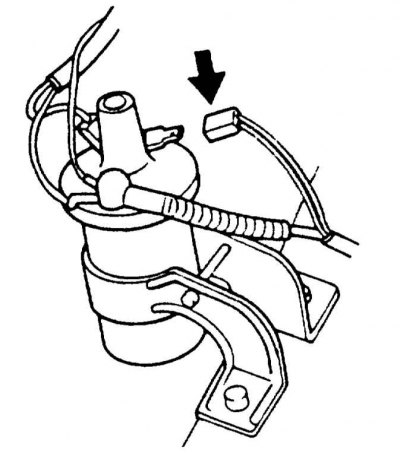
3. Petrol engine: Disconnect the plug from terminal 15 on the ignition distributor.
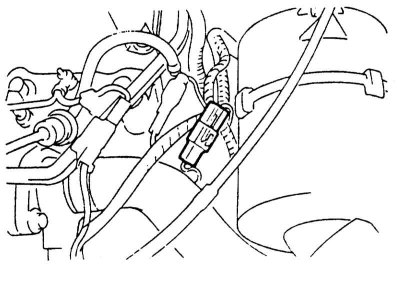
4. Diesel engine: Disconnect the plug from the fuel shut-off valve.
Caution! If the plug is not disconnected, fuel will leak out when the crankshaft is turned.
5. Petrol engine: Disconnect all spark plug tips. There are special pliers for this, for example, HAZET 1849.
6. Blow out the spark plug recesses in the cylinder head with compressed air and unscrew the spark plugs with a spark plug wrench.
7. Diesel engine: Remove the injectors and close the return fuel line to the high-pressure fuel pump (high pressure fuel pump), see Chapter Diesel engine.
8. Turn the crankshaft several times with the starter to remove any remaining soot.
Attention! Set the gearbox to neutral position, apply the handbrake.
9. Insert or screw the compression gauge into the spark plug hole according to the instructions.
[Text taken from an online platform: MAZBOOK.ru]
10. Ask the assistant to fully depress the gas pedal and hold it throughout the entire test.
11. Let the crankshaft turn 8 revolutions until the instrument stops showing an increase in pressure.
12. Check all cylinders and compare with the required value.
13. Petrol engine: Screw in the spark plugs and connect the cables, see Chapter Maintenance.
14. Diesel engine: Install the injectors, see Chapter Diesel engine.
15. Petrol engine: Connect the plug to terminal 15.
16. Diesel engine: Connect the plug to the fuel shut-off valve.