


Contents: Checking the clutch release bearing ⇓ Checking the clutch basket ⇓ Checking the clutch disc ⇓ Checking the guide bearing ⇓ Checking the flywheel ⇓
Checking the clutch release bearing
Caution: Do not use cleaning agents or a steam cleaner to clean the clutch release bearing as the bearing is filled with grease.
1. While squeezing the release bearing on both sides, turn it and check for sticking, excessive resistance and extraneous noise.
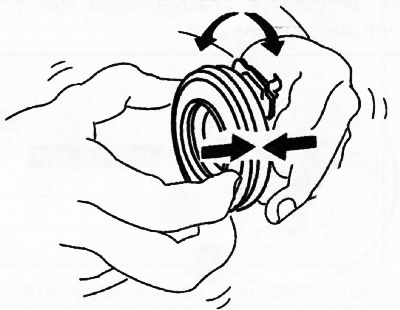
2. If any faults are detected, replace the clutch release bearing with a new one.
Checking the clutch basket
1. Remove the clutch basket.
2. To check the clutch basket, do the following:
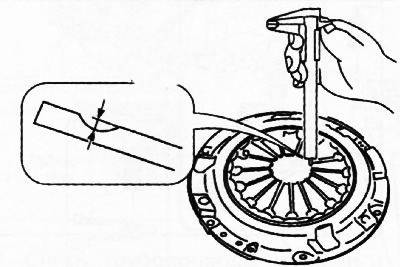
Measure the wear of the diaphragm spring petals. If the measured value exceeds 0.6 mm, replace the clutch basket.
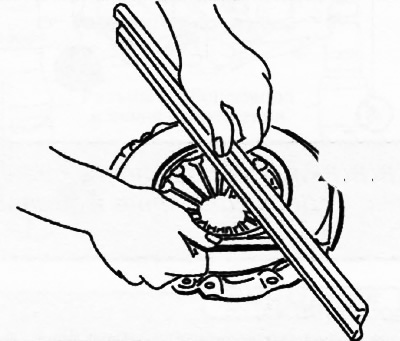
Measure the flatness of the pressure plate using a straightedge and a set of flat feeler gauges. The gap between the surface of the pressure plate and the straightedge should not exceed 0.3 mm.
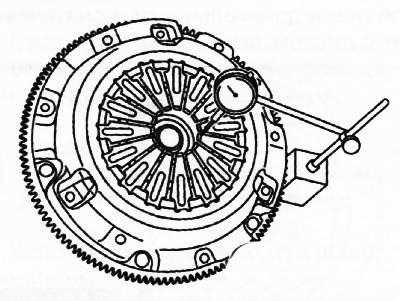
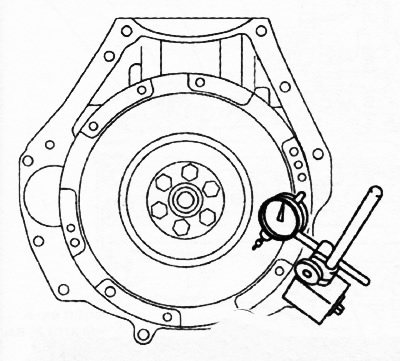
Check for unevenness in the height of the diaphragm spring petals. To do this, install the clutch basket and place a dial indicator on the cylinder block, as shown in the figure. Rotate the flywheel to check the discrepancy in the height of the diaphragm spring petals. The difference in the height of the diaphragm spring petals should not exceed 0.1 mm.
Checking the clutch disc
1. Check the surface of the friction linings for discoloration and the presence of grease.
2. Check the wear of the torsion springs and the loosening of the friction lining rivets.
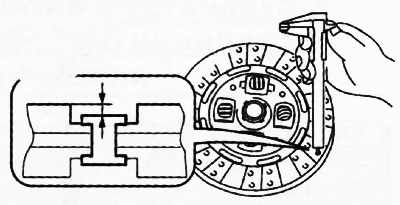
3. Using a caliper, measure the depth of the rivets in the friction linings of the clutch disc. If the measured depth of the rivets is less than 0.3 mm, replace the clutch disc with a new one.
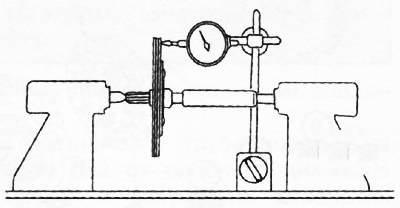
4. Using a dial indicator, measure the runout of the clutch disc. If the measured value exceeds 0.7 mm, replace the clutch disc with a new one.
Checking the guide bearing
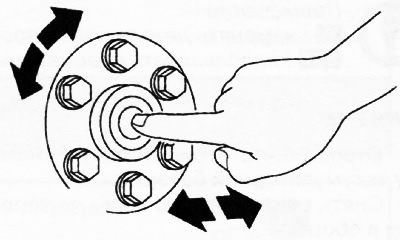
Without removing the guide bearing, turn it with your finger, pressing it in the axial direction. If any defects are found (jamming, presence of extraneous noise, etc.) replace the guide bearing with a new one.
[The article is copied from the resource: MAZBOOK.RU]
Checking the flywheel
1. Remove the flywheel.
2. Perform the following procedures to check the flywheel:
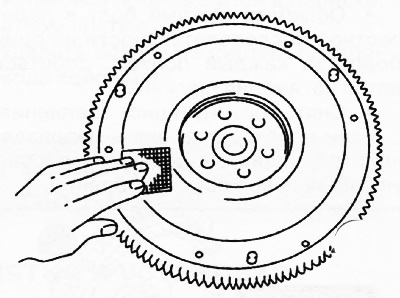
Check the flywheel-to-clutch contact surface for scratches, dents, and discoloration. Minor scratches and discoloration can be removed with sandpaper.
Check the flywheel ring gear for damage and wear.
Check the runout of the flywheel contact surface with the clutch disc. To do this, place a dial indicator on the installed flywheel, as shown in the figure, and, rotating the flywheel, measure the runout value. The maximum permissible flywheel runout value is 0.1 mm.
If any irreparable defects are found, replace the flywheel with a new one.