


- airbag system with gas generators;
- electrical system with impact sensors and fault diagnostic module.
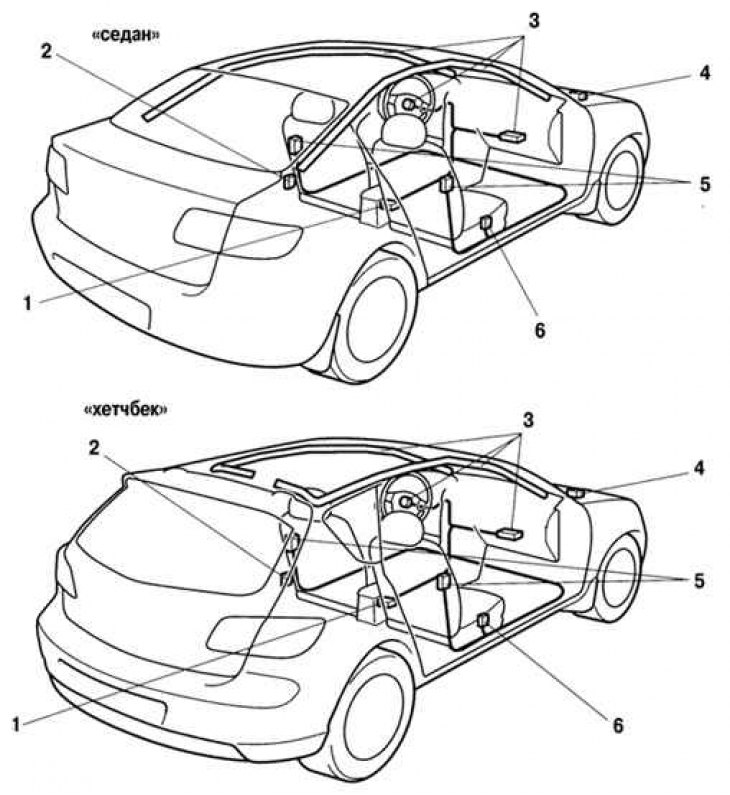
Fig. 1.143. SRS system of Mazda 3: 1 – impact sensors and diagnostic module (SAS); 2 – side impact sensor; 3 – gas generator and airbag; 4 – frontal impact sensor; 5 – gas generator and airbag; 6 – side impact sensor
Inflatable cushions are installed on the vehicle in the following places: steering wheel hub, front panel (on the right side), backs of the front seats (from the door side), the front and rear pillars of the body, as well as along the edge of the ceiling above the side door openings. Airbags and inflatable curtains are installed discreetly and are not visible until they are deployed (fig. 1.143).
The front and side airbag systems include up to 6 inflatable elements (the location of the airbags in the vehicle is indicated by markings "SRS AIRBAG").
Supplemental restraint systems operate independently of each other. If your vehicle has side airbags and curtain airbags, they will not typically deploy on both sides of the vehicle in the same accident, because it is uncommon for a vehicle to be struck on both sides at the same time. Side airbags and curtain airbags will not typically deploy at the same time as the front airbags in the same accident. The exception is an accident in which the vehicle is struck from both the front and the side.
For details, see the website mazbook.ru
Airbag systems are designed only to provide additional passive protection for the driver and front passenger (in certain types of vehicle collisions), as well as passengers sitting in the outer seats in the back seat (only in case of side impacts of the vehicle). Therefore, while the vehicle is moving, the driver and all passengers must always wear seat belts.
If you do not fasten your seat belt, the airbags will not be able to provide effective protection in the event of a traffic accident. Fastening your seat belt ensures the following:
- prevents the driver or passenger from being thrown forward into an inflating airbag;
- reduces the risk of injury in road accidents where the airbags are not intended to be activated, such as when a car rolls over and when a car is hit from behind;
- reduces the risk of injury in frontal and side vehicle collisions that are not strong enough to trigger airbags;
- reduces the likelihood of falling out of the vehicle;
- reduces the risk of injury to the lower body and legs in a traffic accident (airbags are not designed to protect the specified body parts);
- keeps the driver in a position that allows better control of the vehicle's movement.
If the child's height does not allow the use of a seat belt, the child must be seated and securely fastened in a child restraint system.
Carefully select a child restraint system that is suitable for your child. When installing, follow the instructions in this book and in the instructions provided by the manufacturer of the child restraint system.