MazBook.ru
English Русский
Български
Беларускі
Український
Српски
Hrvatski
Română
Polski
Slovenský
Magyar
• Bookmark • Sitemap • Contacts •   
Cars Opel Cars Ford Cars Volkswagen Cars Audi Cars Kia Cars Renault Cars Peugeot


Familia Capella Mazda3 Mazda6 CX-? Others Articles
Mazda 121 (3) (1996-2003) Mazda BT-50 (1) (2006-2011)

Safety precautions when equipped with SRS (airbags) (Mazda BT-50 (1))

  • Home
  • Mazda
  • BT-50 J97M (2006-2011)
  • General information
  • Introduction to guide
  • Safety precautions when equipped with SRS (airbags)
0
Warning: Accidental deployment of the airbag or seat belt pretensioner can result in serious injury, so be sure to read and follow all safety precautions in this section.


1. Symptoms of airbag system malfunctions can be difficult to recognize. Always check the fault codes before disconnecting the battery.

2. Do not work on the airbag system earlier than 90 seconds after setting the ignition switch to the "LOCK" position and disconnecting the negative cable from the battery.

3. Even after a minor collision in which the airbag did not deploy, always check the pad surface and the condition of the sensors. If dents, cracks, deformations, etc. are found, replace the airbag assembly.

4. Never install SRS system components from another vehicle, use only new components.

5. Never disassemble any SRS system components.
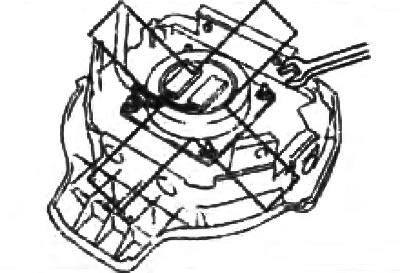
5. Never disassemble any SRS system components.


6. Do not expose the steering wheel pad to impacts or strong magnetic fields.

7. When storing air bag modules, place them face up on a flat, stable surface. Never place anything on top of the air bag modules.

The article is copied from the website MAZBOOK.ru
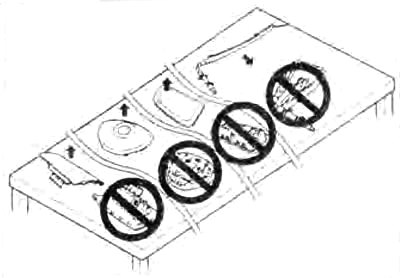
7. When storing air bag modules, place them face up on a flat, stable surface. Never place anything…


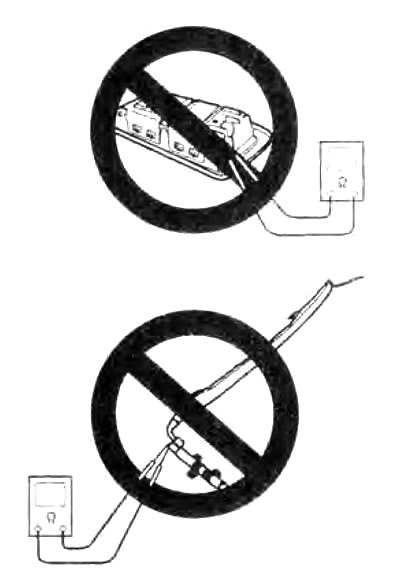
8. Do not use an ohmmeter to test the passive safety system. This may cause the system to operate unintentionally.
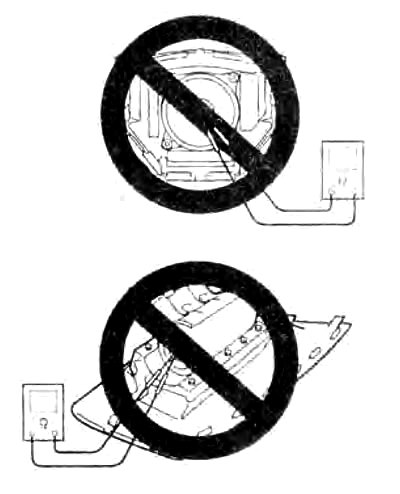


8. Do not use an ohmmeter to test the passive safety system. This may cause the system to operate…

9. When carrying the airbag module, hold it with the cover facing away from you to reduce the risk of injury from accidental deployment.
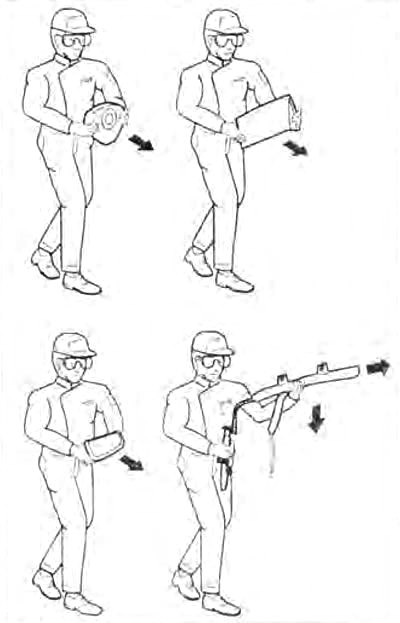
9. When carrying the airbag module, hold it with the cover facing away from you to reduce the risk…


10. Do not allow moisture, oil, grease or other substances to come into contact with the airbag modules.
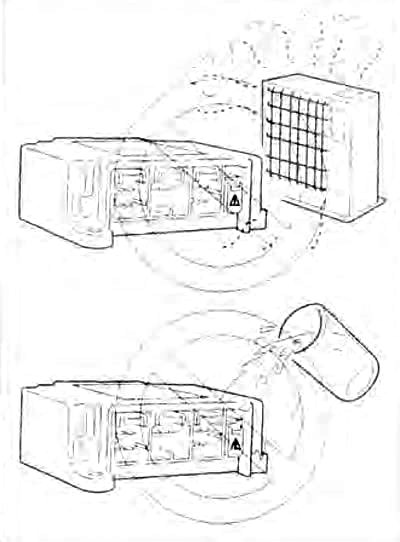
10. Do not allow moisture, oil, grease or other substances to come into contact with the airbag…


11. Before connecting the connector to the passive restraint system control unit, securely fasten the unit to the vehicle.


12. If at least one airbag has deployed, replace the passive restraint system control unit.

13. If one side airbag has deployed, replace both fatal airbags and the damaged parts of the seat back (frame, padding, finishing). After repair, make sure the seats are working properly and the wiring is located properly.

14. Do not disassemble the passive restraint system control unit and side airbag sensors.

15. If the side airbag has deployed, replace the side airbag sensor.

16. Do not allow moisture, oil, grease or other substances to come into contact with the passive restraint system unit and side airbag sensors

17. If the wiring is damaged, replace the wires, do not try to repair them.
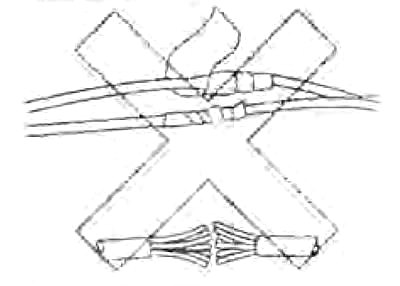
17. If the wiring is damaged, replace the wires, do not try to repair them.


18. Do not insert screwdrivers or other foreign objects into the passive safety system connectors.
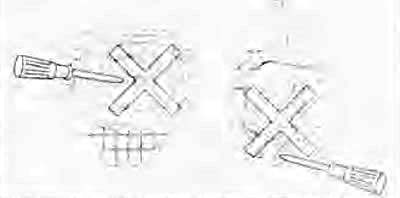
18. Do not insert screwdrivers or other foreign objects into the passive safety system connectors.


19. Even if the airbags did not deploy in a collision and do not show signs of external damage, they may have internal damage, which may lead to their spontaneous deployment. Even after a minor collision, diagnose the passive restraint system to identify internal damage, and if any is found, replace the faulty components.

20. After completing the repair work, re-diagnose the system.
This article is available at: russian, bulgarian, belarusian, ukrainian, serbian, croatian, romanian, polish, slovak, hungarian
This text was checked by: Vladimir Bazhenov
Share with friends on social networks:

Previous
Mazda BT-50 (1) » Introduction to guide
Next

Safety precautions when working with electrical equipment
Safety precautions when installing a mobile radio communication system
Main parameters of the car
Installation points for garage jack, lift legs and stands
General repair instructions
Safety precautions when working with the fuel system
Precautions when working with oils
Safety precautions when working with the air supply system
Safety precautions when working with refrigerant
More articles on repairing other Mazda models
Safety precautions when working with an electronic ignition system Mazda Familia 6 (1989-1994)
Safety precautions when removing the engine Mazda Capella 3 and 4 (1982-1992)
General information and safety precautions for inspection and… Mazda3 BK (2003-2009)
General information and safety precautions when removing the power… Mazda6 GG (2002-2008)
Safety precautions when working with the cooling system Mazda CX-5KE (2012-2017)
Link in different formats to this article
Comments and feedback from visitors
No comments yet


How much will 26 + 41 ?


Mazda BT-50 (1) (2006-2011) 
  • General information
  • Introduction to guide
  • User manual
  • Maintenance
  • Power unit
  • Engine repair (diesel)
  • Cooling and lubrication system
  • Fuel injection system
  • Intake and exhaust system
  • Engine electrical equipment
  • Transmission
  • Clutch
  • Mechanical gearbox
  • All-wheel drive system
  • Transfer case and gearboxes
  • Chassis
  • Front suspension
  • Rear suspension
  • Steering
  • Brake system
  • Body
  • Exterior (external elements)
  • Interior (internal elements)
  • Heating and air conditioning
  • Security system SRS
  • Electrical equipment
  • Equipment and devices
  • Electrical circuits
Mazda 121 (3) (1996-2003) 
  • General information
  • User manual
  • Maintenance
  • Power unit
  • Petrol engine 1.3 l
  • Petrol engine 1.25/1.4 l
  • Diesel engine
  • Lubrication system
  • Cooling system
  • Ignition system
  • Supply system
  • Fuel injection (gasoline)
  • Fuel injection (diesel)
  • Exhaust system
  • Transmission
  • Clutch
  • Car gearbox
  • Chassis
  • Front suspension
  • Rear suspension
  • Steering
  • Brake system
  • Wheels and tires
  • Body
  • Exterior (external elements)
  • Interior (internal elements)
  • Doors, windows and locks
  • Heating system
  • Electrical equipment
  • Troubleshooting
  • Equipment and devices
  • Lighting system
  • Power devices
  • Electrical circuits
MazBook.ru © 2018–2026 · Mobile version · Articles and news · Sitemap: EN BG BY UA RS HR RO PL SK HU · Feedback · Site search · Add to bookmarks Familia 5 (BF) · Familia 6 (BG) · Capella 3 (GC) · Capella 3 and 4 (GC) · Capella 4 (GD) · Capella 5 (GE) · Capella 6 (GF) · Mazda3 BK · Mazda6 GG · CX-5KE · Mazda 121 (3) · Mazda BT-50 (1) ·
By continuing to use the site, you agree to the use of cookies 🔐