


2. Do not touch moving parts in the engine compartment (for example, an electric fan of the cooling system, a drive belt of ancillary equipment, etc.).
3. Before performing any work related to the electrical equipment of the vehicle, as well as when replacing any element of the electrical equipment, it is necessary to disconnect the wire from the negative terminal of the battery and thereby avoid possible damage caused by a short circuit.
Attention:
- Before disconnecting or connecting the negative battery cable, make sure the light switches and ignition switch are in the "OFF" position (if this is not done, there is a risk of damage to the semiconductor components).
- All diagnostic codes stored in the electronic control unit are erased when the negative battery cable is disconnected. Therefore, it is necessary to read the diagnostic codes before disconnecting the battery.
4. When installing the battery, do not confuse the polarity of the wires connected to its terminals.
Caution: After installing the battery, the power cable and ground cable must be securely connected to its terminals (with pins).
5. When removing and installing parts, do not subject electronic control system components, especially the electronic control unit, to impact.
6. When working in rainy weather, protect electronic control units from water. The same should be done when cleaning the engine compartment (engine wash).
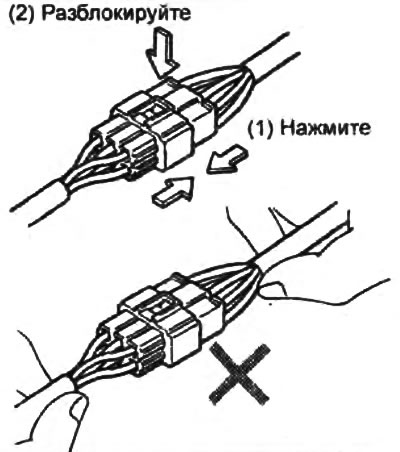
7. Never pull on the wire when disconnecting connectors. Pull the connector itself.
a) When disconnecting, loosen the lock by pressing the spring and pull out the connector, holding it by the body.
b) When connecting, insert the connector fully and make sure it is locked.
8. Do not open the cover or housing of the control units unless absolutely necessary (some terminals may be damaged by static electricity).
9. After completing the repair work, make sure that all wiring connectors are properly and securely connected and that the wiring harnesses are properly secured.
10. Safety rules when working with a battery.
a) The battery emits flammable and explosive gas:
- Use caution when using tools that may produce sparks from the battery.
Do not smoke or light matches near the battery.
b) The electrolyte contains poisonous and corrosive sulfuric acid:
- Always wear safety glasses when working with batteries.
- Keep children away from the battery.
- Avoid contact of electrolyte with eyes, skin or clothing.
c) If electrolyte gets in, do the following:
- If electrolyte gets into your eyes, rinse them immediately with clean water and seek medical attention. If possible, continue to apply water with a swab or cloth while en route to a medical facility.
- If the electrolyte gets on your skin, wash the burnt area thoroughly. If you feel pain or a burn, consult a doctor immediately.
- If you accidentally swallow an electrolyte, you should immediately consult a doctor.
- If the electrolyte gets on your clothes, it may come into contact with your skin, so remove any clothes that come into contact with the electrolyte immediately.