


Warning! A hot engine and oil can cause serious burns. Stop the engine and wait until the engine and engine oil have cooled before checking.
Remove the lower engine cover.
Remove the oil pressure sensor.
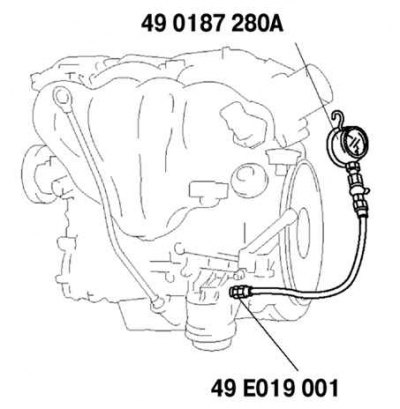
Fig. 2.200. Installing a special device for measuring oil pressure
Screw the special tool into the hole of the oil pressure sensor (fig. 2.200).
Warm up the engine to normal operating temperature.
Set the specified engine speed and record the instrument readings.
If the pressure differs from the specified value, find out the cause and repair or replace damaged parts if necessary.
Note: Oil pressure varies with viscosity and temperature.
Oil pressure
Oil temperature – 100°C:
- L8, LF: 234–521 kPa (2.39–5.31 kgf/cm² at 3000 min⁻¹);
- L3: 395–649 kPa (4.03–6.61 kgf/cm² at 3000 min⁻¹).
Stop the engine and let it cool.
Remove the special device.
Caution! If sealing material gets on the working part of the oil pressure sensor, it may cause the sensor to fail. Make sure that there is no sealing material on the working part of the oil pressure sensor.
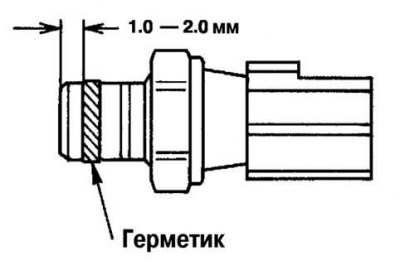
Fig. 2.201. Place of application of sealant to the thread of the oil pressure sensor
(Data provided by the website MAZBOOK)
Apply silicone sealant to the threads of the oil pressure sensor as shown in Figure 2.201.
Install the oil pressure sensor.
Tightening torque: 12–18 Nm.
Install the engine protective cover.
Start the engine and check for oil leaks. If there is a leak, identify the defective part, repair or replace it.