


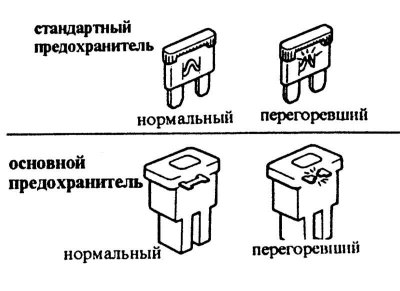
1. There are 2 different types of fuses used. Standard fuses are used for low power, basic fuses are used for high power.
2. Remove the fuse box cover.
3. Before replacing a fuse, always first disconnect the corresponding consumer.
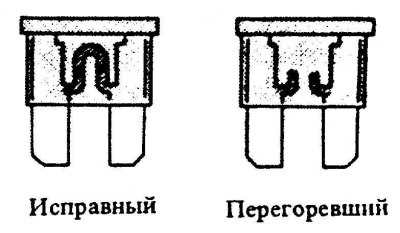
4. A blown fuse is identified by a melted metal strip
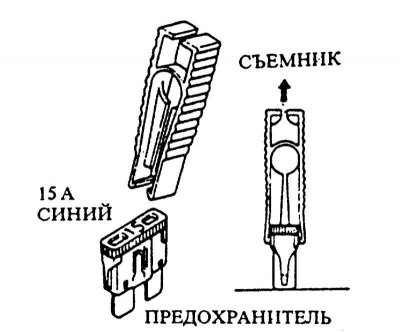
5. Remove the faulty fuse. There are polymer tweezers in the fuse box cover in the passenger compartment to remove the fuse.
6. Insert a new fuse the same current strength.
7. The fuse's rated current is on the back of the handle. In addition, the handle has a color code, which can also be used to determine the rated current.
| Nominal current A | Color coding |
| 10 | red |
| 15 | blue |
| 20 | yellow |
| 30 | light green |
8. Reinstall the fuse box cover.
9. If a newly inserted fuse blows after a short time, the corresponding current circuit should be checked.
10. Never replace a fuse with a piece of wire or anything similar, as this may cause serious damage to the electrical equipment.
11. It is recommended to always have a set of spare fuses in the car. There is a free space for them in the fuse box.
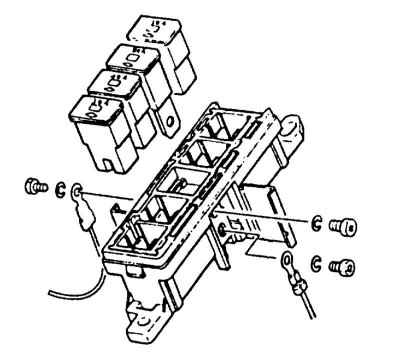
12. If the headlights or other electrical devices do not work, although the fuses are OK, you should check the main fuses in the engine compartment and replace them if necessary.
13. Disconnect the ground cable from the battery.
Warning! This will erase the engine fault memory or the radio security code. Before disconnecting the battery, read the instructions in Section Removal and installation the battery.
14. Remove and replace the 30 A fuse.
15. To replace the main 80 A fuse, remove the fuse box.
16. Open the cover, unscrew the terminals and remove the fuse.
17. Insert the new fuse, screw the terminals and install the fuse box.
18. Connect the ground cable to the battery.
19. If available, set the time on the clock and set the security code for the radio receiver.