


Type A – Arrow indicators
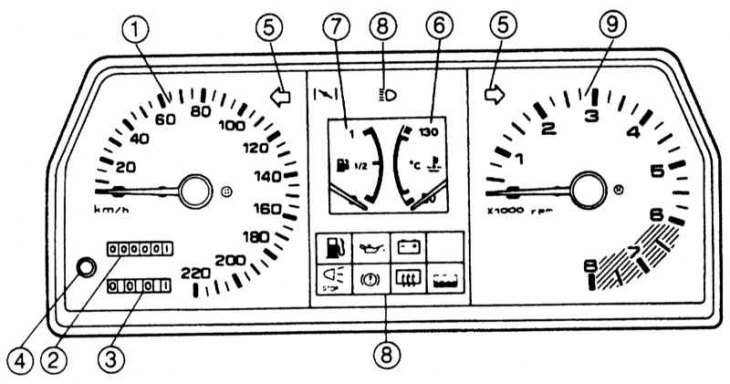
1 - Speedometer; 2 - Total mileage counter; 3 - Odometer since reset*; 4 - Trip meter reset button*; 5 - Hazard warning/turn signal indicator lamp; 6 - Coolant thermometer; 7 - Fuel gauge; 8 - Control lamps; 9 - Tachometer
* - if available
Type B – Electronic indicators
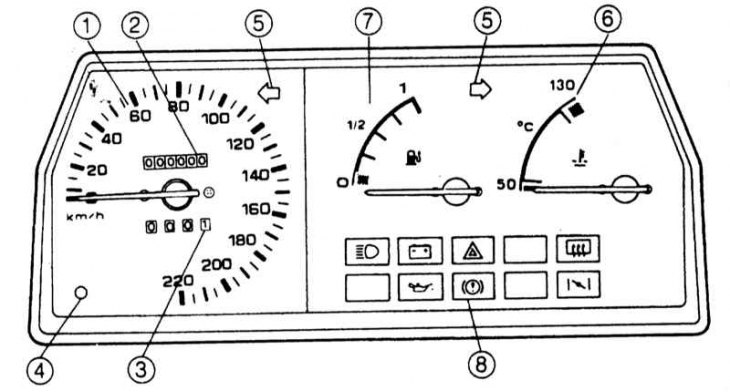
1 - Speedometer; 2 - Total mileage counter; 3 - Odometer since reset*; 4 - Trip meter reset button*; 5 - Hazard warning/turn signal indicator lamp; 6 - Coolant thermometer; 7 - Fuel gauge; 8 - Control lamps; 9 - Tachometer; 10 - Indicator area switching button
*— if available
 |
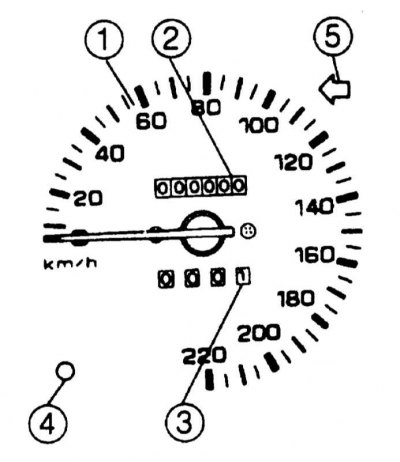 |
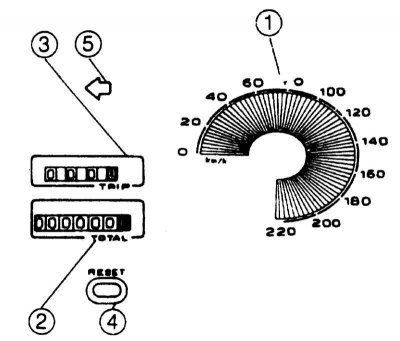
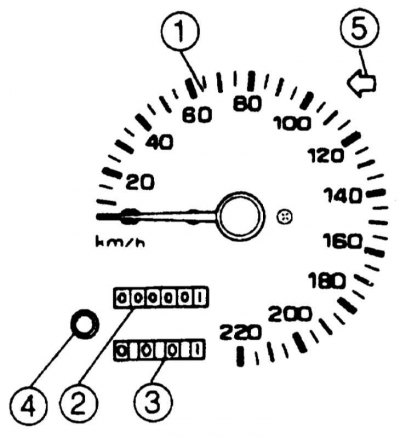
1. Speedometer
2. Odometer
3. Odometer since reset(if any)
4. Tripmeter reset button (if any)
- To set to "0" simply press the button.
5. Turn signal/hazard warning light
- If the indicator lamp does not work, the direction indicator system is not working properly. The fault should be corrected as soon as possible.
- When the hazard warning lights are switched on, the direction indicators on both sides operate simultaneously.
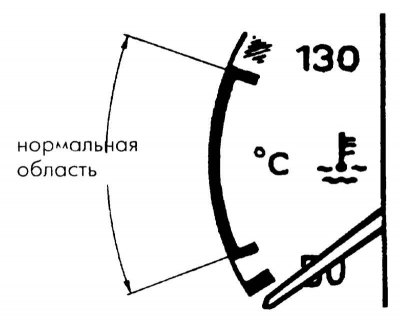
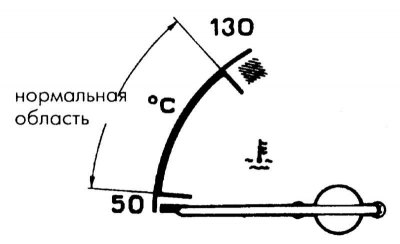
6. Coolant thermometer
- This thermometer indicates the temperature of the coolant.
Type A – Arrow indicators
If the pointer is outside the acceptable range, the engine is overheated.
 |
 |
Type B – Electronic indicators
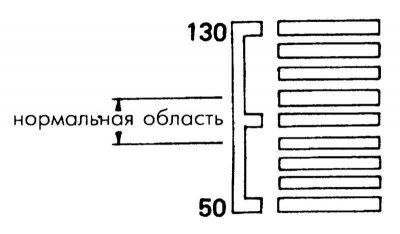
When the engine is overheated, the indicator segments flash.
Take the following steps if your engine overheats:
- 1. Stop the car at the edge of the road.
- 2. Turn off the air conditioner.
- 3. Stop the engine if coolant or steam comes out of the radiator. Turn the ignition key to the "ON (II)" position without starting the engine. In this position, the fan operates automatically. If it does not operate, contact a MAZDA service center.
- 4. If no coolant comes out, let the engine idle and open the hood for better cooling.
- 5. If the temperature does not decrease at idle, turn off the engine and wait until it cools down.
- 6. Check the tightness of the radiator hose connections. Stop the engine immediately if a leak is detected and contact a MAZDA service center.
- 7. Check the coolant level, if coolant is leaking, top up with the prescribed coolant if necessary.
Caution! Do not remove the radiator cap if the engine and radiator are hot. Boiling coolant and steam may escape under pressure from the opening, which can cause burns.
7. Fuel level indicator
- The fuel gauge shows how much fuel is in the tank.
- Fuel tank capacity
- Except for all-wheel drive vehicles: 45 hp.
- All-wheel drive vehicles only: 53 hp.
Type A
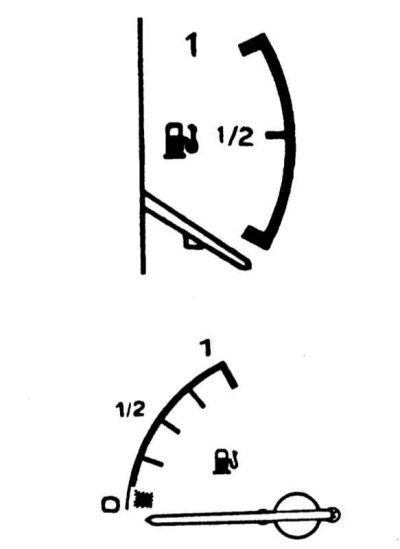
Type B – Electronic indicators
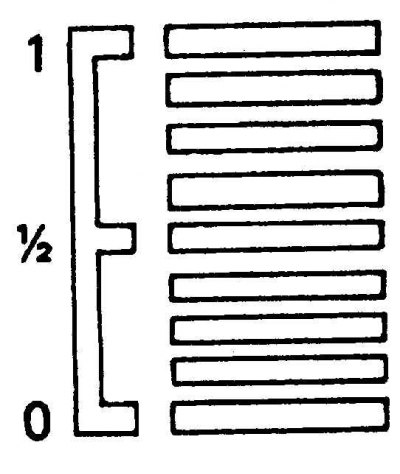
Note: When the lower segment of the fuel reserve indicator starts flashing, the fuel level in the tank is approximately 5 L.
Note: If the ignition switch does not turn on when refueling, this continues until the indicator is set to the current fuel level. Therefore, turn off the switch when refueling.
8. Control lamps
Examination
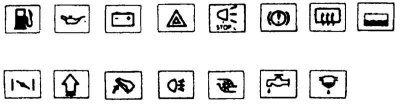
If you turn the ignition switch to the "ON (II)" position without starting the engine and apply the handbrake, you can check the indicator lights. If the indicators do not light, they should be checked by a MAZDA service center.
 Optical/Acoustic
Low fuel alarm (if any). This optical/acoustic signal is activated when the amount of fuel in the tank is 8 l.
 Oil pressure warning light
This warning light indicates that the engine oil pressure is too low. It comes on when the ignition is on (to check the lamp's functionality), if the oil pressure is normal, the lamp goes out after the engine starts.
If the indicator light comes on while driving:
- 1. Stop the car at the edge of the road.
- 2. Check the engine oil level. Add oil if necessary.
- 3. Or have your vehicle towed to the nearest MAZDA service center to top up the oil.
Caution: Failure to follow the above instructions may result in serious engine damage.
 Oil pressure - oil filter warning light/horn (for diesel engine)
This indicator light comes on when the ignition is turned on (to check the functionality) and goes out after the engine starts.
If this oil pressure warning light comes on while driving:
- 1. Stop the car carefully at the edge of the road.
- 2. Check the engine oil level. If the level is too low, add the missing oil, or
- 3. Tow the car to a MAZDA authorized center and top up the oil there.
The oil filter warning light/beep system also serves to protect your vehicle's oil filtration system. If the warning light/beep comes on when the engine temperature is normal and the engine oil level is normal, it indicates that the oil filter may be clogged. In this case, take your vehicle to the nearest petrol station or an authorized MAZDA centre to have the oil filter replaced.
Caution: Failure to follow the above instructions may result in serious engine damage.
 Charging current indicator lamp
This lamp indicates faults in the generator or electrical system.
If the light comes on while driving, proceed as follows:
- 1. Carefully stop the car at the edge of the roadway.
- 2. With the engine off, check that the V-belt is not loose or damaged.
- 3. If the V-belt is OK, the fault lies in the charging system. It is recommended to find and fix the fault as soon as possible.
 Hazard warning light indicator (if any)
This lamp lights when the hazard warning lights are on.
 Brake light failure indicator lamp (if any)
The lamp lights up when the brake light fails or there is a fault in the circuit. The fault should be corrected as soon as possible.
 Brake warning light
Parking brake indicator light - if the handbrake is applied, the indicator light comes on when the ignition is turned on. When starting to move, check that the handbrake is fully released and the light goes out.
Brake fluid level indicator light (if any)
If this lamp comes on after releasing the handbrake and with the ignition on, it may be that the brake fluid level in the reservoir is too low.
If the lamp lights up, proceed as follows:
- 1. Check if the handbrake is fully released. If the brake is released, the lamp remains on.
- 2. Carefully stop the car at the edge of the roadway.
- 3. With the engine off, immediately check the brake fluid level and top up if necessary. All other components of the brake system should be checked for fluid leaks.
- 4. If leaks are found, the warning light remains on, or the brakes do not work properly, stop driving. Have the vehicle towed to a service center to have the brake system checked and any necessary work done.
Warning! Operating the vehicle in this condition is dangerous. The brakes must be repaired immediately.
 Rear window heating indicator light (if any)
The indicator lamp lights up when the rear window heating is on.
 Washer fluid level indicator light (if any)
This warning light comes on when the windshield washer fluid level is too low. Check the fluid level and add washer fluid.
 Air damper indicator light
The indicator lamp lights up when the air damper actuator button is pulled out.
 High beam indicator lamp
The indicator lamp lights up when the high beam is on.
 Next gear shift indicator light (if any)
If this indicator light comes on, the fuel consumption in the current gear is too high. In this case, shift the transmission to the next gear to achieve economical fuel consumption.
 Accelerator pedal indicator light (if any)
This warning light comes on when the accelerator pedal is pressed too hard. In this case, release the accelerator until the light goes out to ensure lower fuel consumption.
 Rear fog light indicator lamp (if any)
This indicator lamp lights up when the rear fog lights are on.
 Turbocharger indicator (for cars with turbocharger)
The indicator lights up when the turbocharger is in operation.
The indicator starts to flash and a warning sound when the boost pressure increases too much. The car should not be driven with the indicator flashing, as the engine may be damaged. In this case, reduce the engine speed until the turbo indicator stops flashing.
 Coolant level indicator light (for diesel engine, if any)
Caution: Since the engine consists of aluminum parts, it is necessary to use ethylene glycol-based coolant.
When the ignition is on, this indicator light comes on to check the lamp's functionality; it should go out when the engine starts. If the indicator light comes on while driving (or a beep will sound):
- 1. Stop the car at the edge of the roadway.
- 2. Turn off the engine and let it cool. If the coolant is not leaking, check the coolant level in the expansion tank and in the radiator. If necessary, add coolant.
- 3. If the indicator lamp does not go out, have the vehicle towed to a MAZDA service center.
 Water deflector indicator lamp/indicator signal (for diesel engine, if any)
Diesel Engine Cars
- Stop your car at the edge of the roadway.
- Turn off the engine and check if the alternator V-belt is loose or broken.
- If the alternator V-belt is faulty, do not continue driving under any circumstances, as the engine will overheat and the braking effect will be reduced. Have the vehicle towed to the nearest workshop.
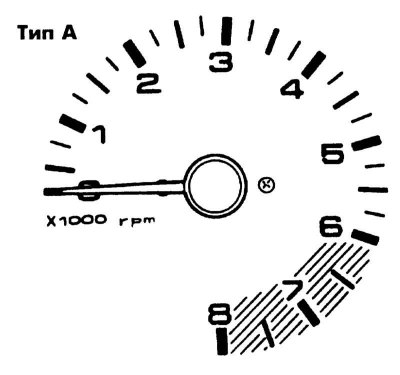
9. Tachometer
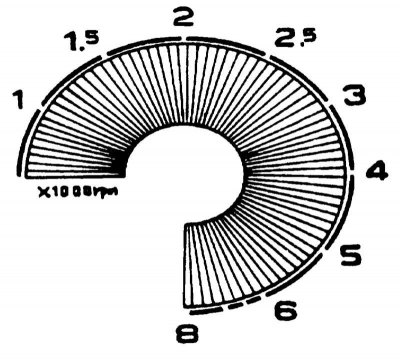
The tachometer shows the engine speed in thousands of revolutions per minute (rpm).
Warning! Do not allow the engine to run in the red area of the tachometer. This may cause serious damage to the engine.
Type A
Type B
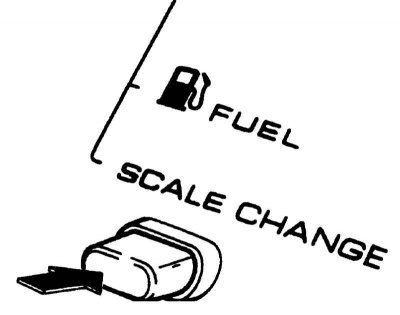
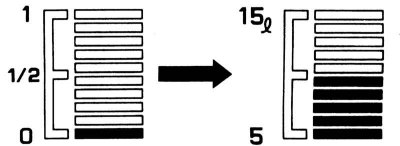
10. Switching the fuel gauge indication (only on electronic indicators, if available)
If you press the button, the lower display area will be shown with limits from 5 to 15 liters. After about 5 seconds, the indicator will return to its previous, normal state.
 |
 |