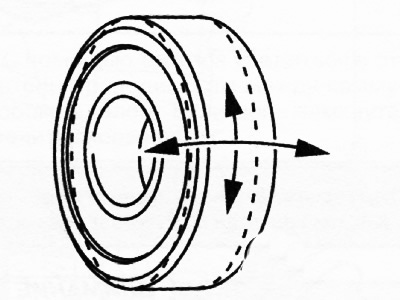


Rotor
1. Using a tester, measure the resistance between the contact rings. If the measured value is not within the norm (1.8-2.1 Ohm at 20°C), replace the rotor with a new one.
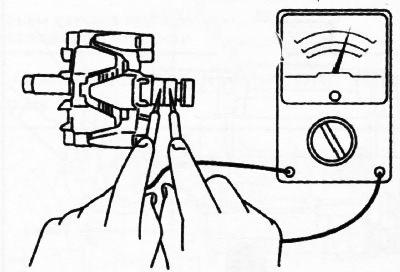
2. Using a tester, make sure there is no conductivity between the contact rings and the core. If the circuit is closed, replace the rotor with a new one.
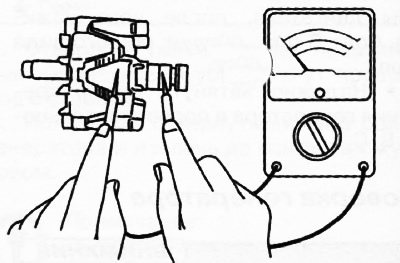
3. Check the condition of the contact ring surface. If the contact ring surface is rough, remove the defect using sandpaper.
Stator winding
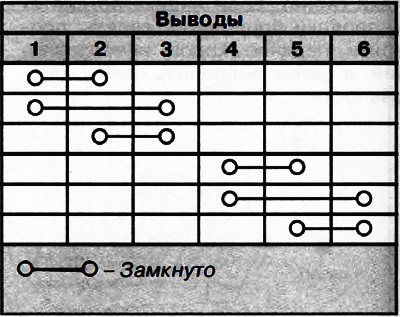
1. Check the continuity of the circuit between the terminals according to the following table. If faults are found, replace the stator with a new one.
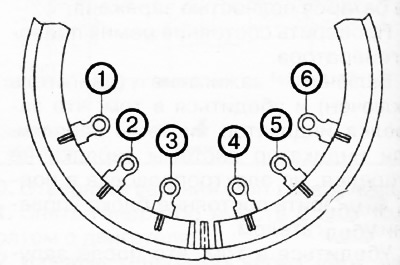 |
 |
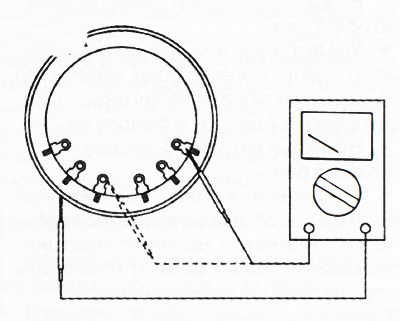
2. Using a tester, make sure there is no conductivity between the stator winding terminals and the core. If the circuit is closed, replace the stator with a new one.
Brushes
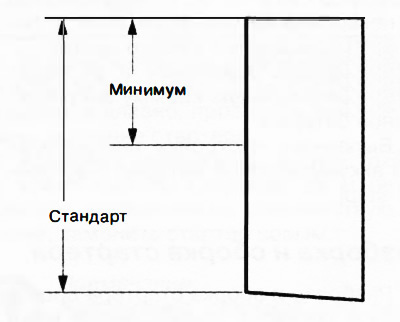
1. Check the brushes for wear. If any brush is worn to or near the limit, replace all brushes with new ones.
Note:
Length of brushes:
- Standard: 22.5 mm.
- Minimum: 5.0 mm.
Brush springs
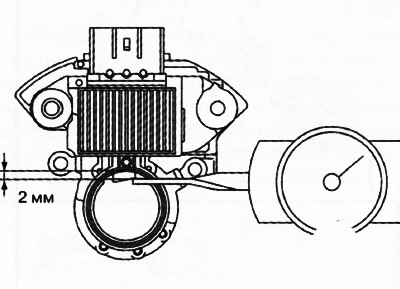
1. Using a dynamometer, measure the force of the brush springs.
2. Read the spring clamping force when the brush edge protrudes 2 mm. If the measured value does not correspond to the norm, replace the brush spring with a new one.
Note:
Brush spring clamping force:
- Standard: 4.1-5.3 N.
- Minimum: 1.7 N.
Rectifier
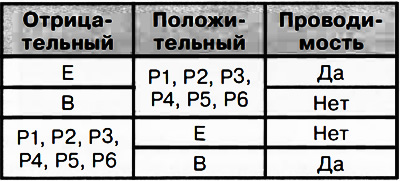
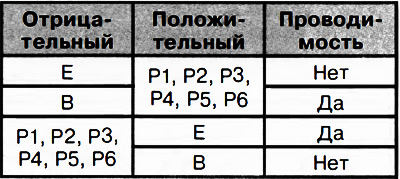
Check the conductivity of the diodes using an analog tester. If the test results are not normal, replace the rectifier with a new one.
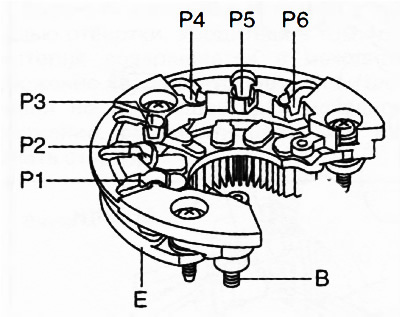
Using an analog tester
Using a digital tester
Bearing
Check the bearings for extraneous noise, looseness and jamming. If necessary, replace the bearing with a new one.