

Pedal Height Check
1. Measure the distance from the center of the top surface of the pedal pad to the floor covering and compare with the specification (see table at the beginning of the chapter).
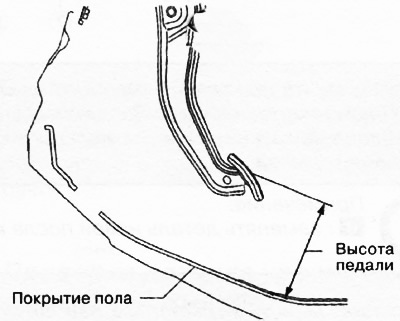
2. If the pedal height is not correct (134 mm), check the following and troubleshoot:
- Installation status of the vacuum brake booster.
- Deformation or damage to the fork of the vacuum brake booster.
- Installation status of the brake pedal.
- Wear on the connecting pin of the brake booster fork.
3. If no faults can be found, replace the brake pedal with a new one.
Pedal play check
1. Press the pedal several times to use up the vacuum in the brake booster.
2. While gently pressing the pedal with your hand, measure the pedal play. It should be 3-5 mm.
3. If the measured value of the brake pedal play is not correct, check the wear of the connecting pin of the brake booster fork. If defects are found, replace the connecting pin with a new one.
Note: If the connecting pin is OK, the possible cause of the malfunction lies in the vacuum brake booster. Check the condition of the brake booster and replace it with a new one if necessary.
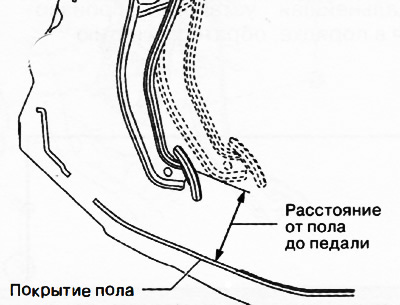
Checking the distance from the pedal to the floor
1. Start the engine and press the brake pedal with a force of 147 N (15 kgf).
2. Measure the distance from the center of the top surface of the pedal pad to the floor covering. If the measured value is not correct (less than 95 mm), check for air in the brake lines and, if necessary, bleed the system.