


Attention.
- Leaks in fuel lines in a pressurized system are dangerous. Fuel can ignite and cause equipment damage, serious injury, or even death. Fuel can also come into contact with human skin and eyes. To prevent this, it is essential to perform a pressure relief procedure in the fuel system.
- A person carrying a static charge can cause a fire or explosion, which could result in death or serious injury. Before working on the fuel system, you must discharge static electricity by touching the vehicle body.
- If fuel gets on engine parts, it may cause damage to those components or cause a fire. Be sure to wipe up any spilled fuel with a clean rag.
- If the fuel does not pass through the fuel filter, this may cause a malfunction of the fuel system. In this regard, it is necessary to ensure that the fuel hoses are not installed incorrectly. Be sure to perform the procedures after servicing the fuel system (see the relevant section above) before installing fuel hoses.
1. Disconnect the negative battery terminal.
2. Perform the procedure for preparing for servicing the power supply system.
3. Remove the decorative engine cover.
4. Remove the high pressure fuel pump return fuel line.
5. Remove the fuel injector return line.
6. Remove the components in the order shown in the following figure.
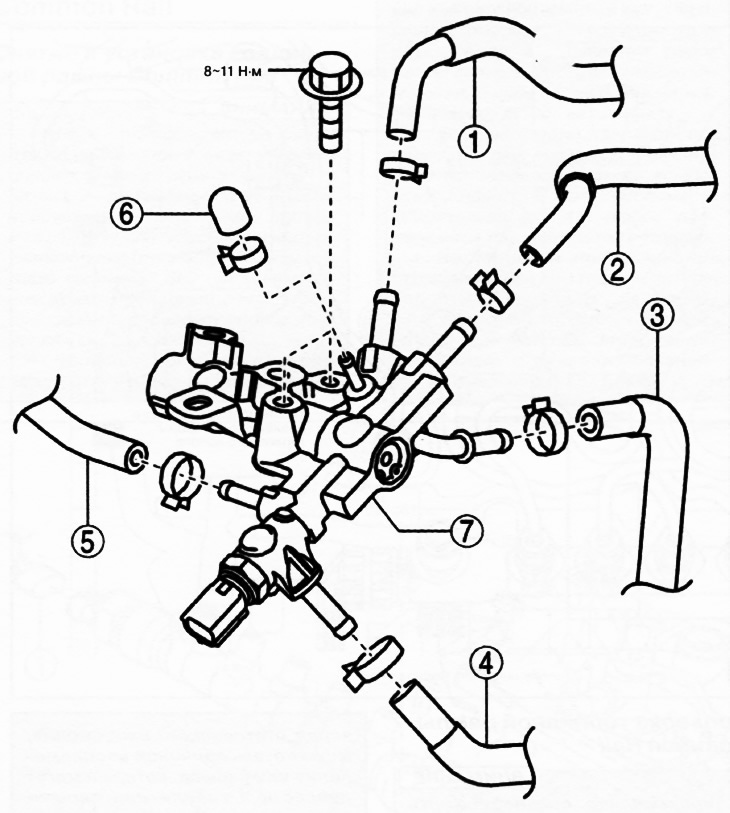
1. Main fuel hose.
2. Return fuel hose No.1.
3. Return fuel hose No.2.
4. Return fuel hose No.3.
5. Return fuel hose No.4.
6. Plug.
7. Lower body.
7. Installation is carried out in the reverse order of removal, taking into account the following:
Install the plug as shown in the figure.
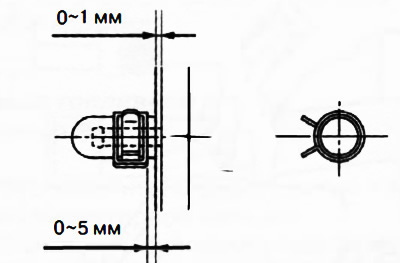
Install return fuel hoses No.2...4 as shown in the figure.
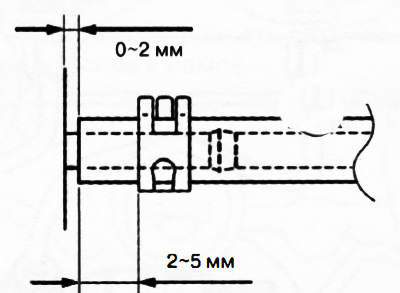
Install the fuel return hose No.1 as shown in the figure.
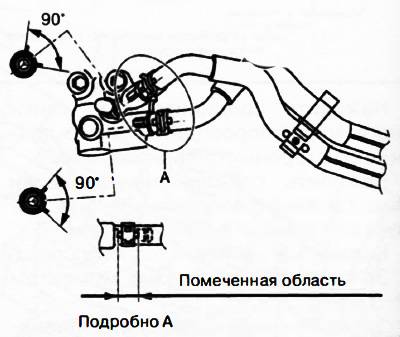
8. Perform the procedure for removing air from the fuel lines.