


Each end of the rack is connected via a ball joint to the steering rods. They transfer the force from the steering wheel through the steering rod joints and steering knuckles to the front wheels. The rack and pinion steering should have a light stroke and no play from lock to lock. It is not serviced, but you need to ensure that the sealing cuffs are in perfect condition.
Depending on the model and equipment, the steering may be equipped with hydraulic booster. Thanks to the power steering (servo control) the force required to turn the steering wheel is insignificant. The power steering consists of an oil pump, a compensation tank and oil lines. The pump is driven by a V-belt from the engine. The pump sucks oil from the compensation tank and delivers it under high pressure to the valve body. The valve body is located in the steering gear. The valve is mechanically connected to the steering shaft and delivers oil depending on the rotation of the wheel to the corresponding side of the working cylinder. There, the oil presses the piston of the toothed rack and maintains the steering movement. At the same time, the piston pushes oil from the other side of the working cylinder through the return line back to the compensation tank.
Attention! Always replace self-locking nuts. Welding and straightening work on the steering is not allowed. In case of insufficient experience, as well as major repairs, contact a specialized workshop.
Steering without power assistance
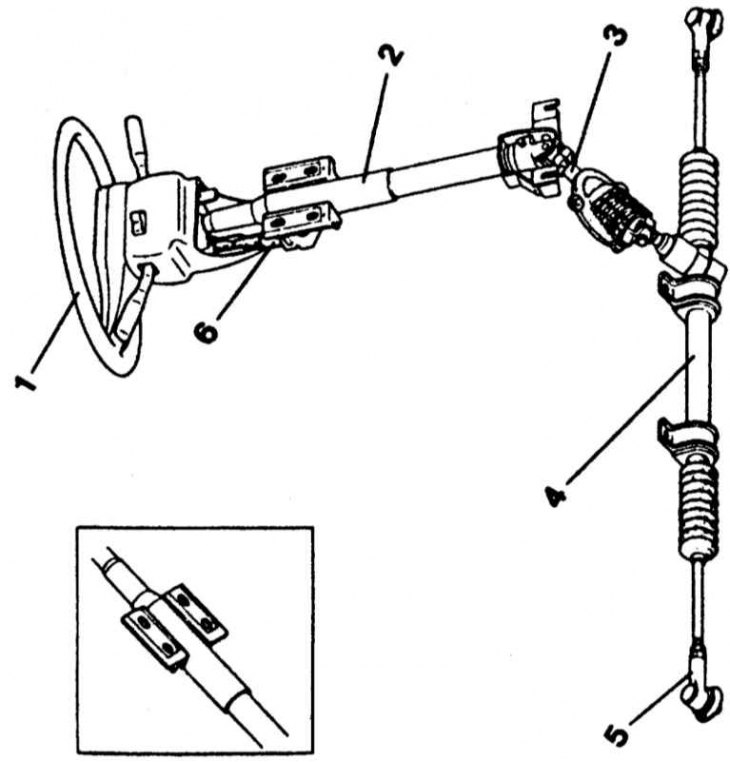
1 - steering wheel; 2 - steering shaft; 3 - intermediate steering shaft; 4 - steering mechanism; 5 - steering rod end; 6 - adjustable steering wheel lever