


Contents: Removal ⇓ Installation ⇓
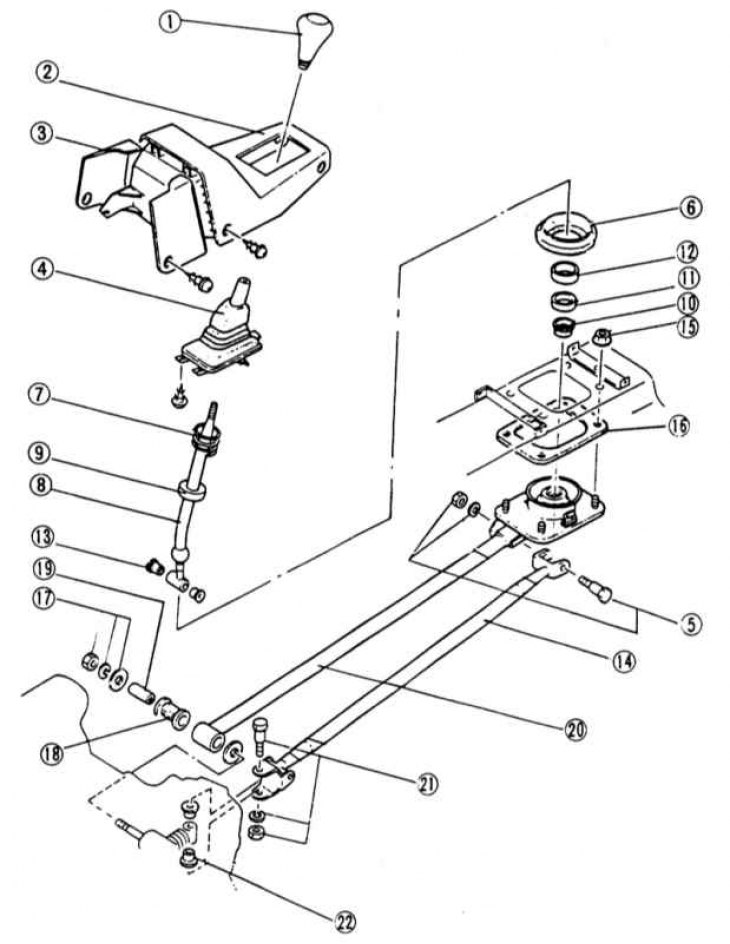
1 - gear shift lever handle; 2 - middle console; 3 - side wall; 4 - shift lever cuff; 5 - bolt and nut; 6 - rubber mount; 7 - spring; 8 - gear shift lever; 9 - upper landing place of the ball; 10 - casing; 11 - holder; 12 - lower ball landing place; 13 - bushing; 14 - shift rod; 15 - self-locking nut (Tighten to 10 Nm, always replace.); 16 - rubber seal; 17 - nut and washer; 18 - bushing; 19 - spacer element; 20 - extension rod; 21 - bolt and nut; 22 - bushing
The gear shift mechanism is maintenance-free. The gear shift mechanism of a front-wheel drive vehicle is shown.
Please note! On all-wheel drive models, conventional shift rods replace the two cables. This has the advantage of requiring less space. When engaging gears, there is a difference between the lateral movement (movement of choice) in the idle position and the actual shifting. Both movements are transmitted via the corresponding rods to the gearbox.
Removal
1. Raise the car.
2. Remove parts in numerical order.
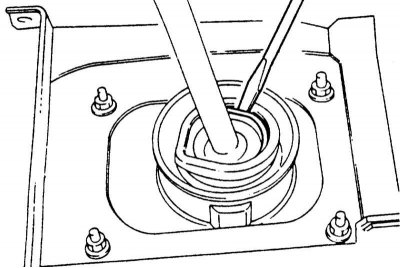
3. To remove spring "7", remove the hook-shaped part with a screwdriver.
Installation
1. Visually inspect all parts. Replace bent shift rods, worn joints and weakened springs.
2. Lubricate all joints and bushings with universal grease before assembly.
3. Install all parts in the reverse order of removal.
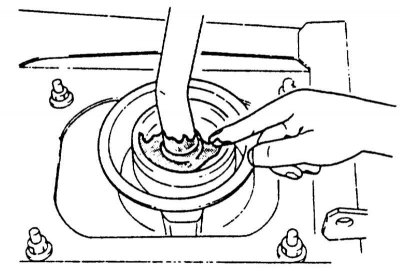
4. Fill the cavity of the shift lever support with universal grease.
5. Screw the shift rods to the gearbox with the required tightening torque, see Section Removal and installation the gearbox.