


Caution! If the coolant is drained as part of a repair, it must be collected, as it contains antifreeze and anticorrosive agents. When replacing the water pump, radiator or cylinder head, the coolant must be replaced. Use only branded ethylene glycol-based fluid. The concentrate must be compatible with aluminum elements. Do not use alcohol-based coolant.
Drain
1. Unscrew the cap on the radiator.
Caution! Remove the cap only when the radiator has cooled to hand temperature, otherwise there is a risk of scalding with hot coolant. For safety, place a rag around the nipple.
Article is based on website data [MazBook]
2. Place a clean container under the radiator to collect the liquid.
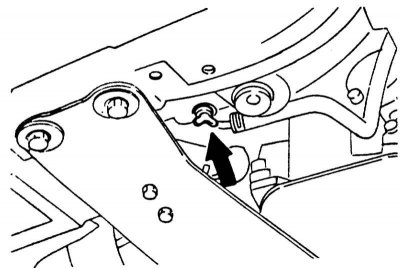
3. Drain the coolant from the radiator tap.
4. Allow the coolant to drain completely.
5. Rinse the system with clean water until the water is free of contaminants.
6. Screw in the drain plug on the radiator.
Filling
1. Fill the coolant through the radiator hose.
2. Fill the expansion tank with coolant up to the FULL mark. Install the cap.
3. Start the engine and let it run for 10 minutes at high speed. The engine should reach operating temperature, the radiator fan should turn on. During warming up, monitor the fluid level, top up if necessary.
4. After the engine has cooled down, check the fluid level in the expansion tank. If necessary, add fluid to the "FULL" mark.
5. Check the cooling system for leaks, especially the hose connections and drain plug, as well as the water pump.