


Warning! If the engine becomes hot after a short drive, the radiator may be clogged with limescale, the fan may be faulty, or the V-belt may be broken (except diesel engine).
The thermostat is located on the left side of the cylinder head behind the coolant inlet pipe.
Removal
1. Drain and collect the coolant, see Section Routine maintenance.
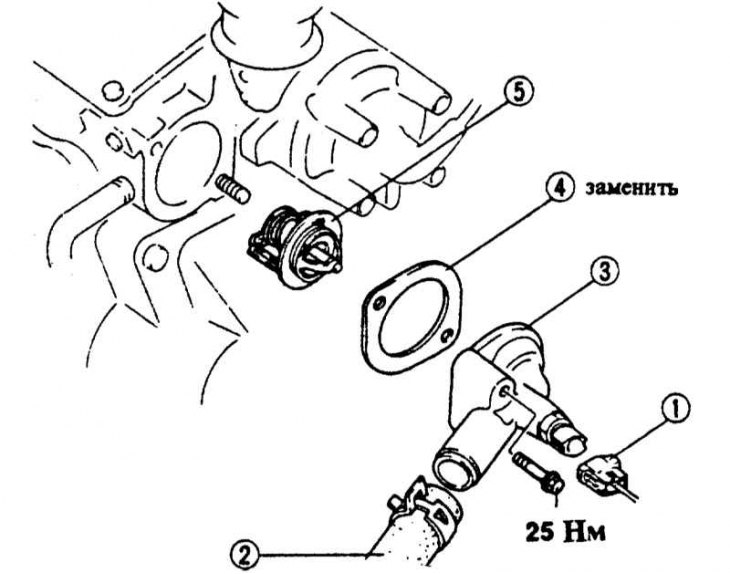
2. Disconnect the coolant hose by first loosening and completely moving the clamp.
3. Disconnect plug "1" of the thermal switch. The thermal switch is located on the coolant outlet pipe "3".
4. Loosen the 2 mounting bolts and remove the outlet fitting "3" with the gasket "4" and the thermostat "5".
Examination
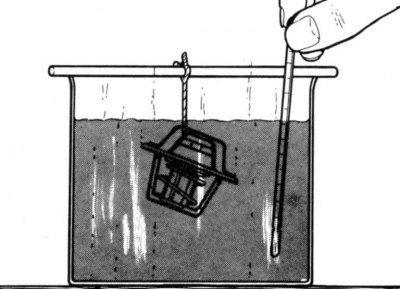
1. Slowly heat the thermostat in a container with water. The thermostat should not touch the walls of the vessel. The thermostat should be completely immersed in water. Monitor the temperature with a suitable thermometer.
2. At a temperature of +82°C (diesel: +86°C) the thermostat should start to open.
Attention! The opening temperature may differ depending on the thermostat. Its value is indicated on the thermostat.
3. At a temperature of +95°C (diesel: +100°C) the thermostat must be fully open, which means that the valve must move away from the stop by at least 8.5 mm.
4. Check that the thermostat closes completely during cooling, otherwise it should be replaced.
Installation
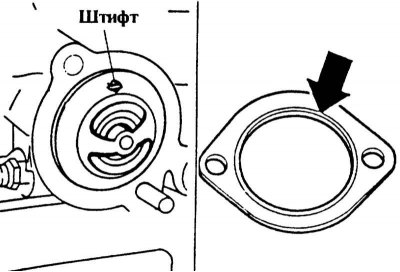
1. Insert the thermostat into the housing so that the pin is above the damper.
2. Insert the new thermostat gasket with the pressed side towards the cylinder head.
3. Tighten the mounting bolts with force 25 Nm.
4. Connect the plug.
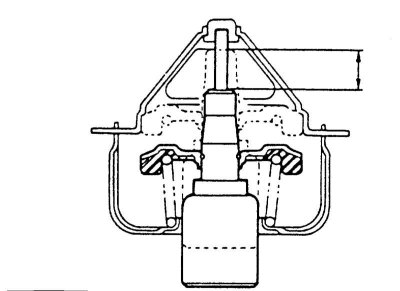
single stage type
5. Connect the coolant hose and secure with a clamp.
6. Fill with coolant, see Section Routine maintenance.
7. Warm up the engine and check the fittings for leaks, perhaps carefully tighten the mounting bolts.