


1. Remove the radiator cap and check the pipe and cap for rust and lime deposits, remove them if necessary.
Caution! Remove the cap only when the radiator has cooled to at least hand temperature, otherwise there is a risk of scalding from hot coolant. For safety, place a rag around the pipe.
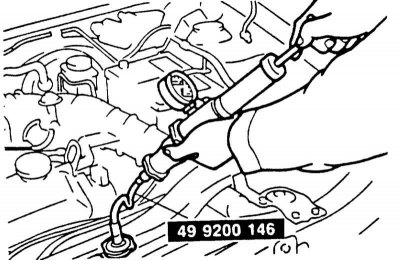
2. Screw the connecting element of the test device instead of the radiator cap.
3. Create pressure in the system by pumping. The pressure should be about 1.1 Bar.
[Original version of the article on the website: www.mazbook.ru]
4. The created pressure should remain constant for 2 minutes. If the pressure drops, find the leaky spots in the cooling system.
5. Reduce the pressure and slowly unscrew the connecting element.
Checking the pressure reducing valve
1. The pressure reducing valve is located in the radiator cap. Its task is to open the cooling system when excess pressure occurs and return the overflowing liquid to the expansion tank.
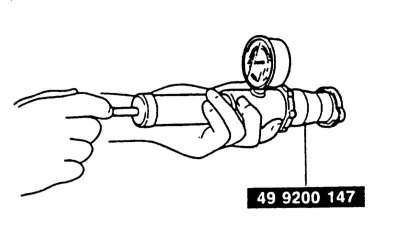
2. To check, screw the radiator cap onto the test device.
3. Create pressure. Load the valve with a pressure of 0.7 - 1.0 Bar. After 10 seconds, check whether the pressure has decreased. If the pressure has decreased, the cap should be replaced.
Checking the pressure relief valve
1. The pressure relief valve is also located in the radiator cap. After the coolant in the system has cooled, it allows the liquid to flow out of the reservoir.
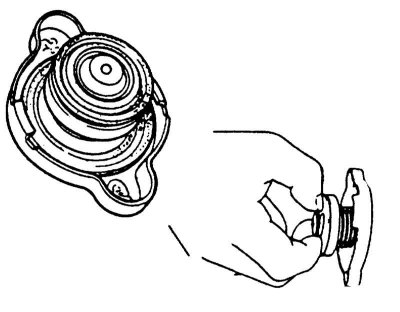
2. Remove the pressure relief valve and check if it closes completely when released. If it does not close completely or the gasket is damaged, the cover should be replaced.
3. Screw the cap onto the radiator; if damaged, replace the rubber gasket.