


2. The cooling system can only be checked when the engine is cold (at least three hours must pass after it is turned off).
3. Remove the radiator cap and thoroughly rinse its inner and outer surfaces with clean water. Also clean the radiator filler neck. All traces of corrosion must be removed (photo).
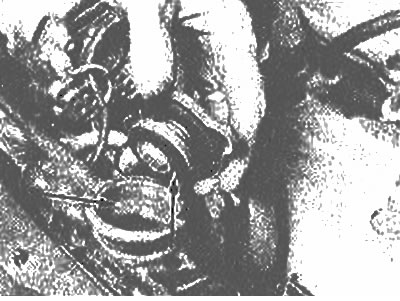
Never remove the radiator cap while the engine is cold. Inspect the sealing surfaces (arrows) for signs of corrosion and damage
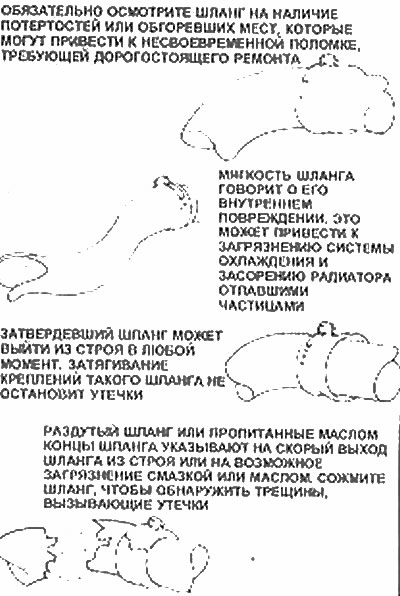
4. Carefully inspect the upper and lower radiator hoses, as well as the heater hoses (smaller diameter). Inspect each hose along its entire length, replacing any that are cracked, bulging, or frayed. Cracks may be easier to spot if you squeeze the hose with your hand (photo).
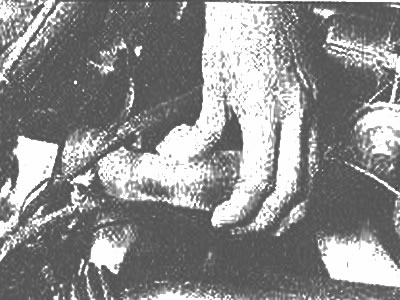
Although the radiator hose appears to be in good condition, it should be checked periodically for cracks, which can be more easily seen by squeezing the hose
5. Make sure all hoses are securely attached. Leaks in the cooling system can usually be detected by white or rusty deposits around the hose fittings.
6. Use compressed air or a soft wood chip to remove dead insects, leaves, etc. from the radiator or air conditioner condenser. Be careful not to damage the delicate cooling fins or cut yourself on them.
7. Check the system pressure and the pressure that opens the valve in the radiator cap. If you do not have the appropriate device, please contact your nearest filling station or service station.