


2. Check pipes and their connections for signs of leaks and/or corrosion indicating a potential failure. Make sure all brackets and hangers are in good condition and securely tightened.
3. At the same time, inspect the underbody for holes, corrosion, cracked seams and similar damage that allows exhaust gases to enter the vehicle's interior. Seal all holes in the underbody with body putty or silicone compound.
4. Rattling and other noises often occur in the exhaust system, which can be caused by loose fasteners and suspensions. Try to move the pipes, muffler and (where is it installed) catalytic converter. If this may cause components to come into contact with the body or suspension parts, secure the exhaust system with new fasteners (photo).
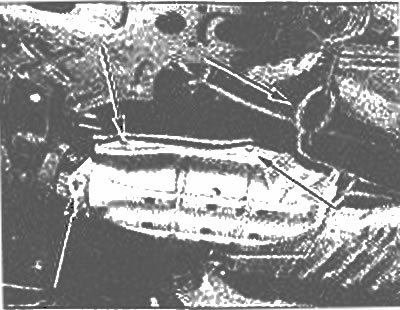
Check the exhaust system rubber mounts for cracks and the heat shield bolts for (where is it installed) for tightening strength
5. Assess the current condition of the engine by inspecting the inner surface of the end of the exhaust pipe. If the surface is black and sooty or covered with white deposits, the engine needs a tune-up, including a complete inspection and carburetor adjustment.