


Contents: Every 400 km or weekly ⇓ Every 10,000 km or once every 6…⇓ Every 20,000 km or once a year ⇓ Every 30,000 km or once every 1.5…⇓ Every 40,000 km or once every 2 years ⇓ Every 75,000 km or once every 4 years ⇓ Every 95,000 km or once every 5 years ⇓ Difficult operating conditions ⇓
Component layout in the engine compartment (air filter removed)
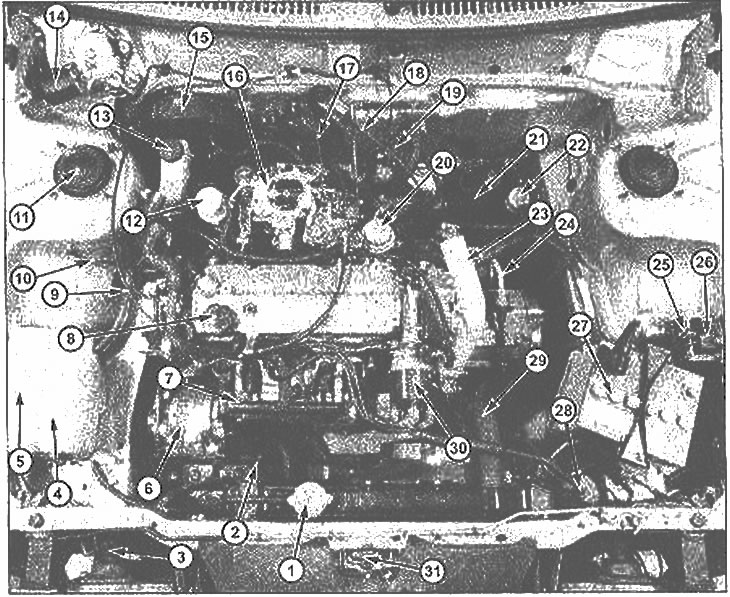
1 Radiator cap (Chapter 26); 2. Engine oil level dipstick (Chapter 4); 3. Headlight connector (Section 12); 4. Coolant reservoir (Chapter 4); 5. Windshield washer reservoir (Chapter 4); 6. Generator (Section 5); 7. Air manifold (Section 6); 8. Engine oil filler cap (Chapter 4); 9. Throttle cable (Chapter 19); 10. Engine grounding belt; 11. Protective cap of suspension strut support (Section 10); 12. Flame arrester valve (Section 6); 13. Master cylinder reservoir (Chapter 4); 14. Windshield wiper motor (Section 12); 15. Brake booster (Section 9); 16. Carburetor (Section 4); 17. Air damper cable (Section 4); 18. Speedometer drive cable (Section 12); 19. Double pressure regulator (Section 9); 20. Fuel pump (Section 4); 21. Steering rack cover (Chapter 12)
1 Radiator cap (Chapter 26); 2. Engine oil level dipstick (Chapter 4); 3. Headlight connector (Section 12); 4. Coolant reservoir (Chapter 4); 5. Windshield washer reservoir (Chapter 4); 6. Generator (Section 5); 7. Air manifold (Section 6); 8. Engine oil filler cap (Chapter 4); 9. Throttle cable (Chapter 19); 10. Engine grounding belt; 11. Protective cap of suspension strut support (Section 10); 12. Flame arrester valve (Section 6); 13. Master cylinder reservoir (Chapter 4); 14. Windshield wiper motor (Section 12); 15. Brake booster (Section 9); 16. Carburetor (Section 4); 17. Air damper cable (Section 4); 18. Speedometer drive cable (Section 12); 19. Double pressure regulator (Section 9); 20. Fuel pump (Section 4); 21. Steering rack cover (Chapter 12)
Bottom view (front of the car)
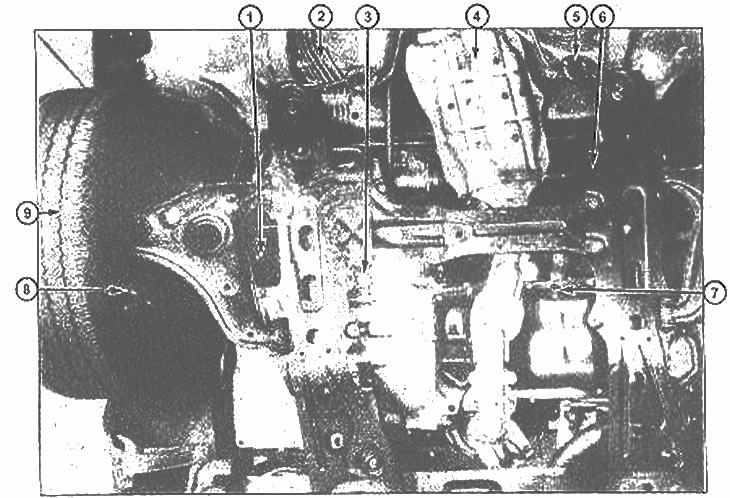
1. Drive shaft cover (Chapter 22); 2. Fuel lines and fuel vapor discharge tubes (Chapter 17); 3. Automatic transmission drain plug (Chapter 28); 4. Heat-resistant exhaust shield (Chapter 11); 5. Exhaust system suspension (Chapter 11); 6. Steering gear cover (Chapter 12); 7. Engine oil drain plug (Chapter 16); 8. Front disc brake (Chapter 13)
1. Drive shaft cover (Chapter 22); 2. Fuel lines and fuel vapor discharge tubes (Chapter 17); 3. Automatic transmission drain plug (Chapter 28); 4. Heat-resistant exhaust shield (Chapter 11); 5. Exhaust system suspension (Chapter 11); 6. Steering gear cover (Chapter 12); 7. Engine oil drain plug (Chapter 16); 8. Front disc brake (Chapter 13)
Bottom view (front of the car)
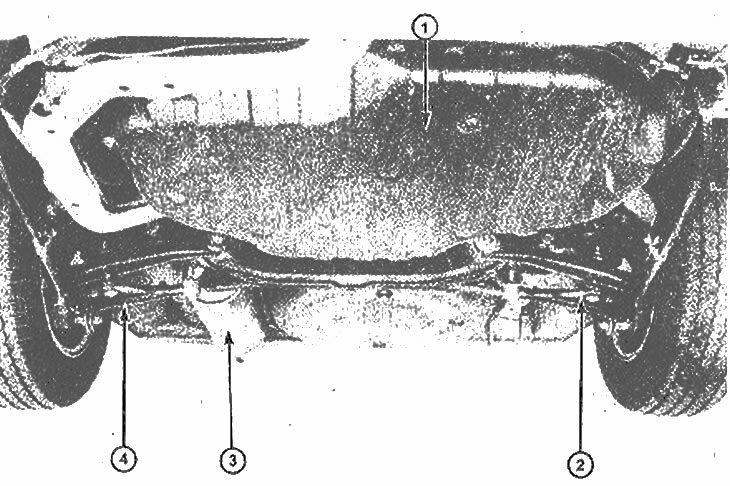
1. Fuel day (Chapter 17); 2. Anti-roll bar (Chapter 12); 3. Muffler (Chapter 17); 4. Lower suspension arm (Chapter 12)
1. Fuel day (Chapter 17); 2. Anti-roll bar (Chapter 12); 3. Muffler (Chapter 17); 4. Lower suspension arm (Chapter 12)
The service intervals in this manual are given on the assumption that you will be performing the service yourself. This is the minimum necessary work that we recommend for a vehicle in daily use.
A new vehicle must be serviced by a manufacturer-authorized dealer to maintain the manufacturer's warranty.
Note: The following service intervals are the manufacturer's recommended ones. To extend the life of your vehicle, perform filter and fluid change procedures at shorter intervals.
Every 400 km or weekly
- Check the engine oil level (Chapter 4)
- Check the coolant level (Chapter 4)
- Check the brake fluid level (Chapter 4)
- Check the electrolyte level in the battery (Chapter 5)
- Check the windshield washer fluid level and top it up if necessary with a product like Wax High Tech Screen Wash
- Inspect your tires and check your tire pressure (Chapter 3)
- Check the operation of all lights
- Check the operation of the sound signal
Every 10,000 km or once every 6 months
- Check the power steering fluid level (Chapter 4)
- Change engine oil and oil filter (Chapter 16)
- Check the tightness of the carburetor mounting bolts (Chapter 20)
- Inspect and lubricate frame components (Chapter 10)
- Check the cooling system (Chapter 7)
- Inspect and replace (if necessary) hoses in the engine compartment (Chapter 8)
- Check the exhaust system (Chapter 11)
- Check and adjust (if necessary) valve clearances (Chapter 37)
- Check and adjust (if necessary) tension of drive belts (Chapter 6)
- Check and adjust (if necessary) ignition timing angle (Chapter 34)
- Check and adjust (if necessary) idle speed and fuel mixture ratio (Chapter 15)
- Check the clutch pedal free play (Chapter 24)
- Inspect the spark plugs and re-gap or replace them (Chapter 35)
- Replace tires if necessary (Chapter 23)
- Check steering and suspension components (Chapter 12)
- Check the transmission fluid level (Chapter 4)
- Inspect the drive shaft boots (Chapter 22)
- Inspect the disc brake pads (Chapter 13)
- Check the operation of the brake system (Chapter 13)
- Inspect the battery and perform maintenance procedures (Chapter 5)
- Check and replace (if necessary) windshield washer blades (Chapter 9)
Every 20,000 km or once a year
In addition to the above procedures, follow these steps:
- Check the thickness of the drum brake linings (Chapter 13)
- Check the operation of the damper (Chapter 14)
- Check the operation of the parking brake (Chapter 13)
- Check the operation of the thermostatic air filter (Chapter 21)
- Check the fuel system components (Chapter 17)
- Check the throttle cable (Chapter 19)
- Replace the fuel filter (Chapter 18)
- Check the tightness of the front suspension strut fasteners and drive shaft nuts (see Section 10, Specifications)
Every 30,000 km or once every 1.5 years
In addition to the procedures performed every 20,000 km/6 months, do the following:
- Check the exhaust gas recirculation (EGR) system (Chapter 32)
- Check the fuel vapor extraction system (Chapter 33)
- Check engine compression (Chapter 38)
Every 40,000 km or once every 2 years
In addition to the procedures performed every 30,000 km and 20,000 km, do the following:
- Check the tightness of the cylinder head mounting bolts (Chapter 37)
- Check the tightness of the intake and exhaust manifold nuts
- Drain, flush and refill the cooling system (Chapter 26)
- Drain and refill the manual transmission with oil (Chapter 25)
- Lubricate and adjust the rear wheel bearings (Chapter 27)
- Inspect and replace, if necessary, the PCV valve (Chapter 31)
- Replace the air filter and the PCV filter (Chapter 29)
- Inspect and replace, if necessary, the spark plug wires, as well as the distributor cap and rotor (Chapter 36)
- Check the oxygen sensor (Section 6) and replace if necessary (Chapter 30)
- Replace the brake fluid by bleeding (Section 9)
Every 75,000 km or once every 4 years
In addition to the above procedures, do the following:
- Drain and refill the automatic transmission (Chapter 28)
Every 95,000 km or once every 5 years
- Replace the timing belt (Section 2)
Difficult operating conditions
Complex operating conditions include:
- Frequent short trips or long periods of idling
- Driving at high speeds in hot weather (above 32°C)
- Driving on dusty roads
- Driving in temperatures below -12°C for 60 days or more
- Very high air humidity
- Mountainous terrain or terrain where frequent use of the brakes is required
If your vehicle is operated in severe conditions, adhere to the following service intervals:
- Change your air and fuel filters more often
- Change engine oil and oil filter every 3,000 km or every two months
- Drain and refill the automatic transmission every 35,000 km