


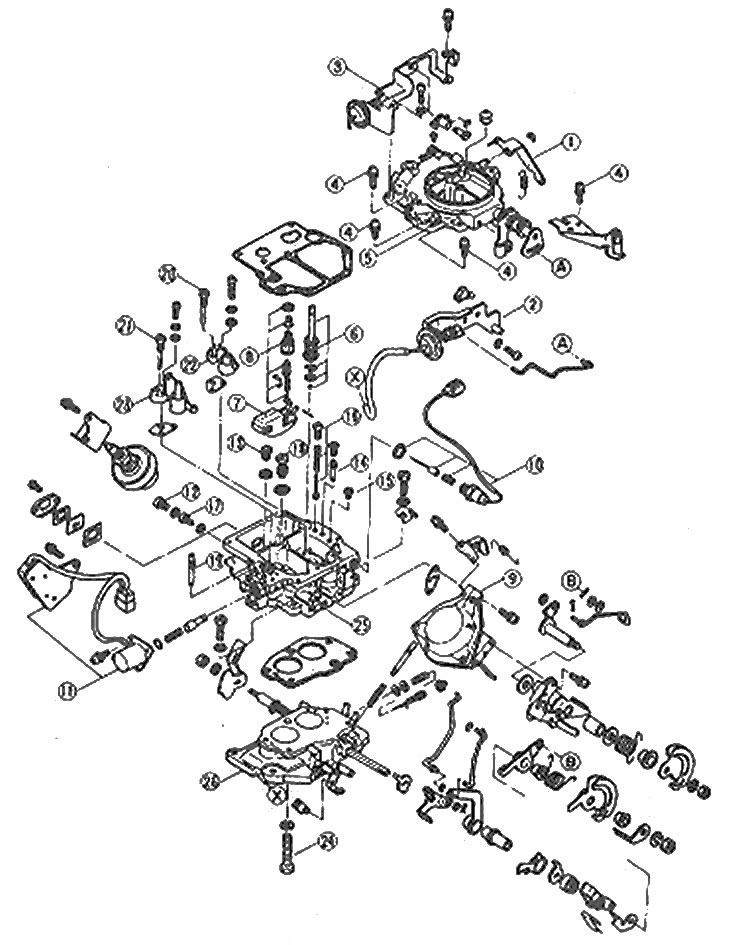
Carburetor Components - UK Models
1. Lever (accelerator pump); 2. Vacuum cut-off diaphragm and bracket; 3. Damper opening diaphragm and bracket; 4. Screws; 5. Air vent; 6. Accelerator pump; 7. Float; 8. Float regulator needle; 9. Secondary chamber throttle valve diaphragm; 10. Cold mode breakthrough electromagnetic valve. move; 11. Solenoid valve for economy mode when coasting and cold switch. move; 12. Cork; 13. Primary chamber main jet; 14. Primary chamber slow-speed jet; 15. Primary chamber slow-speed air jet (No. 2); 16. Injection weight; 17. Secondary chamber main jet; 18. Power jet; 19. Secondary chamber slow-speed jet; 20. Primary chamber main air jet; 21. Main air jet of the secondary chamber; 22. Primary chamber diffuser and atomizer; 23. Secondary chamber diffuser and atomizer; 24. Bolt; 25. Carburetor body; 26. Throttle body
Note: Carburetor repair is a procedure that requires experience. A vehicle owner without much experience should have this procedure performed by a service department.
Check the availability and readiness of spare parts before starting work. It is more efficient to replace components with new ones than to repair a worn-out unit.
Dismantling
1. Clean the outside of the carburetor with solvent and dry it. Place the carburetor on a clean workbench. Prepare lots of small containers.
2. Inspect the throttle valve and accelerator pump rods. Make notes if they differ from those shown in the photo.
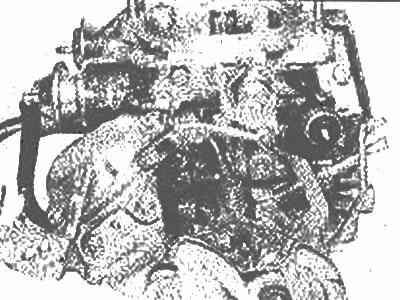
View of the carburetor from the throttle linkage side |
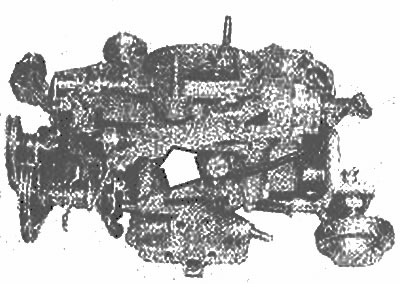
View of the carburetor from the shock absorber side. The accelerator pump lever is marked with arrows |
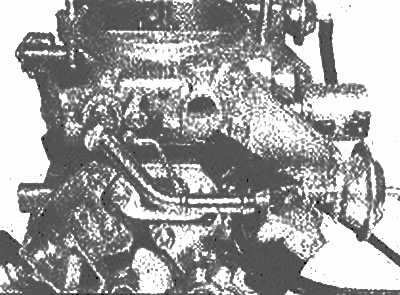
View of the carburetor from the fuel inlet side
3. Disconnect the accelerator pump lever from the throttle linkage. Disconnect the lever spring.
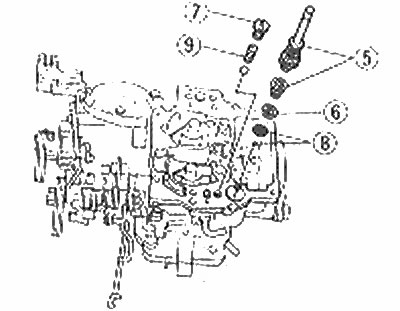
The main components of the carburetor accelerator pump
5. Assembling the accelerator pump plunger; 6. Mounting bracket; 7. Control valve plug; 8. Accelerator pump inlet control mesh filter and ball; 9. Accelerator exit ball
4. Disconnect the vacuum hose from the rod on the throttle body (photo).
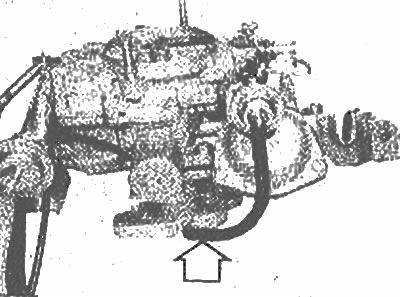
Disconnect the vacuum shut-off hose (marked with an arrow)
5. Disconnect the rod from the quick cool down valve shaft lever. move.
6. Remove the eight screws that secure the airbox to the carburetor body (photo). The screws are not the same length; note their locations.
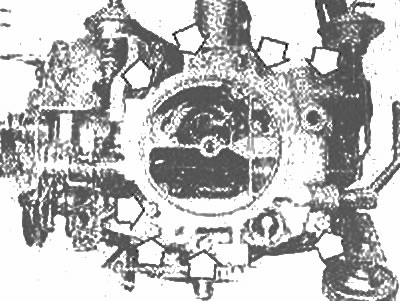
Eight screws (soaked with arrows) sprinkling the air throat to the carburetor body
7. Lift the air filler neck, clearing the wire harness and any other obstructions. Take the gasket. The accelerator pump piston can be removed with the air neck.
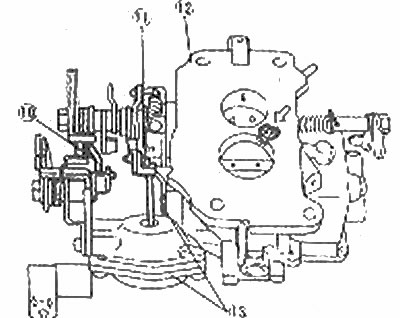
Carburetor throttle body rod (10), vacuum diaphragm rod (11), throttle body (12) and diaphragm assembly (13)
The arrow shows the throttle body mounting screw
8. Now you can clean the float reservoir and various jets and bleed them (photo).
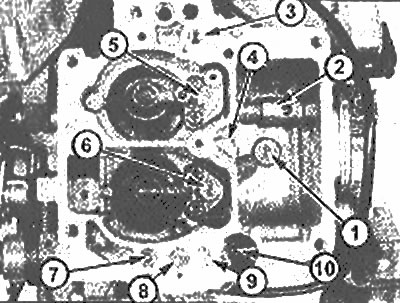
Carburetor body with air filler removed
1. Primary chamber main jet; 2. Main jet of the secondary chamber (in the pipe); 3. Secondary chamber slow-speed jet; 4. Power jet; 5. Main air jet of the secondary chamber; 6. Primary chamber main air jet; 7. Primary chamber slow air jet (No. 2); 8. Primary chamber slow-speed jet; 9. Injection weight; 10. Accelerator pump spring
9. The float and float regulator needle can be removed from the air intake by removing the float pivot pin (photo). Then, the float regulator needle seat can be unscrewed.
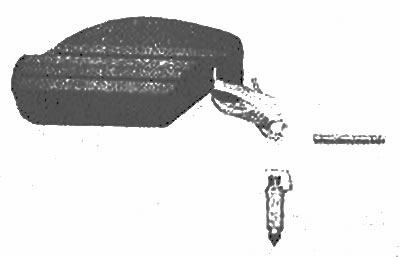
Float, float regulator needle and pivot pin
10. To remove the cold mode interrupt solenoid valve. stroke, unscrew it from the carburetor body. Remove the spring and plunger (photo).
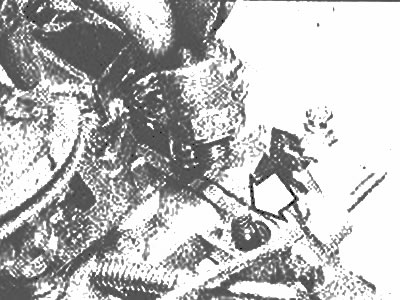
Removing the cold mode breakthrough electromagnetic valve. stroke. Spring and plunger (marked with an arrow) remained in the building
11. Remove the shock absorber, the coasting economy valve and the cold switch. move (where it is equipped). Cm. Section 6 if necessary.
12. If necessary, the secondary throttle diaphragm and vacuum valve assemblies can be removed along with their brackets. The throttle body diaphragm assembly can be removed for inspection, but a repair kit is unlikely to be found.
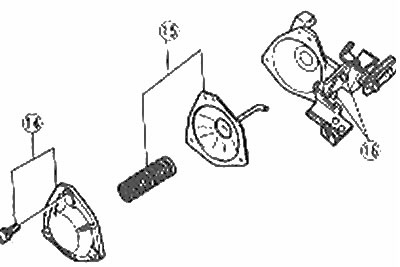
Vacuum diaphragm components
14. Cover and screws; 15. Spring and diaphragm; 16. Throttle lever
13. If you want to separate the throttle body from the carburetor body, note that one of the mounting screws is located below, behind the secondary throttle valve.
14. Remove the idle speed adjustment screw, counting the number of revolutions.
Cleaning and inspection
15. Rinse all components in clean solvent and blow them dry with compressed air. Do not use a piece of passage to clean jets and passages.
16. Electromagnetic block for interrupting cold mode. stroke, diaphragm and other electrical, rubber and plastic parts should not be immersed in various solvents.
17. Ensure that all fuel passages, jets, and other components are free of burrs and dirt.
18. Inspect the upper and lower surfaces of the air throat and the main parts of the throttle body for signs of damage. Make sure all foreign particles are removed.
19. Inspect all lever bores and plastic bushings for signs of excessive wear and replace if necessary.
20. Inspect the float regulator needle and seat for signs of dirt; if there are deep nicks, replace the entire unit.
21. Inspect the float, float arms and pivot pin for signs of distortion (deformations) or slowdowns and align or replace as necessary.
22. Inspect the rubber seal on the accelerator pump plunger for excessive wear or cracks.
23. Inspect the mixture adjusting screw for signs of burrs or ridges.
24. Check the choke and linkage for excessive wear, restrictions, distortion and warping and realign or replace as necessary.
25. Inspect the throttle body vacuum diaphragm for signs of leaks and replace if necessary.
26. Check the freedom of movement of the air damper.
27. Check the pulling action by connecting the traction relay of the electromagnetic unit to the positive pole of the battery and the housing. In this case, the valve stem should retract the valve body. If this does not happen, replace the traction relay with a new one.
28. The throttle valve's vacuum diaphragm is controlled by a thermostatic valve screwed into the intake manifold (photo). The valve should not allow air to pass below 19°C, but should freely pass air above this temperature. The operating temperature tolerance is ±3°C. Remove the valve for inspection as shown in the figure.
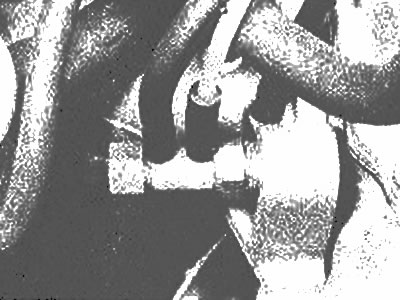
Intake manifold flap opening thermostatic valve
Assembly
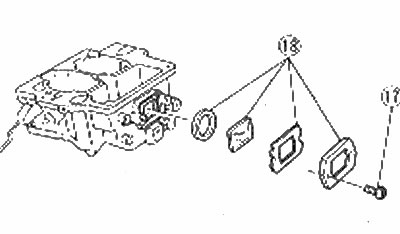
Assembling the glass fuel tank opening in the main part of the carburetor
17. Screws; 18. Lid, gasket, glass and rubber gasket
29. Assembling the carburetor is basically the reverse procedure of disassembly, paying attention to the following points:
- a) Use all new gaskets.
- b) Set the mixture adjusting screw to the same number of turns recorded during removal.
- c) Perform the adjustments described in the following points.
Adjustment
The height of the upper position of the air throat float
30. Before installing the air neck, the upper position of the float must be measured (without gasket) and adjust as follows.
- a) Turn the air neck over, let the float fall under its own weight and measure the gap between the float and the air neck (photo). Compare the measurements (H in the corresponding illustration) to Specifications and adjust the float tip seal as necessary.
- b) Turn the air neck post, let the float drop and measure the distance between the base of the float and the air neck. If there is a gap (L in the corresponding illustration) incorrect, bend the float limiter.
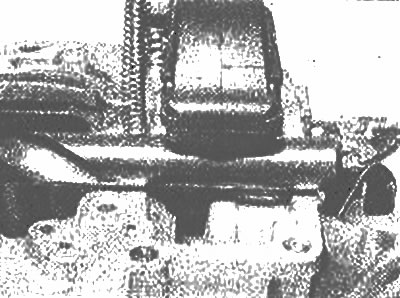
Using a sperlo to measure the float's height
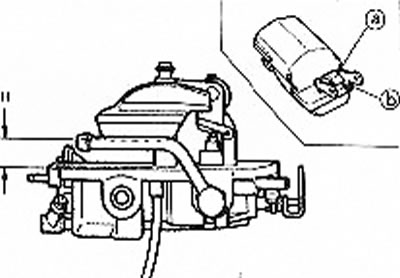
Float position parameters and adjustment procedure (with the body removed) |
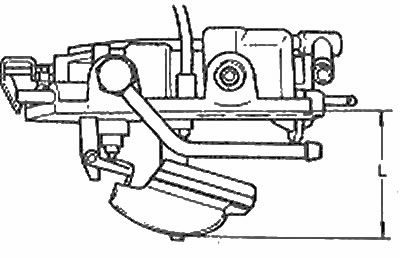
Float position parameters and adjustment procedure |
Damper opening diaphragm
31. Create a vacuum of approximately 15.7 in-Hg on the throttle opening vacuum diaphragm tube. Push the choke valve slightly to close it and measure the gap.
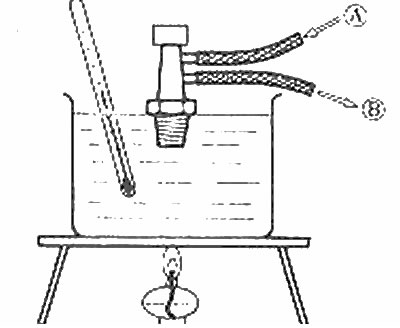
Checking the damper opening thermostatic valve
A - Incoming air; B - Outgoing air
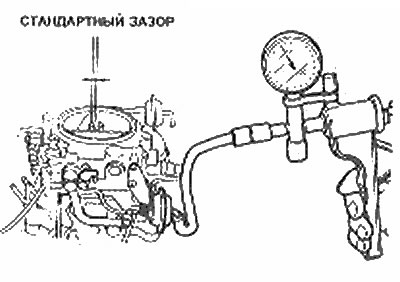
Checking the throttle valve opening diaphragm clearance Standard clearance = 3.94±0.16 mm |
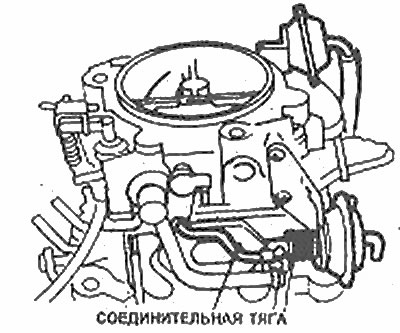
Adjust the throttle valve opening clearance by bending the connecting rod |
Vacuum cut-off diaphragm
32. The check is similar to the procedure described for the throttle valve opening diaphragm, but this time the desired air damper clearance is 1.94±0.25 mm. Bend the connecting rod if necessary.
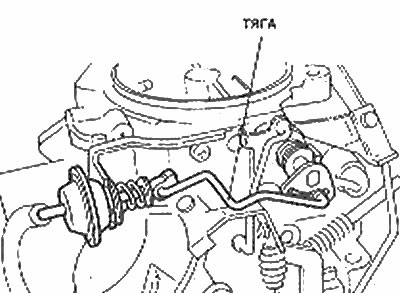
Vacuum diaphragm shut-off connecting rod
Fast cool adjustment. move
33. Close the choke valve completely and measure the clearance between the primary throttle valve and the camshaft using a drill or straightedge (photo). The desired clearance is given in the Specifications. Adjust if necessary by bending the quick release coupling rod. move.
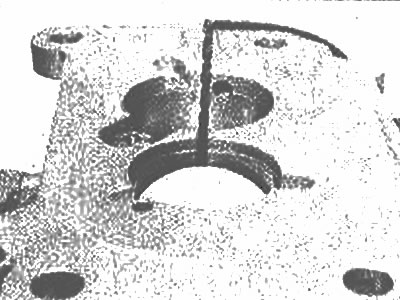
Fast cool adjustment. stroke - measurement of the primary chamber throttle valve clearance |
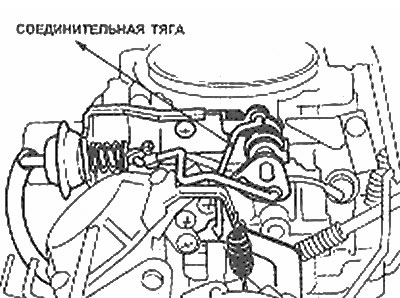
Quick cooler connecting rod. move |
Throttle lock
34. Ensure that the secondary throttle valve does not open freely until the primary throttle valve has opened to 45°C. At this angle, the clearance between the primary throttle valve and the primary throttle valve is 6.7±0.5 mm. Also ensure that the secondary throttle valve opens freely when the primary throttle valve is fully open. Adjust if necessary by bending the lock lever.
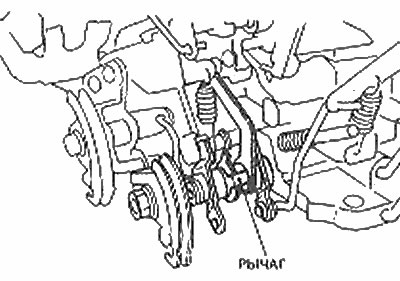
Throttle lock lever
Note: The secondary throttle valve must be opened manually as it is usually opened by vacuum rather than mechanically.
Idle speed and mixture
35. Install the carburetor (Chapter 7), warm up the engine and adjust the idle speed and mixture (Section 1). Finally, install new plugs where needed.
(Original version of the article on the website Mazbook.ru)