
MazBook.ru
English Русский
Български
Беларускі
Український
Српски
Hrvatski
Română
Polski
Slovenský
Magyar
• Bookmark • Sitemap • Contacts •   
Cars Opel Cars Ford Cars Volkswagen Cars Audi Cars Kia Cars Renault Cars Peugeot


Familia Capella Mazda3 Mazda6 CX-? Others Articles
Capella 3 (1982-1992, petrol) Capella 3 and 4 (1982-1992) Capella 4 (1987-1992) Capella 5 (1991-1997) Capella 6 (1997-2005, petrol)

Idle Speed Control System — checking and adjusting (Mazda Capella GC)

  • Home
  • Mazda Capella
  • Capella GC (1982-1992)
  • Power unit
  • Fuel and exhaust system
  • Idle Speed Control System — checking and adjusting
0
Contents: Amplifier diaphragm ⇓ Triple solenoid valve ⇓ Power steering switch ⇓
1. Cold mode stabilization system. the power steering system used on some models increases engine speed to compensate for the load placed on the engine by the air conditioning and/or power steering. The system consists of amplifier diaphragms (which differ according to whether the vehicle has air conditioning and power steering or air conditioning only) and a triple solenoid valve. Sign of damage in the cold mode stabilization system. the running mode is the engine stopping at low speed when the air conditioner and/or power steering is engaged.

Amplifier diaphragm


2. Remove the air filter assembly.

3. Turn off all additional equipment and disconnect the electric fan.

4. Disconnect and plug the cold compensator hoses. stroke, valves and temperature sensor.

5. Warm up the engine to normal operating temperature and connect the tachometer.

Models with air conditioning


6. Disconnect the vacuum pipe (B in the accompanying illustration).
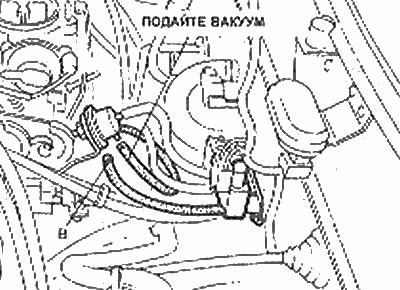
Checking the cold mode stabilization system. move (models with air conditioning)

Checking the cold mode stabilization system. move (models with air conditioning)

B — Vacuum tube


7. Apply vacuum from the manifold to the booster diaphragm and ensure that the idle frequency is correct. the engine speed has increased to 1200-1400 rpm. If this increase does not occur, turn the adjusting screw to adjust it.
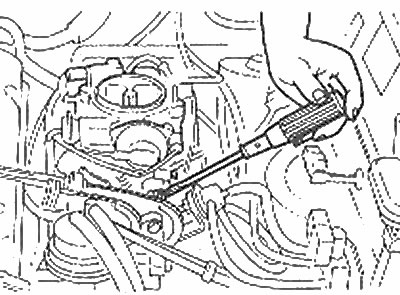
Adjusting the idle speed booster (models with air conditioning)

Adjusting the idle speed booster (models with air conditioning)


Based on website data: MazBook.ru

Models equipped with power steering


8. Follow steps 2-4. On models with air conditioning, also check and adjust the amplifier diaphragm.

9. Connect the vacuum line (A in the accompanying diagram) and apply vacuum from the manifold to the booster diaphragm.
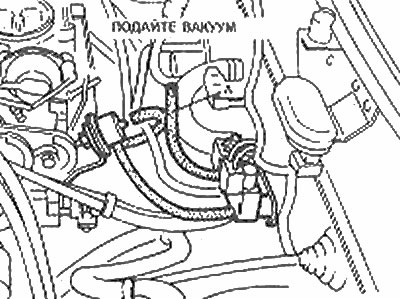
Checking the cold mode stabilization system. travel on models equipped with power steering

Checking the cold mode stabilization system. travel on models equipped with power steering


10. Engine speed should increase to 800-1000 rpm on models with manual transmission and to 1050-1250 rpm on models with automatic transmission. If the increase in RPM is not as good, disconnect the vacuum pipe and turn the adjusting screw on the diaphragm to adjust.
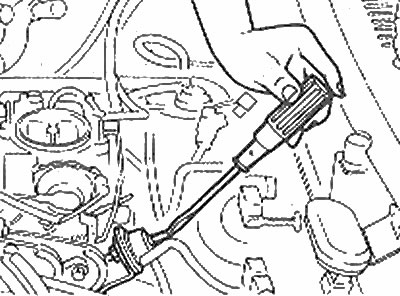


Adjusting the diaphragm of the amplifier of the cold mode stabilization system. move (power…

Adjusting the diaphragm of the amplifier of the cold mode stabilization system. move (power steering)


11. Reconnect the vacuum line and recheck the engine speed.

Triple solenoid valve


12. The triple solenoid valve is installed between the intake manifold and the booster diaphragm. On models with air conditioning, a triple solenoid valve limits vacuum flow according to a signal sent through the control unit from the air conditioning switch. A triple solenoid valve on models with power steering limits vacuum flow according to a signal from the power steering switch.
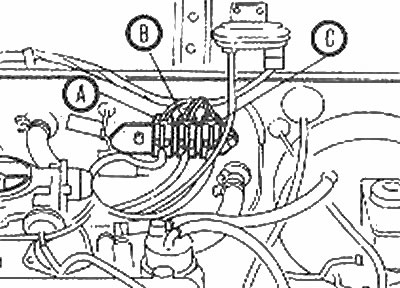
Location of the three-way solenoid valve

Location of the three-way solenoid valve

A - Power steering; B - No. 2 ACV; C - Air Conditioner


13. In idle mode, turn on the air conditioner and check that the booster diaphragm and triple solenoid valve are working properly.


14. Turn off the air conditioner and turn the steering wheel to the maximum right or left angle and check that the power steering diaphragm and triple solenoid valve are working properly.
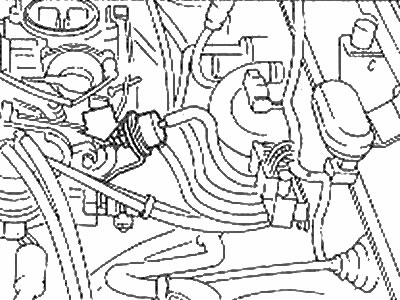
The booster diaphragm rod (arrow) should move if the triple solenoid valve is operating properly

The booster diaphragm rod (arrow) should move if the triple solenoid valve is operating properly


Power steering switch


15. Disconnect the power steering switch connector and check for continuity as shown in the accompanying illustration. In idle mode, turn the steering wheel to the maximum angle to the right or left to ensure there is no break.
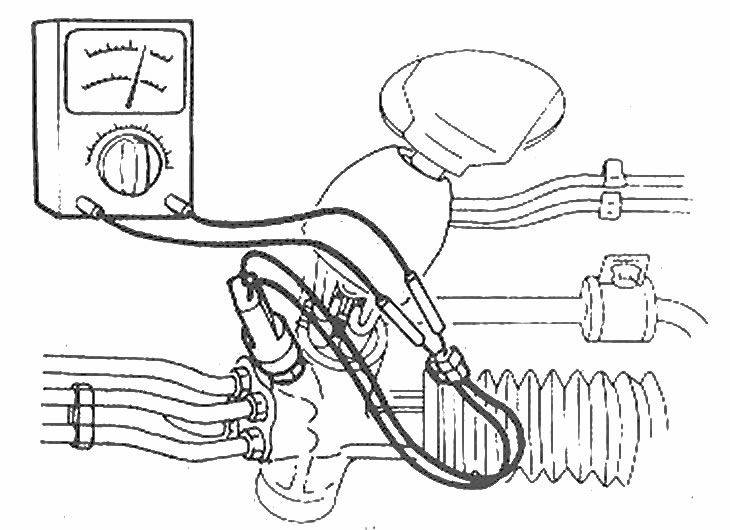
Checking the power steering switch for proper operation

Checking the power steering switch for proper operation
This article is available at: russian, bulgarian, belarusian, ukrainian, serbian, croatian, romanian, polish, slovak, hungarian
This text was checked by: Evdokia Filimonova
Share with friends on social networks:

Previous
Capella 3 » Fuel and exhaust system
Next

Exhaust system components — removal and installation
Carburetor — repair and adjustment
Carburetor — removal and installation
Fuel tank repair
Fuel tank — removal and installation
Choke Cable — removal, installation and adjustment
More articles on repairing other Mazda models
Checking / adjusting the idle speed Mazda Familia 6 (1989-1994)
Checking the idle speed Mazda3 BK (2003-2009)
Checking the idle speed Mazda6 GG (2002-2008)
Checking the idle speed Mazda CX-5KE (2012-2017)
Checking the idle speed Mazda BT-50 (1) (2006-2011)
Link in different formats to this article
Comments and feedback from visitors
No comments yet


How much will 15 + 31 ?


Capella 6 (1997-2005, petrol) 
  • General information
  • Introduction to guide
  • User manual
  • Troubleshooting
  • Maintenance
  • Power unit
  • 4-cylinder engines
  • 6-cylinder engines
  • Engine overhaul
  • Cooling and ventilation
  • Power and exhaust systems
  • Engine electrics
  • Control system
  • Transmission
  • Mechanical gearbox
  • Automatic gearbox
  • Clutch and drive shafts
  • Chassis
  • Brake system
  • Car suspension
  • Steering
  • Body
  • Exterior (external elements)
  • Interior (internal elements)
  • Doors, windows and locks
  • Electrical equipment
  • Equipment and devices
  • Electrical circuits
Capella 5 (1991-1997) 
  • General information
  • User manual
  • Maintenance
  • Helpful hints
  • Power unit
  • Petrol engines 1.6 and 1.8
  • Petrol engines 2.0
  • 2.5 petrol engines
  • Overhaul engines 1.6 and 1.8
  • Overhaul engines 2.0 and 2.5
  • Diesel engine 2.0
  • Engine electrics
  • Cooling system
  • Air conditioner
  • Carburetor Nikki 30/34
  • Power system (1.6 and 1.8)
  • Power system (2.0 and 2.5)
  • Control system
  • Transmission
  • Mechanical gearbox
  • Automatic gearbox
  • Clutch and axles
  • Chassis
  • Brake system
  • Suspension and wheels
  • Steering
  • Body
  • Exterior (external elements)
  • Interior (internal elements)
  • Doors and windows
  • Electrical equipment
  • Equipment and devices
  • Electrical circuits
Capella 4 (1987-1992) 
  • General information
  • Introduction to manual
  • Vehicle specifications
  • Power unit
  • Engine repair
  • Lubrication system
  • Cooling system
  • Fuel system (carburetor)
  • Fuel injection (FE)
  • Fuel injection (DOHC)
  • Fuel system (diesel)
  • Ignition system
  • Transmission
  • Clutch
  • Gearbox
  • Drive shafts
  • Chassis
  • Front suspension
  • Rear suspension
  • Steering system
  • Brake system
  • Electrical equipment
  • Equipment and devices
  • Electrical circuits
Capella 3 and 4 (1982-1992) 
  • General information
  • User manual
  • Maintenance
  • Power unit
  • Gasoline engine
  • Engine overhaul (gasoline)
  • Diesel engine
  • Cooling and heating
  • Supply system
  • Ignition system
  • Emission reduction
  • Transmission
  • Clutch
  • Mechanical gearbox
  • Automatic gearbox
  • Drive shafts
  • Chassis
  • Brake system
  • Suspension and wheels
  • Steering
  • Body
  • Exterior (external elements)
  • Interior (internal elements)
  • Electrical equipment
  • Equipment and devices
  • Power devices
  • Electrical circuits
Capella 3 (1982-1992, petrol) 
  • General information
  • User manual
  • Maintenance
  • Troubleshooting
  • Late models
  • Power unit
  • Engine in car
  • Engine overhaul
  • Cooling and heating system
  • Fuel and exhaust system
  • Engine electrical system
  • Emission control system
  • Transmission
  • Mechanical gearbox
  • Automatic gearbox
  • Clutch and drive shafts
  • Chassis
  • Brake system
  • Suspension and wheels
  • Steering
  • Body
  • Exterior (external elements)
  • Interior (internal elements)
  • Electrical equipment
  • Equipment and devices
  • Lighting and lamps
  • Electrical circuits
MazBook.ru © 2018–2026 · Mobile version · Articles and news · Sitemap: EN BG BY UA RS HR RO PL SK HU · Feedback · Site search · Add to bookmarks Familia 5 (BF) · Familia 6 (BG) · Capella 3 (GC) · Capella 3 and 4 (GC) · Capella 4 (GD) · Capella 5 (GE) · Capella 6 (GF) · Mazda3 BK · Mazda6 GG · CX-5KE · Mazda 121 (3) · Mazda BT-50 (1) ·
By continuing to use the site, you agree to the use of cookies 🔐