


General description
1. The air intake system helps reduce hydrocarbon and carbon monoxide emissions by introducing air into the intake ports of each cylinder.
2. The air intake system uses exhaust pressure pulses to draw air into the exhaust system and uses fresh filtered air.
3. The parts used in the system include fine valves located in the air filter, external pipes and hoses.
Examination
4. Exhaust gas flowing back through the air cleaner assembly is a sign of damage in the air intake system. When starting any inspection, carefully check all hoses. Make sure they are in good condition, all connections are tight and clean.
5. A simple, functional test of this system can be performed with the engine running.
6. Remove the upper part of the air cleaner and filter element assembly.
7. With the engine at normal temperature and idling, place a piece of paper on the fuel valve inlet channel. With the engine idling, there should be a steady stream of air being sucked into the valve. Have an assistant operate the throttle and as the engine speed changes, watch to see if the suction increases.
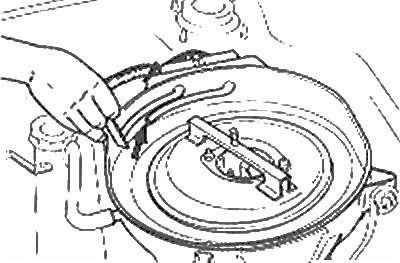
Checking the operation of the thin valve of the air intake system with a piece of paper |
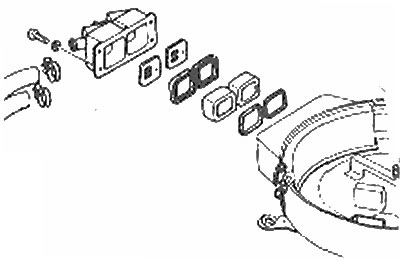
Thin valve parts |
8. If this does not happen, the hoses are not sealed or clogged, or the fine valves are faulty.
9. Increase the engine speed to approximately 1500 rpm and check for exhaust leaks at the vent connection.
10. Replace the thin valve with a new one if it fails any of the tests.
Replacement of parts
11. Remove the air filter.
12. Remove the screws securing the thin valve housing cover and remove the valves and filters from the housing (photo).
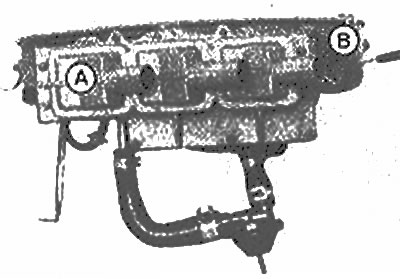
The thin valve assembly (A) is attached to the air cleaner housing (B) with screws |
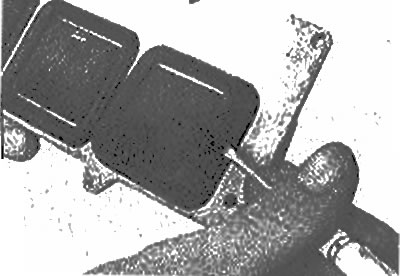
Use a small screwdriver to remove the thin valve |
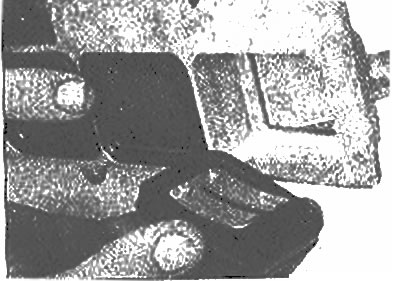
Removing the thin valve from the casing
13. Assembly is carried out in reverse order.