MazBook.ru
English Русский
Български
Беларускі
Український
Српски
Hrvatski
Română
Polski
Slovenský
Magyar
• Bookmark • Sitemap • Contacts •   
Cars Opel Cars Ford Cars Volkswagen Cars Audi Cars Kia Cars Renault Cars Peugeot


Familia Capella Mazda3 Mazda6 CX-? Others Articles
Capella 3 (1982-1992, petrol) Capella 3 and 4 (1982-1992) Capella 4 (1987-1992) Capella 5 (1991-1997) Capella 6 (1997-2005, petrol)

Battery testing and maintenance (Mazda Capella GC)

  • Home
  • Mazda Capella
  • Capella GC (1982-1992)
  • General information
  • Maintenance
  • Battery testing and maintenance
0
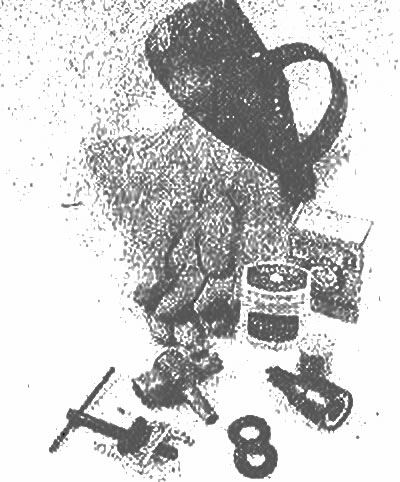
1. Tools and materials required for battery maintenance include a protective mask and gloves, baking soda, petroleum jelly, a battery cable puller and wire stripper, and battery terminals (photo). If the battery has removable cell caps, a hydrometer will also be required.

1. Tools and materials required for battery maintenance include a protective mask and gloves,…


2. Some models described in this manual are equipped with maintenance-free batteries. Although this type of battery has several advantages over the flooded type and never requires water to be added, it still needs to be maintained as described below.

Warning: Small amounts of hydrogen gas may be released from the vents of sealed batteries, so do not bring a lit cigarette or open flame near the battery.


3. Periodically inspect the battery for damage such as cracks.

4. Check the battery cable clamps for tightness to ensure good electrical contact and inspect each cable for cracks or fraying.

5. If corrosion is detected (white, loose growth), remove the wires from the clamps, clean them with a special brush and reinstall them. After installing the wires, apply a layer of petroleum jelly or grease to the clamps and terminals to prevent corrosion.


The article is reprinted from the portal mazbook

6. Make sure the rubber insulator on the positive terminal (if installed) not damaged. It should completely cover the clamp.

7. Make sure the battery mount is in good condition and that the clamp bolts are securely tightened (but don't overtighten them).

8. Corrosion on the battery mounting components and case can be removed with a solution of baking soda. Wear protective gloves. Rinse all cleaned areas thoroughly with clean water.

9. All metal parts damaged by corrosion must be coated with zinc primer and then painted.

10. If the battery has removable cell caps, check the electrolyte density using a special hydrometer (photo). Draw the electrolyte from one of the cells into the hydrometer and determine its density based on the position of the hydrometer float. Return the electrolyte to the same cell, then repeat the procedure on the remaining cells. The density of the electrolyte at 20°C should be as follows:
  • Fully charged - 1.260
  • Half charged - 1.160
  • Discharged - 1.060

Discharged - 1.060


11. If the density of the electrolyte in one of the cells constantly remains lower than in the others, the battery may soon fail. It is also possible that the electrolyte from this cell was lost and dilution of the remainder with water resulted in a decrease in density. If electrolyte replenishment is necessary, consult a specialist.

12. Information regarding charging the battery and starting the engine from an external voltage source see Section 5 and at the beginning of this guide.
This article is available at: russian, bulgarian, belarusian, ukrainian, serbian, croatian, romanian, polish, slovak, hungarian
This text was checked by: Evdokia Filimonova
Share with friends on social networks:

Previous
Capella 3 » Maintenance
Next

Checking fluid levels
Tire condition and pressure check
Maintenance intervals
Maintenance Specifications
Engine tuning
Inspection, adjustment and replacement of the drive belt
Checking the operation of the cooling system
Checking and replacing hoses in the engine compartment
Inspection and replacement of windshield wipers
Lubrication of vehicle components
More articles on repairing other Mazda models
A. Schemes of battery charging, starting system, heating element of… Mazda Familia 5 (1985-1989)
Battery Maintenance Mazda3 BK (2003-2009)
Battery Maintenance Mazda6 GG (2002-2008)
Car maintenance — running in a car Mazda CX-5KE (2012-2017)
Instructions for use of maintenance-free battery Mazda 121 (3) (1996-2003)
Link in different formats to this article
Comments and feedback from visitors
No comments yet


How much will 39 + 46 ?


Capella 6 (1997-2005, petrol) 
  • General information
  • Introduction to guide
  • User manual
  • Troubleshooting
  • Maintenance
  • Power unit
  • 4-cylinder engines
  • 6-cylinder engines
  • Engine overhaul
  • Cooling and ventilation
  • Power and exhaust systems
  • Engine electrics
  • Control system
  • Transmission
  • Mechanical gearbox
  • Automatic gearbox
  • Clutch and drive shafts
  • Chassis
  • Brake system
  • Car suspension
  • Steering
  • Body
  • Exterior (external elements)
  • Interior (internal elements)
  • Doors, windows and locks
  • Electrical equipment
  • Equipment and devices
  • Electrical circuits
Capella 5 (1991-1997) 
  • General information
  • User manual
  • Maintenance
  • Helpful hints
  • Power unit
  • Petrol engines 1.6 and 1.8
  • Petrol engines 2.0
  • 2.5 petrol engines
  • Overhaul engines 1.6 and 1.8
  • Overhaul engines 2.0 and 2.5
  • Diesel engine 2.0
  • Engine electrics
  • Cooling system
  • Air conditioner
  • Carburetor Nikki 30/34
  • Power system (1.6 and 1.8)
  • Power system (2.0 and 2.5)
  • Control system
  • Transmission
  • Mechanical gearbox
  • Automatic gearbox
  • Clutch and axles
  • Chassis
  • Brake system
  • Suspension and wheels
  • Steering
  • Body
  • Exterior (external elements)
  • Interior (internal elements)
  • Doors and windows
  • Electrical equipment
  • Equipment and devices
  • Electrical circuits
Capella 4 (1987-1992) 
  • General information
  • Introduction to manual
  • Vehicle specifications
  • Power unit
  • Engine repair
  • Lubrication system
  • Cooling system
  • Fuel system (carburetor)
  • Fuel injection (FE)
  • Fuel injection (DOHC)
  • Fuel system (diesel)
  • Ignition system
  • Transmission
  • Clutch
  • Gearbox
  • Drive shafts
  • Chassis
  • Front suspension
  • Rear suspension
  • Steering system
  • Brake system
  • Electrical equipment
  • Equipment and devices
  • Electrical circuits
Capella 3 and 4 (1982-1992) 
  • General information
  • User manual
  • Maintenance
  • Power unit
  • Gasoline engine
  • Engine overhaul (gasoline)
  • Diesel engine
  • Cooling and heating
  • Supply system
  • Ignition system
  • Emission reduction
  • Transmission
  • Clutch
  • Mechanical gearbox
  • Automatic gearbox
  • Drive shafts
  • Chassis
  • Brake system
  • Suspension and wheels
  • Steering
  • Body
  • Exterior (external elements)
  • Interior (internal elements)
  • Electrical equipment
  • Equipment and devices
  • Power devices
  • Electrical circuits
Capella 3 (1982-1992, petrol) 
  • General information
  • User manual
  • Maintenance
  • Troubleshooting
  • Late models
  • Power unit
  • Engine in car
  • Engine overhaul
  • Cooling and heating system
  • Fuel and exhaust system
  • Engine electrical system
  • Emission control system
  • Transmission
  • Mechanical gearbox
  • Automatic gearbox
  • Clutch and drive shafts
  • Chassis
  • Brake system
  • Suspension and wheels
  • Steering
  • Body
  • Exterior (external elements)
  • Interior (internal elements)
  • Electrical equipment
  • Equipment and devices
  • Lighting and lamps
  • Electrical circuits
MazBook.ru © 2018–2026 · Mobile version · Articles and news · Sitemap: EN BG BY UA RS HR RO PL SK HU · Feedback · Site search · Add to bookmarks Familia 5 (BF) · Familia 6 (BG) · Capella 3 (GC) · Capella 3 and 4 (GC) · Capella 4 (GD) · Capella 5 (GE) · Capella 6 (GF) · Mazda3 BK · Mazda6 GG · CX-5KE · Mazda 121 (3) · Mazda BT-50 (1) ·
By continuing to use the site, you agree to the use of cookies 🔐