


Checking the density of the electrolyte
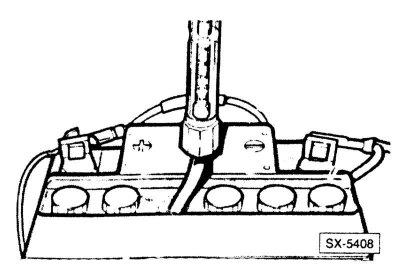
1. Checking the density of the electrolyte together with measuring the voltage allows you to make an accurate conclusion about the battery charge level. A hydrometer is used for checking, which can be purchased inexpensively in specialized stores. The higher the density of the electrolyte, the more the float rises. On the scale, you can read the density values in units of specific weight (g/ml) or degrees Baume (°Be). The following values should be achieved (at an electrolyte temperature of +20°C).
| Charging state | Gasoline engine | Diesel engine | ||
| +°Ve | g/ml | +°Ve | g/ml | |
| discharged | 8 | 1,06 | 11 | 1,08 |
| half charged | 20 | 1,16 | 22 | 1,18 |
| well charged | 30 | 1,26 | 32 | 1,28 |
2. Check each battery jar in turn; the electrolyte in all jars should have the same density (maximum difference 0.04 g/ml). Otherwise, it can be concluded that the battery is faulty.
Checking the battery under load
1. Connect the voltmeter to the battery terminals.
The original article is on MAZBOOK.ru
Note: If the battery voltage (without connected consumers) below 12V, the battery is discharged and needs to be charged.
2. Start the engine and read the voltage value.
3. When starting, the voltage of the charged battery should not fall below 8 V (at an electrolyte temperature of +20°C).
4. If the voltage drops immediately and different densities are detected in the cells, this indicates a faulty battery.
5. The total voltage can be measured with a battery tester. Follow the instructions for use.
Values when checking
| Capacity Ah | Test current A | Load current A | Minimum voltage after 5-10 sec at temperature from 0 to +204°C |
| 54 | 265 | 200 | 9.4 V |
| 64 | 380 | 300 | 9.0 V |
| 88 | 395 | 300 | 9.5 V |
Attention! If during this measurement (within 10 sec) the overall voltage drops below the specified value, the battery is either discharged or faulty.