


Contents: Vehicles not equipped with an…⇓ Cars without manual choke ⇓ For vehicles with manual choke ⇓ Vehicles equipped with an electric…⇓ Diesel engine ⇓
Vehicles not equipped with an electric fuel injection system
1. Fasten your seat belt.
2. Check if the handbrake is applied.
3. Manual gearbox – fully depress the clutch and set the shift lever to neutral. When starting, keep the clutch pedal fully depressed.
4. Automatic transmission – set the gear lever to position "P" (parking) or "N" (neutral).
Warning! Do not keep the starter on for more than 10 seconds. If the engine does not start immediately, wait 5 - 10 seconds, and repeat the starting process, otherwise the starter may be damaged.
Cars without manual choke
Cold engine
1. Fully depress the gas pedal once and release it.
2. Turn the ignition key to the on position "START (III)". Release it after a maximum of 10 seconds.
3. Press the gas pedal about halfway if the engine starts. Release the gas pedal to reduce the RPM.
4. Allow the engine to warm up for approximately 10 seconds before shifting into gear.
5. In cold weather (below -18°C), or if the car has not been used for several days
6. Press the gas pedal two or three times and release it again.
7. Turn the ignition key to the on position "START (III)". Release the key when the engine starts.
8. If the engine does not start, release the ignition key. Press the gas pedal five to ten times before trying to start again.
9. Turn the ignition key to the on position "START (III)", to start the engine.
10. Once the engine starts, let it warm up without pressing the gas pedal.
11. If the engine runs smoothly after 30 seconds, reduce the speed by lightly pressing and releasing the gas pedal.
Attention! If the engine is running for a long time (more than 5 minutes) if the engine is idling at high speed, the vehicle may be damaged due to very high temperatures in the exhaust gas cleaning system.
Warm engine
1. Press the gas pedal halfway and hold it there without pumping.
2. Turn the ignition key to the on position "START (III)", to start the engine.
3. Release the ignition key and gas pedal when the engine starts.
The spark plugs are flooded with fuel
1. If a hot engine does not start, the spark plugs may be flooded with fuel. Therefore, wait at least half a minute before trying to start again.
2. Fully depress the gas pedal and hold it in this position without pumping.
3. Turn the ignition key to the on position "START (III)", to start the engine.
4. Release the ignition key and gas pedal when the engine starts.
For vehicles with manual choke
Air damper
1. Pull out the choke actuator only to start or warm up the engine.
2. Pull the choke knob out completely.
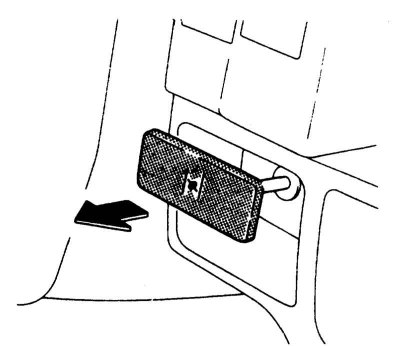
3. When the engine reaches its operating temperature, push the button all the way in.
Air damper indicator light (if any)
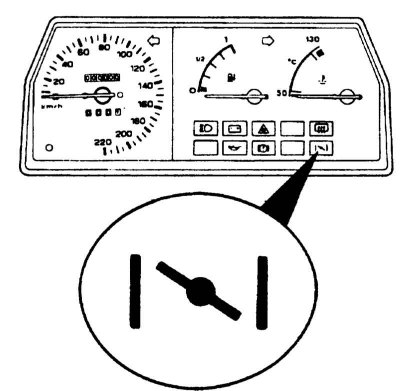
The indicator light comes on when the air flap button is pulled out and goes out when the button is pushed in.
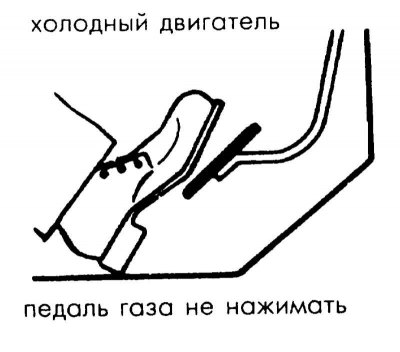
On a cold engine
The text of the article is taken from the website MazBook
1. Do not press the gas pedal.
2. Pull the choke knob out completely.
3. Turn the ignition key to the on position "START (II)".
4. Release the ignition key when the engine starts. If the engine stalls, start it again.
5. After starting the engine, push the button in far enough to make the engine run steadily.
6. When the engine reaches operating temperature, push the choke knob all the way in.
On a warm engine
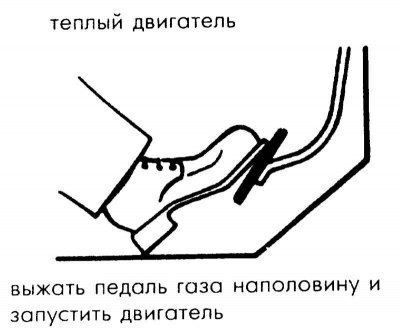
1. Press the gas pedal about halfway. Do not pump the gas pedal or pull the choke button.
2. Turn the ignition key to the on position "START (III)".
3. After the engine starts, release the ignition key and slowly release the gas pedal.
The spark plugs are flooded with fuel
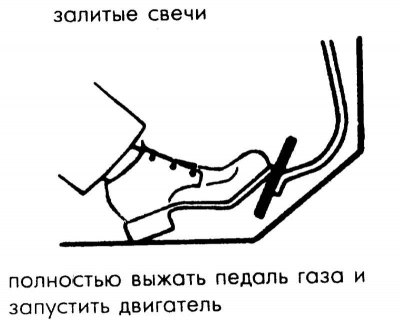
1. If the spark plugs are flooded with fuel on a warm engine and the engine does not start, wait 1 minute or longer before trying to start it again.
2. Slowly depress the accelerator pedal fully. Do not pump or pull the choke knob.
3. Turn the ignition key to the on position "START (III)", to start the engine.
4. After the engine starts, release the ignition key and slowly release the gas pedal.
Caution: If the engine does not start due to excess fuel, remove the spark plugs and dry them.
Caution: Keep cigarettes, sparks or open flames away from the engine when replacing spark plugs.
Vehicles equipped with an electric fuel injection system
1. Fasten your seat belt (if any).
2. Check if the handbrake is applied.
3. Do not press the gas pedal.
4. Fully depress the clutch pedal and move the gearshift lever to neutral position
5. Start the engine with the clutch depressed.
6. Turn the ignition key to the on position "START (III)".
7. Release the ignition key when the engine starts. If the engine stalls, start it again.
Note: On a warm or cold engine, first try to start it without pressing the gas pedal. If the warm engine does not start, press the gas pedal halfway and try again.
For turbocharged engines only
Caution: Immediately after driving at high speed or after a long climb, the engine must be allowed to idle for at least 30 seconds before it is stopped.
Diesel engine
1. Fasten your seat belt (if any).
2. Check if the handbrake is applied.
3. Fully depress the clutch pedal and set the gearshift lever to neutral. Keep the clutch pedal fully depressed during starting.
Warning! Do not keep the starter on for more than 30 seconds. If the engine does not start immediately, wait 5 - 10 seconds and repeat the starting process, otherwise the starter may be damaged.
On a cold engine
1. Turn the ignition key to the "ON (II)" position.
2. Then turn the ignition key to the position "START (III)" and start the engine without pressing the gas pedal. On a cold engine, the gas pedal must be fully depressed when starting the engine.
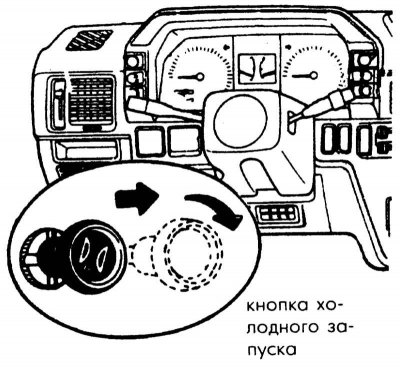
Caution: At low ambient temperatures, pull the cold start button all the way out, turn it to the right and turn the ignition key to the "ON (II)" position.
Attention! Turn the ignition key to the position "START (III)" and hold until the engine starts. Press the gas pedal to increase the RPM slightly and release it when the engine runs steadily.
Caution: Turn the cold start button to the left and push it in fully when the engine reaches its normal operating temperature.
Caution! When warming up the engine, the cold start button must be pulled out.
Note: To facilitate starting, turn off all electrical appliances.
Note: If the engine does not start, return the ignition switch to the "LOCK (0)" or "ACC (I)" position before attempting to start it again.
On a warm engine
1. Turn the ignition key to the "ON (II)" position.
2. Then turn the ignition key to the position "START (III)" and start the engine without pressing the gas pedal.