


- Open-end wrench for bleed valves. Necessary spare parts:
- Brake fluid specifications SAE J 1703, DOT 3.
Brake fluid absorbs moisture from the air through the pores in the hoses and through the ventilation hole of the expansion tank. Because of this, the boiling point of the brake fluid decreases during operation. With strong impact on the brakes, this can lead to the formation of vapor locks in the brake pipes, which greatly reduces braking efficiency.
Brake fluid should be replaced every 2 years, preferably in the spring. If you drive frequently in the mountains, the brake fluid should be replaced more often.
Observe the rules for handling brake fluid, see Chapter Brake system.
1. Using a suction device, pump out the brake fluid from the expansion tank to a level of 10 mm.
Caution! Do not empty the expansion tank completely to prevent air from entering the brake system.
2. Fill the expansion tank new brake fluid up to the "Max" mark.
Caution! Open the bleeder valves on the wheel cylinders and calipers carefully so as not to twist them. It is recommended to cover the valves with rust solvent 2 hours before bleeding. If the valves are firmly seated, bleed them in a workshop.
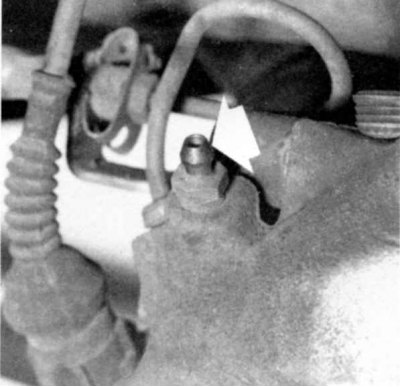
3. Connect a clean hose to the bleed valve on the right rear caliper, place a suitable container underneath.
4. Ask an assistant to pump the brake pedal several times until pressure is created, hold the brake pedal down, open the bleeder valve. Keep your foot on the pedal, close the valve. Remove your foot from the pedal. Repeat this procedure on each valve until only new brake fluid starts to come out.
5. Close the bleed valve and fill the expansion tank new brake fluid.
6. In the same way, pump out the old brake fluid from the remaining calipers or cylinders in the following sequence: rear right, rear left, front right, front left.
Attention! The leaking brake fluid must be transparent and free of bubbles.
7. Old brake fluid should be taken to a special point.