


Attention.
- Leaks in fuel lines in a pressurized system are dangerous. Fuel can ignite and cause equipment damage, serious injury, or even death. Fuel can also come into contact with human skin and eyes. To prevent this, it is essential to perform a pressure relief procedure in the fuel system.
- A person carrying a static charge can cause a fire or explosion, which could result in death or serious injury. Before working on the fuel system, you must discharge static electricity by touching the vehicle body.
- Disconnecting/connecting quick-release connectors without first cleaning their outside may cause damage to the fuel lines and quick-release connectors. Be sure to clean the quick-release connector area with a cloth or soft brush before disconnecting/connecting. Make sure there is no foreign material near the quick-release connector.
1. Place the vehicle on a level surface.
2. Perform the fuel system pressure relief procedure (see the relevant section above).
3. Drain the fuel.
4. Versions with a 6:4 split rear seat back: remove the rear seat cushion.
Versions with a 4:2:4 split rear seat back: move the rear seat to the side as shown in the picture.
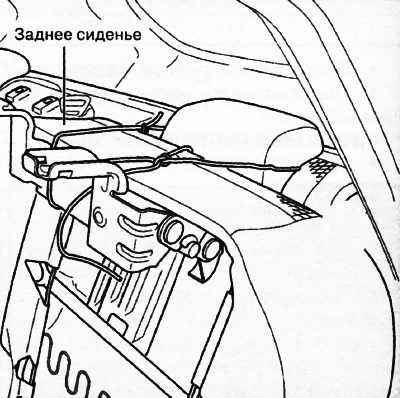
Main part
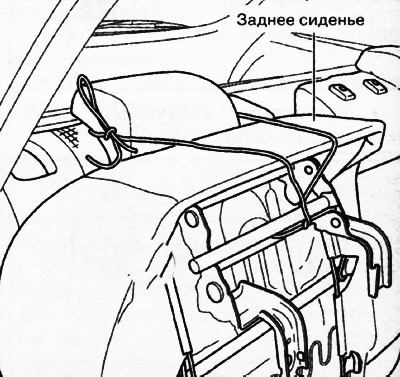
Additional part (only versions with all-wheel drive 4WD)
5. Partially unfold the floor covering as shown in the figure.
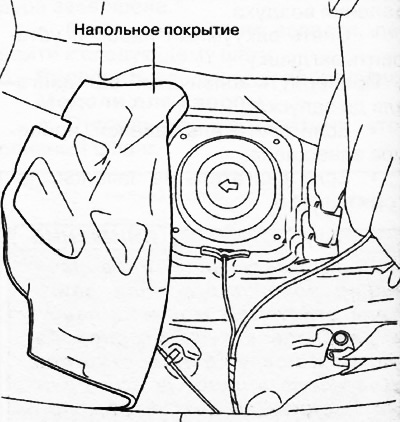
Main part
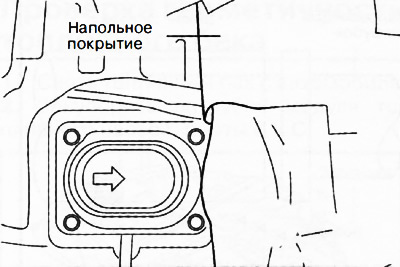
Additional part (only versions with all-wheel drive 4WD)
6. Remove the service hole cover.
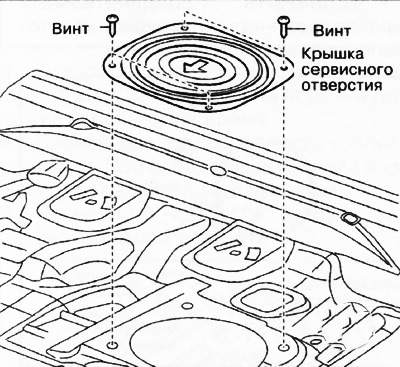
Main part
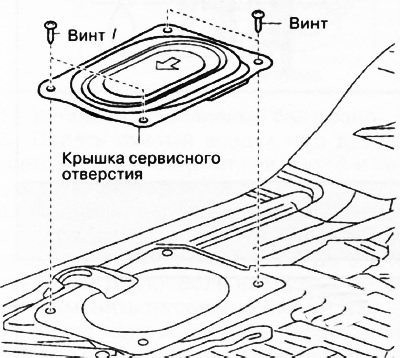
Additional part (only versions with all-wheel drive 4WD)
7. Disconnect the fuel pump connector and quick release connector.
8. 4WD versions: Disconnect the fuel gauge connector through the service hole of the additional part.
9. Remove the supporting roof from the bottom of the body.
10. Disconnect the heated oxygen sensor connector.
11. Remove the three-way catalytic converter with heated oxygen sensor as one unit.
12. All-wheel drive (4WD) versions: remove the propeller shaft.
13. Remove the clamps and remove the filling pipe connecting hose.
Note: The pictures below show the fuel tanks of petrol versions. Diesel versions do not have a carbon canister and isolator.
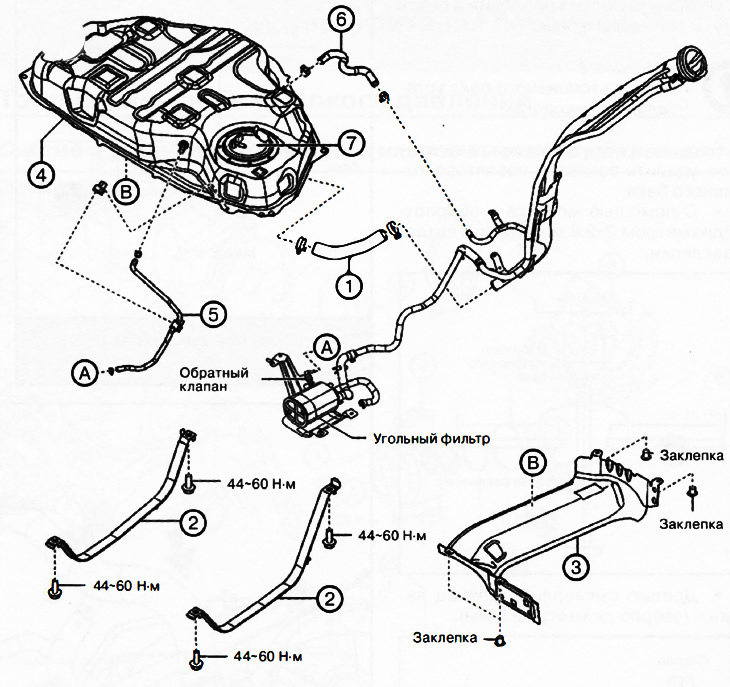
Front-wheel drive (2WD) versions:
1. Connecting hose
2. Fuel tank clamps.
3. Fuel tank insulator.
4. Fuel tank.
5. Fuel vapor recovery system hose.
6. Breather hose.
7. Fuel pump module.
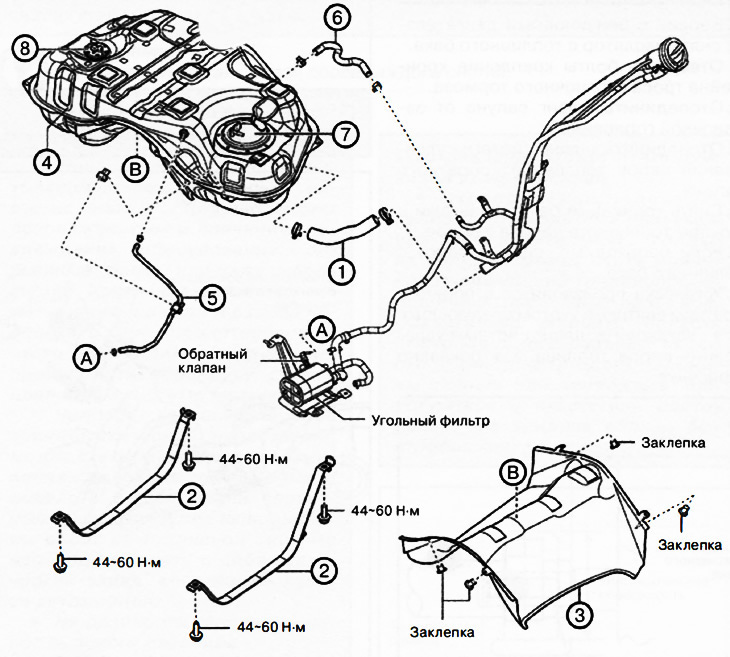
All-wheel drive (4WD) versions:
1. Connecting hose.
2. Fuel tank clamps.
3. Fuel tank insulator.
4. Fuel tank.
5. Fuel vapor recovery system hose.
6. Breather hose.
7. Fuel pump module.
8. Additional fuel level indicator module.
14. Loosen the mounting bolts and remove the fuel tank clamps.
Note: The fuel tank insulator is riveted in place.
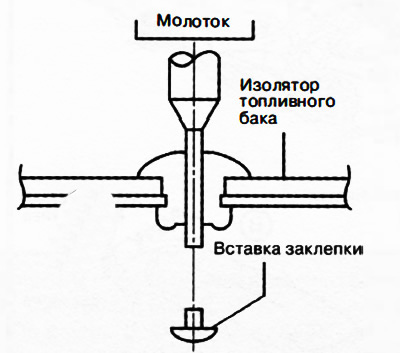
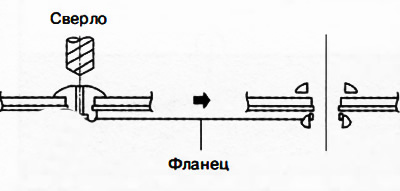
15. Petrol engine versions: remove the fuel tank insulator rivets:
Using a hammer and punch (diameter 2-2.8 mm) knock out the rivet insert.
Use a drill to drill out the rivet flange (drill diameter 5 mm).
16. Versions with petrol engines: remove the insulator from the fuel tank.
17. Loosen the parking brake cable bracket mounting bolts.
18. Disconnect the breather hose from the filler neck.
19. Disconnect the fuel vapor recovery system hose from the check valve.
20. Remove the fuel tank with hoses and fuel pump module assembly.
21. If necessary, remove the hoses from the fuel tank.
22. Installation is carried out in the reverse order of removal, taking into account the following:
Install the fuel vapor recovery system hose as shown in the illustration.
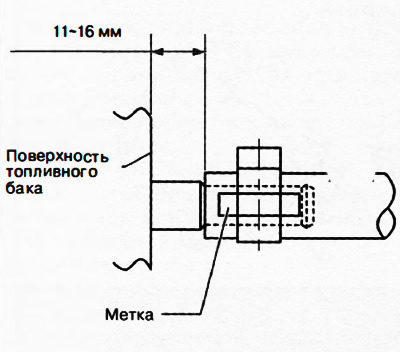
Install the breather hose as shown in the following figures.
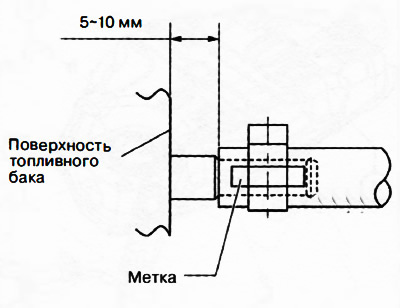
From the fuel tank side
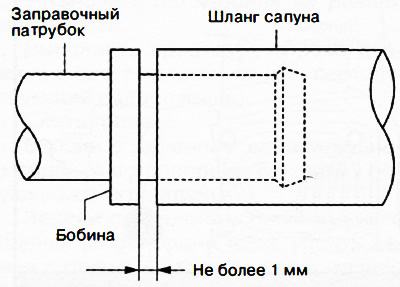
From the filling pipe side
Install the filling pipe connecting hose as shown in the following figures.
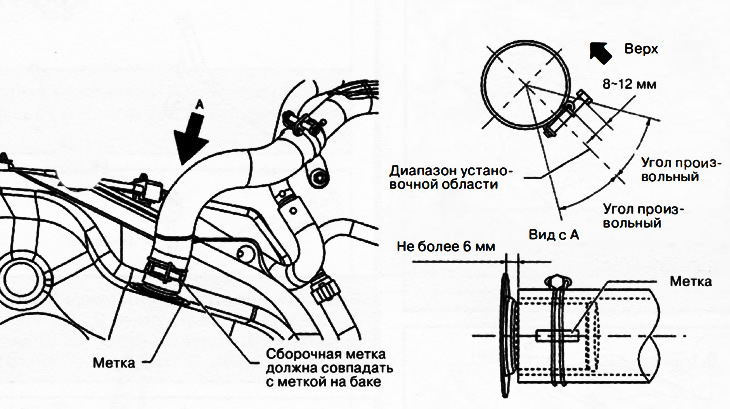
From the fuel tank side
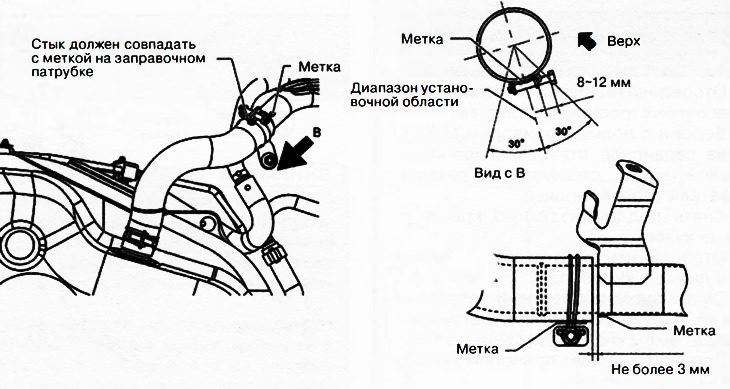
From the filling pipe side
23. Perform the necessary operations after servicing the power supply system.