


1. Unscrew the oil filter. The oil filter is located, looking in the direction of travel, at the back of the cylinder block. There is a special tool for unscrewing the filter, for example, HAZET 2172. You can also hammer a sharp screwdriver into the filter from the side. Oil will leak out - place a container underneath.
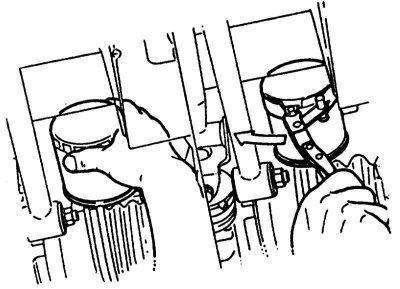
2. Clean the oil filter flange on the cylinder block with fuel. Remove the filter gasket.
3. Lightly coat the rubber gasket on the filter with engine oil.
4. Screw the new filter on by hand. When the filter gasket is flush with the cylinder block, tighten the filter with the clamping band another 4/3 of a turn. Follow the instructions on the filter.
Filling
1. Pour new oil into the filler neck of the cylinder head cover. Then check the oil level with the dipstick.
2. Screw on the filler cap.
Attention! It is recommended to first fill in 1/2 liter less oil, warm up the engine and after a few minutes check the oil level with a dipstick, add oil if necessary. Excess oil must be pumped out, otherwise the engine gaskets or catalytic converter may be damaged.
3. After a test drive, check the tightness of the drain plug and oil filter, carefully tighten if necessary.
4. Turn off the warmed-up engine and after 2 minutes check the oil level again, top up if necessary.
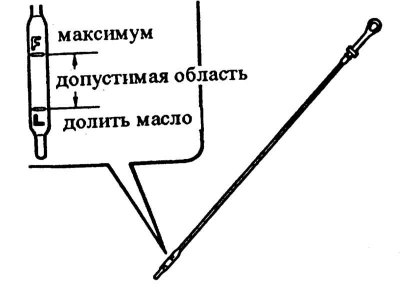
5. The difference between the upper mark "F" and the lower mark "L" is about 0.8 l. The oil level should always be between these marks.
Caution! Never fill oil above the "F" mark. Too much oil can damage the catalytic converter during operation.
6. For better control of the dynamic characteristics of the engine, when changing, always use oil of the same type and, if possible, of the same brand. Therefore, it is advisable to attach a plate to the engine each time the oil is changed, indicating the brand and viscosity of the oil.
7. Unreasonable use of oils of different types is unfavorable. Motor oils of the same type but different brands should not be mixed if possible. Oils of the same type and brand but with different viscosity can be mixed with each other when changing seasons, if necessary.