


Attention:
- Do not wear the shoulder portion of the belt so that it passes under the armpit or is positioned in any other incorrect position.
- Make sure that the belt does not twist.
- The belt provides the greatest protection when the seatback is in the upright position. When the seatback is reclined, there is a greater risk that the occupant will slide out from under the belt, especially in a frontal collision, and be injured by the belt or by striking the dashboard or seatback.
To fasten the seat belt, slowly pull the belt out, holding it by the bar. Insert the bar into the latch until you hear a click.
Note: If the belt is blocked and does not come out of the reel, pull the belt firmly and then release it. Then slowly pull the belt out again.
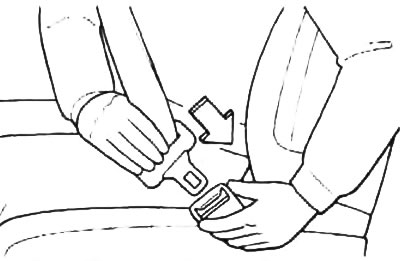
Pull the belt slightly to adjust the desired tension.
Warning: Pregnant women are advised to use the available seat belts after consulting with a doctor. This will reduce the risk of injury to both the woman and her unborn child. The lap belt should be positioned as low as possible under the belly.
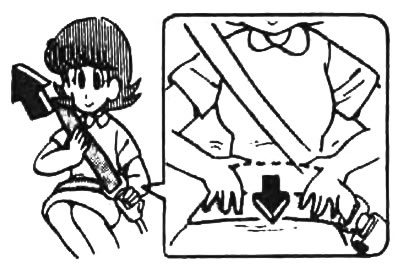
To unfasten the belt, hold the bar and press the button in the buckle.
Note: Since the belt retracts automatically, hold it by the bar to prevent the belt from retracting too quickly. Otherwise, you may damage the vehicle.
Adjusting the height of the seat belt anchor point (front seats)
To adjust the height of the seat belt anchorage point, press or pull the locking button and move the seat belt anchorage up or down to the position that is most comfortable for you and release the button. You should hear a click and be sure that the seat belt anchorage point is securely locked.
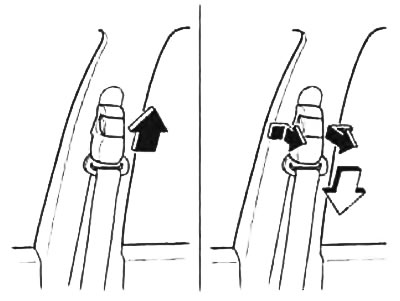
Caution: When adjusting the position of the belt anchor point, position it high enough so that the belt makes full contact with your shoulder but does not touch your neck.
Child seats
When transporting children in your vehicle, you should always use a child restraint system of one type or another, depending on the weight and age of the child.
Attention:
- It is recommended that children be transported only in the rear seat and that they be restrained in a child restraint system.
- Holding your baby in your arms is not a substitute for a child restraint.
Warning about installing child seats in vehicles with a front passenger airbag (SRS)
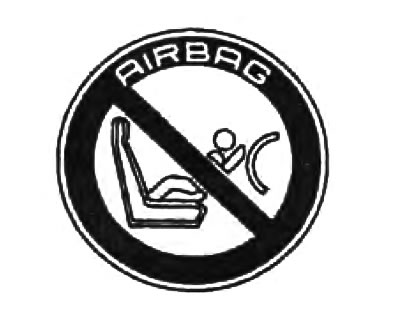
The sign shown in the figure is attached to vehicles equipped with a passenger airbag.
Attention:
- Do not use rear-facing child restraints in the front passenger seat where the air bag is located. The force of the passenger seat air bag deployment could force the child restraint against the seat back, causing serious injury.
- Forward-facing child seats must be installed in the second or third row seats.
- If you are installing a child seat on the front passenger seat, move the seat to its rearmost position.
Infants and young children
For infants of such a size that the shoulder belt contacts the face or neck when seated, a bassinet should be used instead of a child seat. For younger children, a child seat should be used.
The child restraint system must be appropriate for your child's weight and height and be installed correctly in the vehicle.
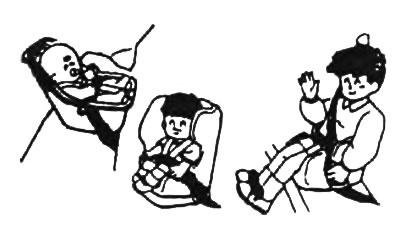
When installing a child seat, follow the instructions provided by the manufacturer of the device.
Failure to follow these instructions may result in serious or fatal injury to your child.
When the child seat is not in use, secure it with a seat belt or remove it from the vehicle to prevent accidental injury to the child.
Note: Before purchasing a child seat, check to see if it fits securely in the back seat. Sometimes the seat belt buckles located on the seat cushion can make it difficult to install some types of child seats securely. If the child seat can be moved forward on the seat cushion after tightening the belt, choose a different child seat.
Teenagers
Children who are no longer fit in a child seat should be in the back seat and wear a combination lap and shoulder belt. The lap portion of the belt should fit snugly around the child's hips. Otherwise, in a crash, the belt could cut into the child's abdomen and injure the child.
Warning: Children who are not wearing seat belts may be thrown from the vehicle in the event of an accident.