


Attention.
- The battery contains toxic substances. Handle the battery with care.
- Since battery electrolyte is highly corrosive, be careful not to allow it to come into contact with clothing or vehicle surfaces.
- If electrolyte gets on your skin or clothes, wash it off immediately with plenty of running water. If electrolyte gets into your eyes, rinse them with running water for 15 minutes and then seek medical help.
1. Using a hydrometer, measure the density of the electrolyte. If the measured value is less than 1.22-1.29 at a temperature of 20°C, recharge the battery.
2. Measure the positive voltage of the battery. If the reading is less than 12.4 V, perform a quick charge for 30 minutes and check the voltage again. If the voltage is still less than 12.4 V, replace the battery with a new one.
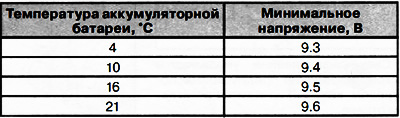
3. Using a battery tester, apply a working load and check the voltage after 15 seconds. If the battery voltage drops too much during this time, replace the battery with a new one.
Note:
Battery working load:
- 55D23L (48): 180 A
- 75D23L (52): 195 A
(The text of the article is taken from the website: «MazBook»)
4. Check for parasitic currents:
- Make sure the ignition is off (the key must be removed), and all the doors are closed.
- Disconnect the negative battery terminal.
Caution: Turning on working loads when measuring parasitic currents may damage the tester.
Note:
- If the battery is not disturbed for 10 minutes or more (but not longer than 30 minutes), the tester will show a high value (approximately 300 mA).
- If the ignition or any electrical consumer is turned on after connecting the tester, the battery must be left alone for 10 minutes or more (but not longer than 30 minutes), starting from this moment.
- In cars with an immobilizer, the system periodically switches on the synchronization of the flashing indicator of the security system. In connection with this, a current of 65 mA is supplied (0.1 seconds) when the security indicator lights up, and 40 mA (2 seconds) when the security indicator goes out. A meter that shows an average value will show approximately 55 mA.
Connect the tester between the negative battery terminal and the negative cable, and leave the battery alone for 10 minutes or more (but not longer than 30 minutes). After this, measure the value of parasitic currents. If the measured value does not correspond to the norm (40-65 mA), repeat the measurement of parasitic currents after removing one by one the fuses from the fuse boxes. Check and repair the wiring and fuse connectors of the subsystems for which increased currents were detected.
Note: If the battery is left standing for more than 30 minutes, the parasitic current value will be 25-45 mA.