


Warning: The air conditioning system is under high pressure. Do not disconnect any system components without first depressurizing the system. Depressurization must be entrusted to a specialist with the appropriate equipment. The refrigerant used is a hazardous substance. In case of contact with skin or eyes (in a liquid state) it can cause frostbite. In its gaseous state it is colourless and odourless. Being heavier than air, the gas accumulates at the bottom of the repair pit or near the ground and can cause suffocation for those working in such places. The gas is not flammable, but even a lit cigarette causes it to decompose into its constituent substances, some of which are deadly poisonous. If refrigerant gets into your eyes, rinse them with boric acid solution and seek medical attention immediately.
1. Remove the front grille cover (Section 11).
2. Inspect the condenser fins, clean them of leaves and insects, and check the evaporator and fan wiring connections (photo).
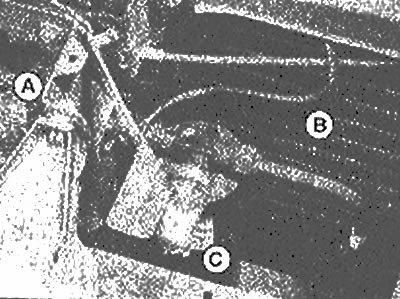
Air conditioner fan (A), condenser (B) and evaporator (C)
3. Check the condition of the system hoses. If there is any sign of wear or hardening, have them replaced by a professional.
4. At the recommended intervals, check and adjust the compressor drive belt as described in Section 1.
5. Due to the complexity of servicing the air conditioning system, and the differences between systems in different models, service procedures are not provided in this manual.
6. Run your air conditioning for a few minutes every month, even if you don't need it. This will keep the system in good condition.
7. Have your refrigerant system checked by a qualified technician annually. Operating the system with insufficient refrigerant may cause damage to the system.