


Contents: Installation ⇓ Installation ⇓
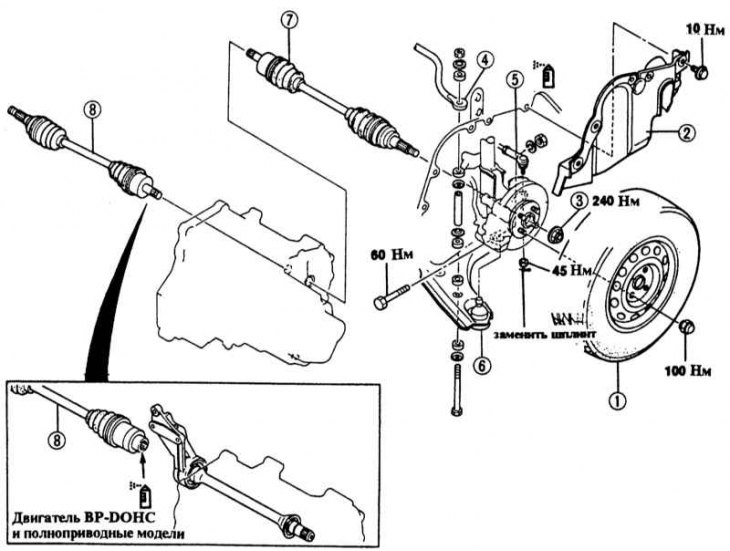
1 - wheel; 2 - mudguard; 3 - hub nut; 4 - stabilizer; 5 - steering rod end; 6 - steering knuckle; 7 - left drive shaft; 8 - right drive shaft
 lubricate (lithium universal grease)
Installation
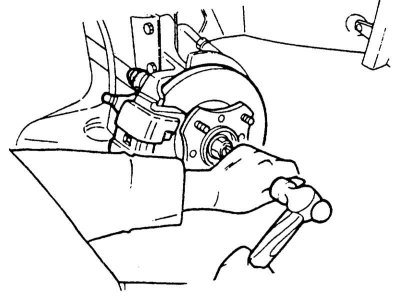
1. Bend back the hub nut retaining plate using a hammer and chisel.
2. Unscrew the hub nut of the vehicle while it is on the ground. At the same time, ask an assistant to press the brake pedal so that the hub does not turn. High tightening torque, risk of accident!
3. Loosen the wheel nuts.
4. Mark the position of the wheel disc relative to the hub so that the balanced wheel can be installed in its original position.
5. Raise the front of the vehicle.
6. Remove the wheel.
7. Drain the transmission oil, see Chapter Maintenance.
8. Unscrew the mudguard and remove it from the wheel arch.
9. If available, unscrew the stabilizer on the wishbone, remove the bolt with bushings and spacers.
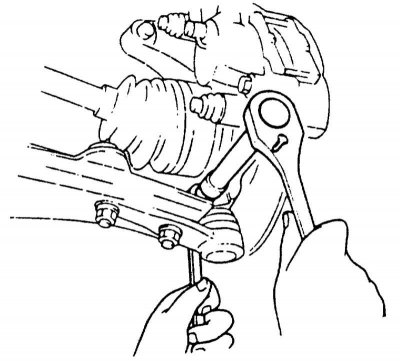
10. Unscrew the nut and remove the steering knuckle clamp bolt.
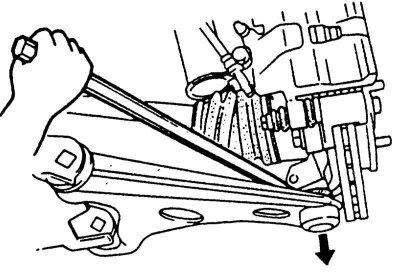
11. Press the ball joint pin down from the steering knuckle using a pry bar. Place a cloth underneath to avoid damaging the seal.
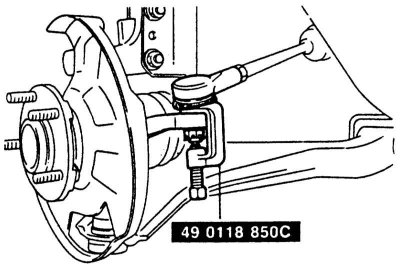
12. Cars produced since 10/89, except for station wagon models: Straighten the cotter pin and remove it. Unscrew the tie rod end nut and press the end out of the steering knuckle arm using a standard puller.
Caution! Be careful not to damage the cuff.
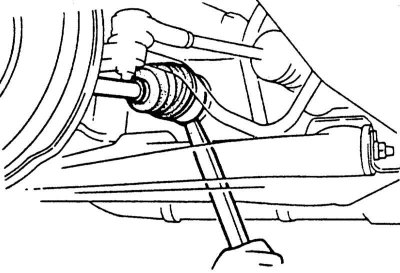
13. Install a pry bar between the joint and the gearbox housing. Tilt the pry bar and press the joint out. Do not pull on the drive shaft, as this may stretch the inner joint on some models.
Attention! On models with intermediate shaft (1.9L DOHC engine and/or all-wheel drive) the right drive shaft should be pressed away from the intermediate support. See Section Removal and installation the intermediate shaft.
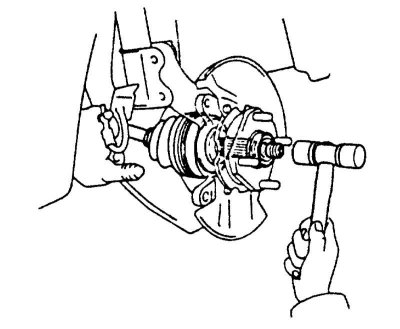
14. Press the drive shaft out of the hub using a standard puller or knock it out with a polymer hammer.
Installation
1. Before installation, check the seals for wear.
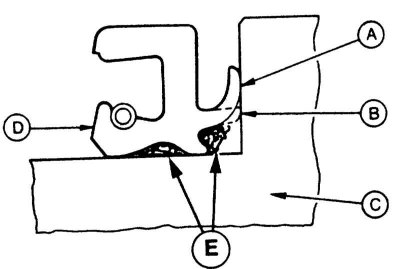
A - working edge (new),
B - working edge (worn out),
C - wheel hub or drive shaft,
D — gland,
E - lubricant.
2. Remove the worn seal if necessary. If necessary, drill the seal with a drill, screw in a suitable self-tapping screw and remove the screw with pliers together with the seal.
Attention! If the seal is worn or faulty, check the bearing rollers and races for damage and replace if necessary.
3. Lubricate the new seal and evenly pack it with a suitable pipe.
4. Clean and lightly lubricate the splines and threads of the drive shaft.
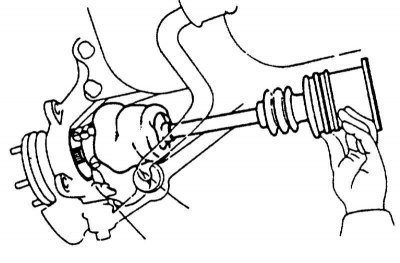
5. Insert the drive shaft into the hub bearing by hand. Put on the washer, install the hub nut and, screwing it, pull the hub onto the end of the drive shaft. Do not tighten the nut completely yet.
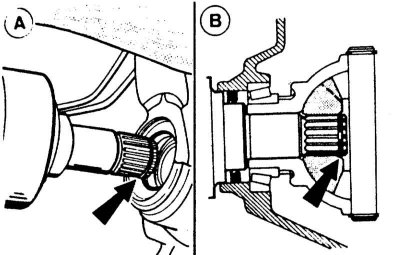
6. Insert the drive shaft with the new retaining ring -arrow A- into the splined connection of the gearbox pinion. The cut of the retaining ring must face upwards when installing. Tap the drive shaft with a rubber mallet until it snaps into place -arrow B-. Check by pulling and pressing slightly to ensure that the shaft snaps into place.
7. Screw the steering knuckle and stabilizer onto the wishbone, see Chapter Suspension and steering system.
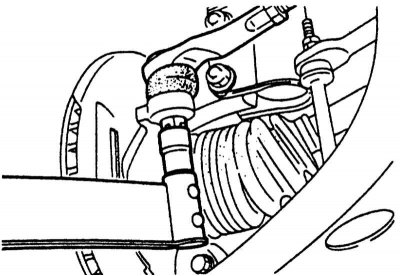
8. Insert the steering rod end element into the steering knuckle, tighten the nut with force 45 Nm and secure with a new cotter pin. If the cotter pin does not fit, tighten the nut slightly, do not loosen it. Bend the ends of the cotter pin.
9. Fill with transmission oil.
10. Screw on the wheel arch mudguard.
11. Screw on new hub nut, without tightening it completely yet.
12. Screw on the wheel, taking into account the mark on the hub. Lower the car and tighten the wheel nuts crosswise with force 100 Nm
13. Tighten the hub nut of the vehicle standing on the ground with force 240 Nm, the assistant must press the brake pedal.
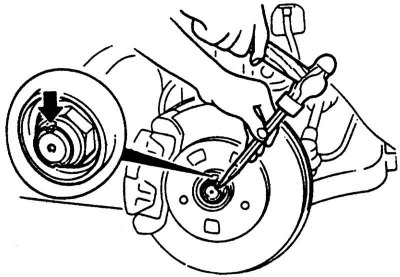
14. Secure the hub nut. To do this, hammer the nut flange into the shaft groove using a punch.
15. Measure the front wheel alignment angles.