


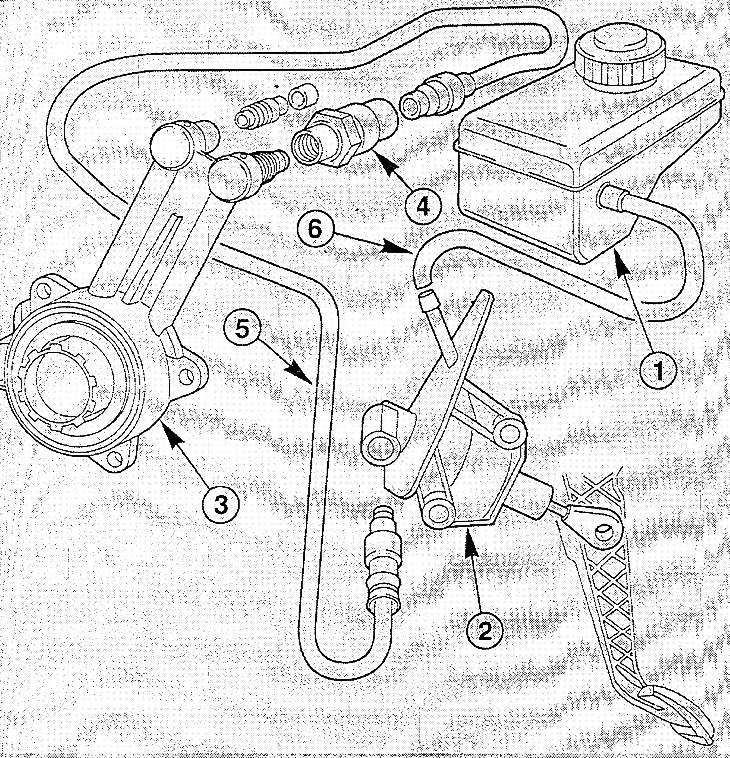
1. Tank for brake fluid; 2. Clutch master cylinder; 3. Clutch slave cylinder with release bearing; 4. Primary valve; 5. Discharge pipeline; 6. Supply pipeline.
It is necessary to remove air from the clutch hydraulic actuator when the clutch pedal does not return to its original position or returns with a delay, the clutch does not disengage completely, or if the hydraulic actuator system has opened.
Precautions: as there is brake fluid in the hydraulic clutch system, the corresponding instructions in chapter «Brake system». Brake fluid is poisonous and corrodes paint.
Check the brake fluid level in the reservoir and top up if necessary..
Attention: The fluid level in the reservoir must not drop too much and always add only fresh brake fluid.
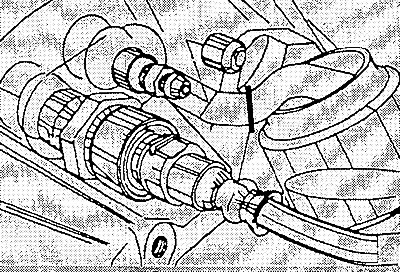
Remove the dust cap from the bleed valve on the slave cylinder. The bleeder valve is located at the top of the gearbox in front of the left engine/gearbox mount. Attach a transparent hose to the bleeder valve.
Lower the other end of the hose into a vessel partially filled with brake fluid so that no air enters the system during bleeding.
Loosen the bleeder valve one turn carefully with a spanner wrench to avoid damaging the edges of the valve.
Have an assistant depress the clutch pedal all the way down until no more air bubbles come out of the hose. At the same time, constantly add fresh brake fluid to the reservoir.
Attention: When changing the brake fluid (maintenance plan) pump it out until fresh brake fluid, which has a lighter color, begins to come out.
Tighten the bleed valve. Pull off the hose and put on the dust cap.
Lower the car.
Add brake fluid up to the mark «MAX».
Check clutch and brake operation.